 This week, PBS’s American Experience aired the first episode of The Abolitionists, a new three-part documentary. If you missed it, you can still watch it online. It is written and directed by Rob Rapley. The next two episodes will air on January 15 and 22.
The film profiles Frederick Douglass, William Lloyd Garrison, Harriet Beecher Stowe, John Brown, and Angelina Grimké. Part I covers the 1820s and 1830s, fitting it comfortably into The Junto’s portfolio. Kenneth Owen, an Assistant Professor of History at the University of Illinois at Springfield, and Jonathan Wilson, a PhD candidate at Syracuse University, have a review.
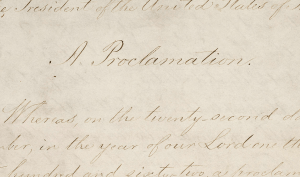 We can’t let 2013 begin without marking
 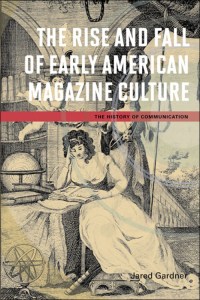 Almost by definition, studying communications media means examining the nature of rationality and the meaning of citizenship. So literary historians generally see the novel, which privileges dialogue and individual subjectivity, as helping to constitute a liberal social order, while political historians see newspapers as essential to various expressions of republicanism and democracy. In
  The Junto