 I don’t like Abraham Lincoln. Working in Springfield, Illinois, that’s not an especially popular viewpoint to hold. Yet it is working in Springfield, Illinois, that has really led me to that conclusion. It’s almost impossible to escape the shadow of Honest Abe here. Bronze statues sit prominently in downtown; all sorts of programs and buildings at my university bear Lincoln’s name. His face even peers out from every license plate in the state. It’s a historical cult of personality that can feel alienating to a revolutionary specialist.
(Though he does have a good nose for sniffing out dodgy car dealers.) Continue reading


 The SHEAR Annual Meeting kicked off this year with the Presidential Plenary session, “Missouri: Crossroads of the Early Republic?” Using the conference’s location as a jumping-off point for discussions of the diverse and multifaceted history of the early nineteenth century, four distinguished historians offered reflections as if located in Missouri, looking across the North American continent in different directions. Walter Johnson then concluded the roundtable with the notional title “Looking Forward,” but calling attention to some ways in which the session might profitably be used by historians looking to introduce new themes and stories into their teaching.
 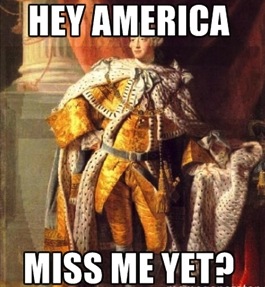 “There’s just one question I have to ask,” said the pleasant young man at the US Embassy, reviewing my visa application. “You are aware that we won, right?”
 One of the biggest difficulties I find in teaching the American Revolution is explaining to my students the large time gaps between so many of the most seminal events of the Revolution. The popular narrative of the Revolution has a tendency to conflate the Stamp Act with the Declaration of Independence with the Constitution, with perhaps a quick pause to celebrate Washington’s victory at Yorktown. Yet if the Stamp Act crisis happened today, it would be 2024 before we reached the Declaration of Independence, and 2035 before the Constitutional Convention met.
 On a cold and wet May Friday in London, I decided to take refuge from the weather by stepping back into the eighteenth century. While serving as agent for the colony of Pennsylvania (and others), Benjamin Franklin lodged in a small dwelling on Craven Street, now just behind Charing Cross station and a short walk from Parliament. Though Franklin’s lodgings were originally misidentified (to the extent that a commemorative plaque was placed on the wrong house!), the original building still stands. Now the only surviving Franklin home in the world, the house is the home of the “
 The Junto