Yesterday I learned that some Republican state legislators in North Carolina have sponsored a bill to declare an established religion—or at least, to declare that the federal Constitution wouldn’t prohibit such a declaration. In doing so, of course, they disregard a mainstream of constitutional jurisprudence on the issue that goes back into the ninteenth century but was really firmly established in the middle of the twentieth century. I’m not here to talk about that question, but I found it particularly interesting in light of the conversation I’ve been having by email over the last few weeks with Dr. Sean Wilson, an assistant professor of law at Wright State University, about his new book The Flexible Constitution. Continue reading
Author Archives: Tom Cutterham
Alexander Hamilton’s Originalism
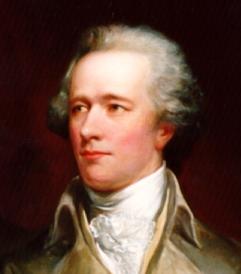
We should read each legal document according to the plain sense of the text: the sense that was understood by its authors, or perhaps by the people by whose authority it became law. The task of interpretation is, in essence, a historical one. It should be concerned with past realities, not present conjectures. That is as compelling a definition of originalism as I can muster.
I’m not going to get into originalism deeply here. I just wanted to share a few lines from the pen of Alexander Hamilton. There’s a point where the argument for originalism folds in upon itself logically: the point where originalist historians and lawyers want to show that the authors or ratifiers of the original text intended or understood it to be interpreted according to its original intent or meaning. Originalist historiography then becomes a historiography of originalism itself. Lawyers, in my small experience, tend to like this, because they like doing the history of other lawyers. Continue reading
Charles Beard, Economic Interpretation, and History
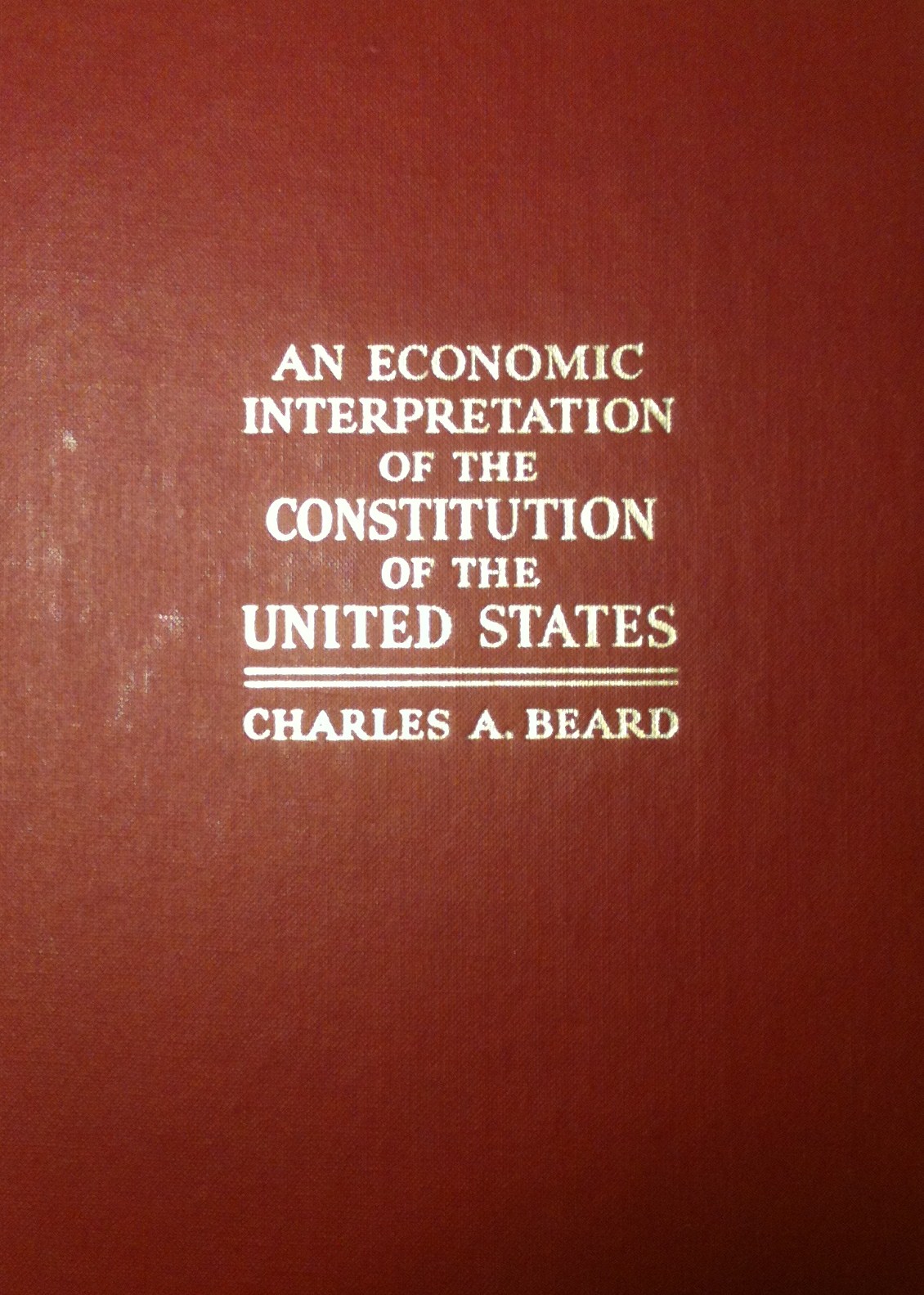 It’s been a century since Charles Beard published An Economic Interpretation of the Constitution of the United States. That book has a central role in more or less every overview of the historiography of the constitution and the founding. Just what that role is, though, is still open to debate. That Pauline Maier’s Ratification (2010) has no listing for Charles Beard in the index might have been taken as a sign that scholars no longer have to deal directly with his towering legacy. But that Seth Cotlar called her out on it in a recent William & Mary Quarterly forum, and took her to task for the “absence of any direct engagement” with Beardian, “conflict-oriented” interpretations of the period, reminds us just the opposite. As Saul Cornell put it, in light of powerful and varied strands of contemporary neo-Beardian scholarship, from Robert McGuire to Woody Holton and Terry Bouton, “one wonders if we have fully laid the ghost of Charles Beard to rest.” Well, if you have to wonder… Continue reading
Young Men of the Revolution
The intelligent American of today may know a great deal about his history, but the chances are that he feels none too secure about the Founding Fathers and the framing and ratification of the Federal Constitution. He is no longer certain what the “enlightened” version of that story is, or even whether there is one. This is because, in the century and three quarters since the Constitution was written, our best thinking on that subject has gone through two dramatically different phases and at this moment is about to enter a third.
As well as a continuation of my earlier thoughts on elites, this post is a tribute to a classic article: Stanley Elkins and Eric McKitrick’s “The Founding Fathers: Young Men of the Revolution,” in the Political Science Quarterly 76, no. 2 (June 1961). When I opened the article to reread it in order to write this post, I was struck by the vigour and assurance of that opening paragraph. It’s writing that hasn’t dated so much as aged, beautifully. Continue reading
Sympathy for the Founders
One day soon, someone will write the history of the bankers, fund managers, lawyers and accountants who helped make our present financial crisis. When they do, they’ll need to be careful not to lose sight of the far larger group of people – really, everyone – who were also part of that process, the suffering they endured and the resistance they enacted. It would need to be a cultural, intellectual, legal, political, and social history that gave account not only of how the financial elite thought and acted, but how that thought and action was shaped by structures and events. It would see the world reflected in their eyes. In that moment, it might show a little sympathy.
 That’s how I feel about my own project, a history of power and ideology among American elites in the 1780s. The first question that troubles me – why study elites? – tends to dissolve into a slightly different one – what does it mean to study elites? To be meaningful it has to be a way of studying how historical change happens and how the conditions of life are produced. Elites are both separate and inseparable from the rest of society, linked in a complex, ambivalent embrace that constitutes a kind of class struggle. And class struggle is history in action.
 The Junto