 Ed Morgan changed the way historians understood the American Revolution. Over a period of about ten years, from 1948 to 1957, he published three important research articles, a monograph, an essay aimed at a general audience, and a historiographical article, all having to do with the coming of the Revolution. It was an amazing burst of work that elevated Morgan to the upper echelons of American historians. Of course, Morgan had previously worked on Puritanism and would go on to do groundbreaking work on colonial Virginia and slavery. But he made his bones with the American Revolution. Continue reading
Category Archives: Special Features
Puritan Family Ties
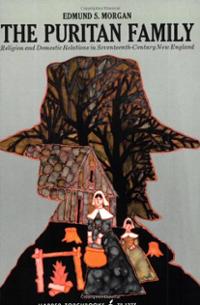 Family pictures can be the hardest to frame, and Puritans make for appealingly restless subjects. In tackling the early American narrative, scholars must confront the thorny task of portraying the Puritan family with equal parts theological dexterity and sociological skill, a problem that seventeenth-century artists and modern historians alike have sought to refine. Scholars who take on the Puritans must address sin, salvation, and community-building in a way that does not make American democracy feel inevitable; further, they must seize onto the seventeenth-century peculiarities of transatlantic intellectual life in which the Puritans flourished and fell. Wrapped in New England lore and either exalted or disowned by their descendants, the cultural memory of Puritan contributions to the project of nation-building has inspired a broad spectrum of historiographical views. In the early 1940s, then-Harvard doctoral student Edmund S. Morgan and his colleagues would have encountered a popular narrative of Puritanism, one seemingly destined to smother any effort at new work: America’s Puritan “tribe” had briefly inhabited a tau(gh)t sphere, bounded by covenant theology and laden with impossible ethics, peopled by censorious prudes who excelled at capitalist rhetoric and balked at the sinful frivolity of a stray dance. Or… did they? Continue reading
Roundtable: The Legacy of Edmund S. Morgan
This is a very special week at The Junto. Following last month’s sad news of the passing of one of our field’s true giants, Edmund S. Morgan, we all agreed that a weeklong retrospective on his remarkable career was in order. Hence, this week, each day will be given over to a specific work or theme to which Morgan made important contributions during his four-decades long academic career. We hope that this roundtable, being written by graduate students and junior faculty, will provide a snapshot of Morgan’s continuing relevance to new generations of early Americanists almost three decades after his retirement from Yale University.
E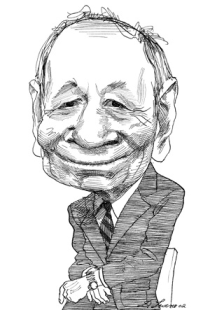 dmund Sears Morgan was born on January 17, 1916 in Minneapolis, Minnesota.[1] His father, Edmund Morris Morgan, was a Professor of Law at the Minnesota Law School, Yale University, Harvard University, and Vanderbilt University. Ed the Younger attended Belmont Hill School from which he graduated in 1933. From there, he left to do his undergraduate work at Harvard. In his second year, he took a course taught by F.O. Mathiessen, his senior tutor, and Perry Miller, whom Morgan called “simply the most exciting lecturer” he had encountered. The experience turned a budding English major into an American history and literature major. Upon graduation, Morgan spent a year at the London School of Economics studying with Harold Laski. Continue reading
Guest Post: Teaching with Legal Sources: The Case of Ann Hibbens
Today’s guest poster is Sara Damiano, a Ph.D. candidate at Johns Hopkins University. Her dissertation is entitled, “Gender, Law, and the Culture of Credit in New England, 1730-1790.”

As we plunge into syllabus-writing season, I would like to contribute to The Junto’s ongoing conversation on teaching with primary sources. (Joseph Adelman and Glenda Goodman have previously written on favorite sources in the survey and on music in the classroom, respectively.) I’m a historian of gender and law, so I would like to make the argument for including legal sources in our syllabi, even for courses that aren’t explicitly focused on legal history. By way of illustration, I would also like to recommend one of my favorite legal history sources for teaching: the 1640 trial of Ann Hibbens before the First Church of Boston.
Guest Post: Sports Talk Radio, Sabermetrics, and Carl Becker
Mark Boonshoft is a PhD candidate at Ohio State University. His work focuses on colleges and academies, especially the networks forged in them, and their role in the formation of revolutionary political culture.

“Long time listener, first time caller.” These are words I heard often as a kid. I grew up listening to sports talk radio—mostly 660AM, WFAN-New York—and this is how many a caller introduced themselves. I’ve limited my habit—I no longer keep a transistor radio quietly playing under my pillow while I sleep—but I have not shaken it entirely. Long car rides are still a good chance to binge, and binge I did this July Fourth weekend. Driving through Albany, I called in for the first time ever. Continue reading
Final Pre-Conference Highlights for #SHEAR13
As you may have read, the Junto is cross-posting some of the pre-conference highlights for the Society for Historians of the Early American Republic’s (SHEAR’s) upcoming July conference in Saint Louis. Continue reading
Guest Post: Thomas Mundy Peterson and the Fifteenth Amendment
Gordon Bond is an independent historian/researcher. He has written an excellent biography of the colonial New York printer, James Parker, entitled James Parker: A Printer on the Eve of Revolution. He is also the author of Hidden History of South Jersey (2013) and North Jersey Legacies (2012). Currently, he is the Founder, Editor-in-Chief & Director of Garden State Legacies .

While a rejection is nothing any writer wants, sometimes it is what we need. Such was the case with my proposals to publishers for a book about Thomas Mundy Peterson. If you’ve heard of Peterson before, chances are it will be for the Wikipedia reason; in 1870, he became the first African-American to vote under the auspices of the Fifteenth Amendment to the United States Constitution. He was, of course, more than that moment.
There’s a Conference Coming! (Pre-Conference Highlights for #SHEAR13)
As you may have read, the Junto is cross-posting some of the pre-conference highlights for the Society for Historians of the Early American Republic’s (SHEAR’s) upcoming July conference in Saint Louis. Continue reading
More and More Pre-Conference Highlights for #SHEAR13
As you may have read, the Junto is cross-posting some of the pre-conference highlights for the Society for Historians of the Early American Republic’s (SHEAR’s) upcoming July conference in Saint Louis. Continue reading
Yet More Pre-Conference Highlights for #SHEAR13
As you may have read, the Junto is cross-posting some of the pre-conference highlights for the Society for Historians of the Early American Republic’s (SHEAR’s) upcoming July conference in Saint Louis. Continue reading
 The Junto