The Week in Early American History

TWEAHHappy Easter and Passover to all celebrating!
With all the excitement around the Junto’s March Madness tournament (we even have a hashtag!), it’s a useful reminder that there are other things going on this week around the blogosphere. Once you’ve found all the Easter eggs (or, if you hid it really well on Monday, the afikoman), sit down and try out a few of these posts and stories.

Continue reading

The Abolitionists: A Recap

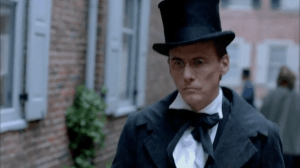
Garrison walkingOver the last three weeks, Jonathan Wilson and Ken Owen have reviewed the PBS documentary series The Abolitionists. Their reviews of part 1, part 2, and part 3 are already available for you to read. In this final post, Wilson and Owen will discuss the series as a whole, focusing especially on its value for history professors in the classroom.

Ken: Jonathan, I thought that we might start this discussion by looking at the producers’ public statements on what they were attempting with the series. For reference, there is a video entitled ‘Why We Made The Abolitionists‘, and an article ‘From The Executive Producer‘. For me, the most striking statement of the video is the opening assertion that no transformative moment in American history ‘stems from the actions of ordinary Americans as much as the abolitionists’. The producers then say that the five characters that they chose were deliberately intended to invoke different strands of the abolitionist movement. 

Continue reading

The Abolitionists Go to War: Part 3

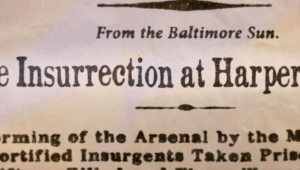
Harpers FerryThe final episode of The Abolitionists aired this week on PBS. The entire three-hour documentary is now available online here (Part 3 begins at the 1:40 mark). A full transcript is also available. Kenneth Owen and Jonathan Wilson previously discussed the first two episodes for The Junto. Today, we discuss the final hour.

Jonathan Wilson:

We’ve been fairly hard on The Abolitionists thus far, so I’m happy to say I thought the final chapter of the film is the strongest, both historiographically and dramatically. This episode reflects recent scholarship on slave rebellions, and on John Brown in particular, by meditating in a fairly sophisticated way on the uses and languages of violence.

Continue reading

Then, Thenceforward, and Forever Free

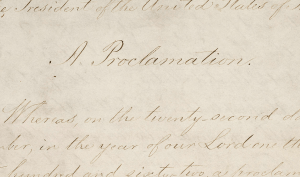
emancipationproclamationWe can’t let 2013 begin without marking the 150th anniversary of the Emancipation Proclamation, which Abraham Lincoln issued on January 1, 1863.

Harold Holzer describes the anxiety many Americans felt on that day as they waited for confirmation of the act. Allen Guelzo weighs Lincoln’s legal options. Annette Gordon-Reed discusses the document’s significance. Eric Foner discusses what it did–and did not do. Continue reading

The Week in Early American History

TWEAHHappy New Year! A brief post today, and then the Junto will take a few days to observe the transition from 2012 to 2013 (before most of the members head to New Orleans for the AHA conference). Enjoy these reads!

Continue reading

The Week in Early American History

TWEAHWelcome back for week two! Things will be going quiet around the Junto for the next few days over Christmas, and on behalf of the entire Junto, we want to wish you a happy holiday. In the meantime we have a few links to tide you over when you need a few minutes to browse the internet.

Continue reading