François Furstenberg. When the United States Spoke French: Five Refugees Who Shaped a Nation. New York: Penguin, 2014.
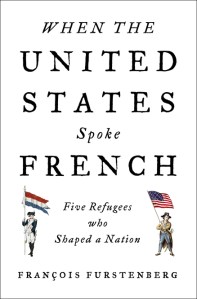 On the Fourth of July, 1794, two former members of France’s Constituent Assembly gazed from a window across New York’s Bowling Green. Both had arrived in the United States just that year. Back in 1789, they had helped to launch a revolutionary movement for liberal and constitutional reforms. But as the Revolution grew ever more violent and threatened to destroy them, they fled France. The United States, they thought, would be a suitable refuge: the republican spawn of the British government whose constitution they so admired, the new nation whose Enlightenment principles would guard them from the threats of the Parisian mob. They must have been unnerved to see “a host of pro-French radicals” marching towards them that day, the rabble-rousing Girondin ambassador Edmond-Charles Genet at the fore, “singing the Marseillaise and other republican songs,” and hurling insults up to the windows where the émigrés stood watching (80). Continue reading

 I’ve never met anybody, living or dead, who fits their name quite as well as Peregrine Foster did. I encountered Peregrine in the papers of his brother, Dwight Foster, at the Massachusetts Historical Society, where I was looking for compilations of meaty correspondence that depicted land speculators at work. Peregrine was the youngest of three; his older brothers were Congressmen from Massachusetts and Rhode Island. Peregrine, though, wasn’t destined for such prominence.
 The Junto