 Impostor syndrome comes in many forms in academia, and this is how it comes for me: I shouldn’t be a doctor, because I never wrote a dissertation. I just wrote a book. It’s not that I regret the choice. But since that book came out, I’ve had the chance to think about what can be gained, and what lost, by writing your dissertation as a book. This is not a pro-con list. It is a pro-pro list. The hitch is, you can only pick one. Continue reading
Monthly Archives: October 2017
A Short Ode to Slow History
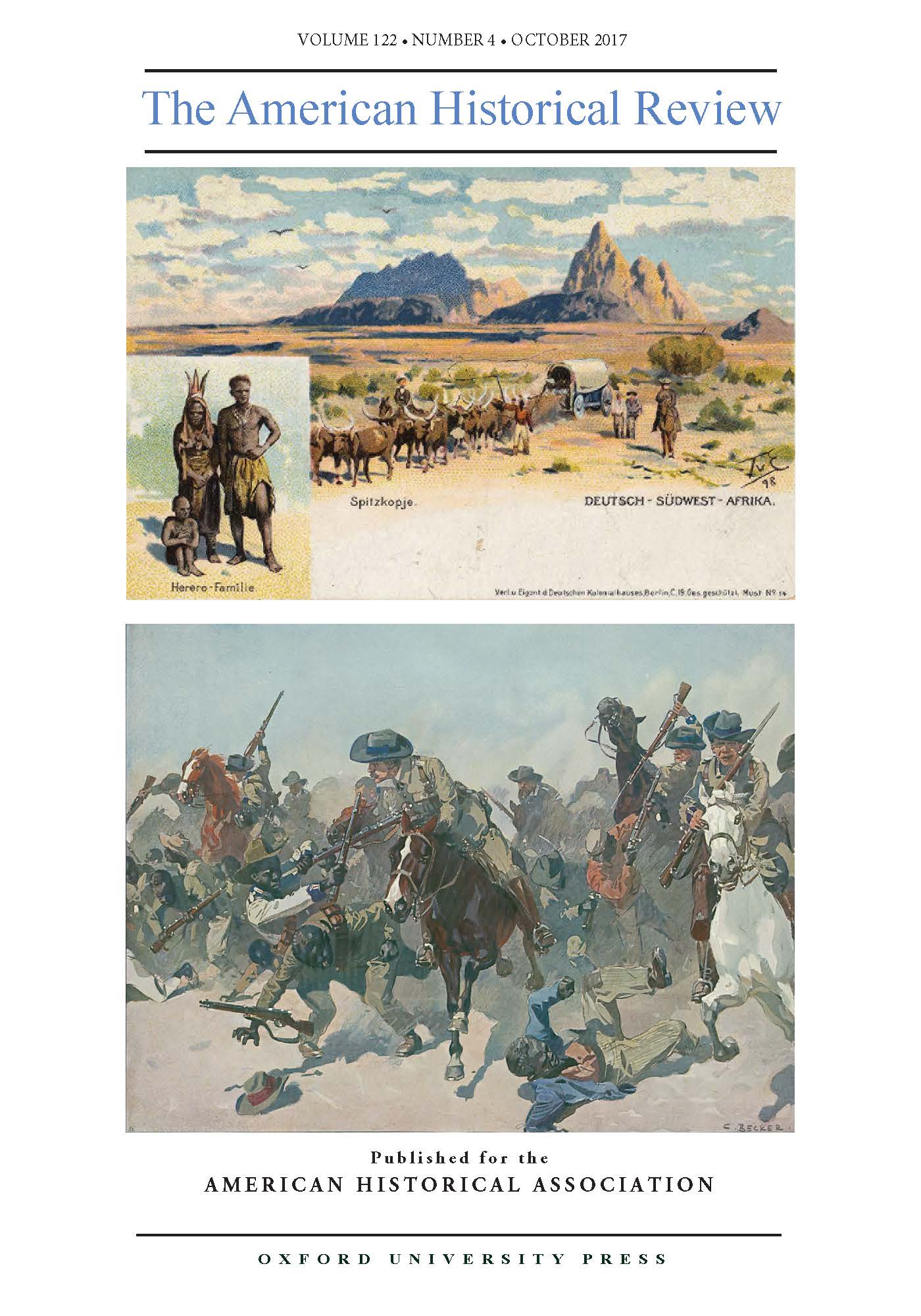 An article just came out in the American Historical Review’s October issue that should be on the radar for anyone interested in early American history: Holly Brewer’s “Slavery, Sovereignty, and ‘Inheritable Blood’: Reconsidering John Locke and the Origins of American Slavery.” In it, Brewer connects Locke’s criticism of absolutism with an opposition to inheritable slavery, thereby casting our understanding of democracy, capitalism, and slavery in an entirely new light. Continue reading
Did Hamilton Write Too Much For His Own Good?
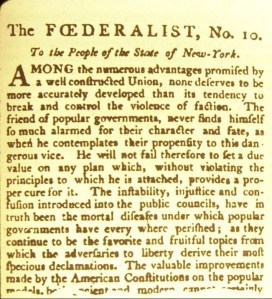 Hamilton wrote … the other FIFTY-ONE!
You probably know that line about the Federalist from the Act One finale of Hamilton, “Non-Stop,” in which Aaron Burr repeatedly asks Hamilton, “how do you write like you’re running out of time?” In the musical, his indefatigable pen is treated as a virtue (and yes, I have at times listened to the number on repeat to motivate my own writing). By contrast, scholars frequently point out that the eighty-five Federalist essays were not widely reprinted when they were first written in late 1787 and early 1788, even if they have since garnered attention as a clear statement of the views of (some of) the Founders on the meaning of the Constitution.[1]
Guest Post: George Washington’s Mausoleum: Congressional Debates Over the Work of Monuments
Jamie L. Brummitt is a Ph.D. Candidate in American Religion at Duke University and an online instructor for the Department of Philosophy and Religion at the University of North Carolina Wilmington (UNCW). Her dissertation “Protestant Relics: The Politics of Religion & the Art of Mourning” examines the lively relic culture that thrived in political and religious life of the United States from the 1770s to 1870s.
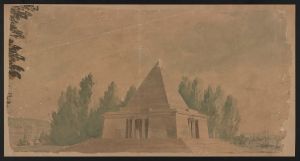
Benjamin H. Latrobe, Watercolor, ink, and pencil of the proposed Washington mausoleum, c. 1800, Library of Congress.
If the recent acts of iconoclasm in Durham and Charlottesville have taught us anything, it may be this: monuments matter. They matter not just in an ideological sense, but in a material sense. Monuments work as material objects because they embody people, memory, and ideas for better or worse. This post examines the proposed construction of a mausoleum for George Washington’s remains by Congress. The proposed mausoleum was entangled in debates about politics, finances, and the material nature of monuments. Many congressmen argued that a monument to Washington should work with his remains to transfer his virtues to Americans. Continue reading
 The Junto