Browne, Surviving Slavery in the British Caribbean (Philadelphia: University of Pennsylvania, 2017)
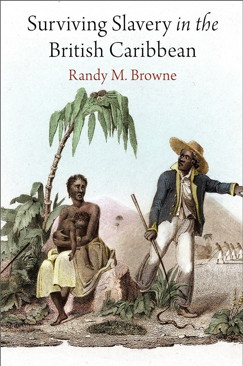
In the early Americanist community’s conception of #VastEarlyAmerica we constantly attempt to push the boundaries of what and where early America is. Randy M. Browne’s Surviving Slavery in the British Caribbean will appeal to proponents of a vaster early America in part because it pushes the geographical limits of early America. Browne’s study of slavery in Berbice (present-day Guyana), takes his readers to one of the most understudied slave societies in the Americas, to understand how enslaved Berbicians attempted to survive their bondage from the beginning of the nineteenth century in the Dutch period, to 1834 when British slavery ended. This is an important distinction from other studies of slavery which focused on understanding and fighting against notions of “agency” and “resistance” such as Marisa Fuentes’ prize-winning Dispossessed Lives: Enslaved Women, Violence, and the Archive, and Vincent Brown’s 2009 American Historical Review article “Social Death and Political Life in the Study of Slavery,” among others [1]. By contrast, instead of highlighting the voices of those in open rebellion, Browne focuses on those whom attempted to better their situation despite remaining under the yoke of bondage. Browne does this by accessing one of the most bountiful, yet underutilized, archival records of the voices of enslaved people [2]. Browne mines information about how enslaved Berbicians attempted to survive and carve out lives in one of the most oppressive slave regimes in the Americas. Whether describing the use of obeah as a spiritual defense mechanism to sustain themselves through the institution of slavery, the use of Black slave drivers, or how enslaved women and men attempted to sort out marital and partner discourses, Browne adeptly traces how enslaved Berbicians attempted to live, and most importantly, to survive, slavery. Continue reading
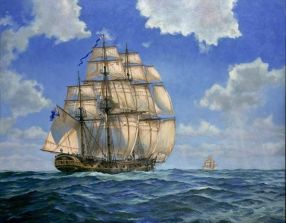 Black men in early America strived for masculine recognition in their society which did not provide many opportunities for Black men to publicly present themselves as men. In 2007, through The William and Mary Quarterly, maritime historian W. Jeffrey Bolster published “Letters by African American Sailors, 1799-1814,” which is useful in examining how Black men performed masculinity to not only provide for themselves and their families, but also to provide opportunities to be recognized as men. In my first post for The Junto, I decided to focus on the life of one of the Black sailors involved in the letters named Jacob Israel Potter. As an early nineteenth century impressed, or captured, Black sailor from Lewes, Delaware by the British Royal Navy, conceptually speaking, the parameters of freedom were far different for him as a person of African descent than someone white. Generally, Black freedom was always in tension with Black mobility. Scholars like Elizabeth Pryor examine this tension in the lives of Black antebellum activists from the late 1820s until just before the Civil War, but this post, in part, examines this tension with the added caveats of how Black masculinity and Black patriotism coincided with this tension as well.[1]
 The Junto