
Interviews with Historians: Edwin G. Burrows

Edwin G. Burrows, Brooklyn College

Note: This post initiates one of our first special features, “Interviews with Historians.” The series is meant to give established historians a chance to discuss their work and share their thoughts on a range of topics with the next generation of early Americanists. The Junto would especially like to thank Ted Burrows for agreeing to be the subject of the series’ first interview.

Edwin G. Burrows is the Pulitzer-Prize winning co-author of Gotham: A History of New York City to 1898, a narrative history covering the city’s founding by the Dutch through consolidation. After receiving his BA from the University of Michigan in 1964, Burrows received his PhD from Columbia University in 1972, where he worked with Eric McKitrick. Soon thereafter, he took a position in the History Department at Brooklyn College, where he has remained for the last forty years. Over the course of two decades, he co-wrote Gotham: A History of New York City to 1898 with fellow Columbia PhD, Mike Wallace, which won them the Pulitzer Prize in History in 1999. In 2008, his second book, Forgotten Patriots: The Untold Story of American Prisoners During the Revolutionary War, was published by Basic Books and won the 2009 Fraunces Tavern Museum Book Award for the best book written each year on the American Revolution. In the interest of full disclosure, Ted served as my “faculty mentor” in the CUNY Baccalaureate Program for Unique and Interdisciplinary Studies. Continue reading
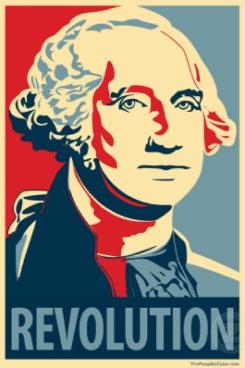
The Founders, the Tea Party, and the Historical Wing of the “Conservative Entertainment Complex”

Following the recent election, much has been made of the alternative reality created by the “conservative entertainment complex.” However, conservative media has not only created its own contemporary reality; it has also created its own historical reality, through what one might call the historical wing of the conservative entertainment complex.

In recent years, men like David Barton, Bill O’Reilly, and Glenn Beck, among numerous others, have written a number of books on eighteenth-century figures and events. But though they claim to be getting their principles directly from “the founders,” what they are really doing is giving their principles to the founders and the eighteenth century, more generally. This revisionism, promoted by conservative think tanks, was lapped up by hardcore conservatives and perhaps no group of people has been a more receptive audience than those who identify themselves as supporters of the Tea Party. Continue reading

Jeffersongate: The Case of Henry Wiencek

On October 16, Farrar, Straus and Giroux published Henry Wiencek’s third book, Master of the Mountain: Thomas Jefferson and His Slaves. His previous works both dealt with slavery, most notably his well-received An Imperfect God: George Washington, His Slaves, and the Creation of America. By contrast, his latest work has come under fire from leading Jefferson scholars around the country. Within days of the book’s release, highly critical reviews by academics appeared in online magazines. These reviews started online exchanges that have played out over the last two months and continue to do so.

Historians much more up to the task than myself—including Annette Gordon-Reed, Jan Lewis, and Lucia (Cinder) Stanton—have called into question Wiencek’s use of sources (both primary and secondary), his overall interpretation, and his motives. Therefore, I will not recapitulate all of them here. I have included a chronology with links to all the relevant articles below, with J.L. Bell’s posts at Boston 1775 providing excellent summaries of the most contentious points. Instead, I want to touch on two things: the main part of Wiencek’s argument and how it reflects his broader approach to history and the effects of Wiencek’s treatment of the historiography, both having to do with the larger relationship between popular and academic history. Continue reading