Digging Out My Cannibal Girl Hat

Jane

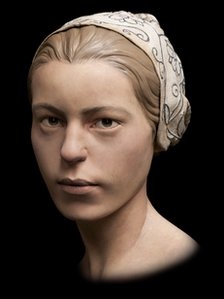
A reconstruction of the skull of a 14-year-old girl that researchers have named “Jane.”

I have some initial thoughts on new reports of cannibalism at Jamestown, so I’ve cross-posted them from my personal blog.

So, funny story. When I first submitted my article on cannibalism and the Starving Time at Jamestown to the William and Mary Quarterly, the piece strongly argued against any occurrence of cannibalism. When I got my readers’ reports back, Editor Chris Grasso pointed out that I didn’t really have the evidence to convincingly make that claim. He said that he’d accept the article only if I agreed to temper the argument—which was really fine with me because the main point of the essay was to ask why the stories of cannibalism mattered, not to argue for or against the existence of cannibalism in colonial Virginia. Continue reading

The Week in Early American History

TWEAHA DC-based company with the email address coolhistory13@gmail.com has posted an open casting call for a “history based reality TV show.” What could go wrong?

Do you work on disability studies? Early American Literature is running a special issue, and calling for contributions from “historians, literary critics, art historians, musicologists, and other early American scholars.” Continue reading

Junto March Madness CANCELLED! (Now with an update)

We at the Junto are sad to bring news this morning that our amazingly popular if rather silly March Madness competition is no more. We’ll leave the existing posts up for now, but there’ll be no more posts, no more voting, and therefore no more surprise upsets. Over the weekend, we received a communication from the law firm of Prilo & Foal, acting for a New York publisher that we are unable to name. It turns out our little competition may be in breach of some competition and advertising laws – to be honest it’s all a bit beyond us, but suffice to say it doesn’t seem worth getting into any trouble over a bit of fun.

Continue reading

Guest Post: Things Colloquial: Material Culture at the 2013 Conference of the Society of Early Americanists

Today’s guest poster, Zara Anishanslin, is Assistant Professor of History at the College of Staten Island/City University of New York.  She received her PhD in the History of American Civilization at the University of Delaware in 2009, and from 2009-2010 was the Patrick Henry Postdoctoral Fellow in the Department of History at Johns Hopkins University. She’s at work on her first book, Embedded Empire: Hidden Histories of Labor, Landscape, and Luxury in the British Atlantic World (Yale University Press, forthcoming).  Embedded Empire uses a single object—the portrait of a woman in a silk dress—and the four people who made it (the textile designer, the silk weaver, the colonial merchant’s wife, and the painter), to tell transatlantic material histories that challenge traditional narratives of emulative consumption.  She also serves as Co-Chair of the Seminar in Early American History and Culture at Columbia University.

Savannah is one of those southern cities where historic atmosphere and charm drape over everything like Spanish moss on live oaks. But amidst all this atmospheric charm, one of the sights I remember most was a distinctly uncharming thing: the desiccated body of a dead squirrel on a tray, tucked away in the attic of the Davenport House. I visited iconic Davenport House because it was the site of the Material Culture Colloquium at this year’s Society of Early Americanists’ conference.  (For a report on the conference, see Rachel Herrmann’s blog post).

Continue reading

The Week in Early American History…Now with Random Headings!

TWEAHOn to the links (and headings)…

Historical Happenings

Did Benjamin Franklin invent the mail-order catalog (on top of everything else)? Wendy Woloson investigates for Bloomberg’s Echoes blog.

Most of our readers know the radio show BackStory. This week, its eclectic “sister” show from the Virginia Foundation for the Humanities, With Good Reason, has posted the audio for an early American episode. “Red Ink” features Drew Lopenzina on Native American literacy, Turk McCleskey on law in the Virginia frontier, and Bonnie Gordon and Emily Gale on the music of early America.

According to the Boston Globe, amateur genealogist Nathaniel Sharpe has traced the word “scalawag” to an Anti-Mason in Batavia, New York, circa 1832.

When did America see its first St. Patrick’s Day parade? The N-YHS has a contender. Continue reading

The Historian’s Lunch

Congratulations, readers: you’ve made it to spring break! This post is written for everyone about to embark on short archival research trips (but that doesn’t mean you have to skip over it if you’re stuck in one place). I’ve always found that while I’m researching, it’s nice to have an idea of what food places are nearby for those lunchtime moments when I emerge, ravenous, from manuscript rooms around the country. Continue reading

A Report from Savannah

This last weekend Juntoist Glenda Goodman and I attended the Society of Early Americanists’ biennial conference in Savannah.

First things first: have you been to Savannah? It’s lovely, and you should go immediately if you haven’t made it there yet. It’s eminently walkable, and everywhere you ramble you find pretty squares with statues, intersecting streets overhung with Spanish moss.

The walkability factor helped a lot, as there were quite a lot of great panels to capture my attention during the run of the conference; it was nice to be able to pop out for lunch, and to get back (mostly) in time for afternoon panels. Continue reading

The Historian’s Appetite

Hello, world.

I am slowly becoming accustomed to the feeling of having defended my dissertation, and reacquainting myself with the idea that it’s okay to take a day off here and there. Earlier this week I prepped and served pho, a Vietnamese noodle soup that takes two days to prepare.

I spent time earlier this month exploring a new cookbook, The Smitten Kitchen Cookbook, by Deb Perelman, of Smitten Kitchen blogosphere fame.

I came to the field of food history in part because I love food—cooking it, eating it, and sharing it with others—a love which has, at times, demanded that I stretch my knife skills, my ability to multitask, and my willingness to fail. Continue reading

Some Thoughts on Teaching: An Interview with James H. Merrell

I first met Jim Merrell in the spring of my sophomore year at Vassar College, when I registered for his Revolutionary America class. Over the next two and a half years I took several more courses with Mr. Merrell (professors at Vassar go by “Mr.” or “Ms.,” rather than “Dr.” or “Professor”), where I received multi-page responses to my essays, and comments on my research papers with words like “Huzza!”

Eventually, I began work on my senior thesis, which he kindly agreed to supervise. During the course of that year he met with me weekly to check on my progress with research and writing. His feedback was thoughtful but tough—after receiving his comments on the first full draft, I recall needing to go to the gym to run, lift, and then swim before being able to read them calmly. His assurance “that the draft gets critical treatment that is closer to graduate school than to first or second year college. (Huzza, sez you!)” should indicate the substance of his remarks [1]. Continue reading

#AHA2013 Open Comment Thread

Some of us here at The Junto are headed to the American Historical Association’s annual meeting in New Orleans today. We thought about doing one post, but then we thought it’d be fun to hear your AHA impressions, too. So we’re making this an open comment thread.

Do you want to plug your paper? Are you a first-time AHA attendee? Did you hear about something new afoot in the world of early America? More broadly, did you find any thought-provoking panels on teaching, publishing, or digital history?

Think of this thread as a place to post preliminary thoughts on the conference. We’d love to hear about your experiences in New Orleans.