 Thanks to the Comte de Buffon’s comprehensive Natural History, every European in the eighteenth century knew that the American environment was conducive only to degeneration. Still, Buffon admitted, “though Nature has reduced all the quadropeds of the new world, yet she has preferred the size of reptiles, and enlarged that of insects.” As his Dutch colleague Cornelis de Pauw put it, giant insects and venomous snakes “so unhappily distinguish this hemisphere” from the more hospitable side of the Atlantic.[1] Leaving aside insects for the moment, reptiles—and especially serpents—have always had a powerful symbolic valence. In the American context, the ambivalent use of the reptile shows up some of the complex relationship between the colonists’ natural world and their political imagination.
Author Archives: Tom Cutterham
Wood & Holton on the Constitution
 Was the purpose of the constitution to protect democracy from being ruined by the people or to protect commerce from being ruined by democracy? This was one of the questions put to Gordon Wood and Woody Holton in a debate held a few weeks ago at the University of South Carolina. A full video of the event has just been released on YouTube, and is embedded below. For anyone familiar with the work of these two historians, the debate will constitute a useful recap of the distinction between their two interpretations of the origins of the federal constitution. And for others, I hope it might be a kind of teaser for their excellent books! Continue reading
Litchfield Law School and the Revolutionary Elite
 Joel Barlow and Noah Webster graduated from Yale together in 1778 with little sense of what they might do next. Their experience will be familiar to graduates of our own day, except, of course that it was in the middle of a Revolutionary War. “We are not the first men in the world to have broke loose from college without fortune to puff us into public notice,” Barlow wrote to Webster. But if ever virtue and merit were to be rewarded, he went on, “it is in America.”[1] Both men would have their faith in America sorely tested over the following decades, as they struggled to gain entry into established social elites that were themselves experiencing tension and transformation. Continue reading
“Barbarities, Extortions and Monopolies”
 American colonists’ protest against the 1773 Tea Act involved more than just the Boston Tea Party; and it was provoked by more than just a tax. What sharpened the edge of colonial frustration was the short shrift given to American business interests in the balancing-act of imperial administration—and the triumph, by contrast, of the East India Company. American merchants and smugglers were the big losers in a larger effort to bail out the struggling corporation. As John Dickinson put it in his second “Letter from the Country,” the British policy aimed “not only to enforce the Revenue Act but to establish a monopoly for the East India Company, who have espoused the cause of the ministry; and hope to repair their broken fortunes by the ruin of American freedom and liberty!”[1] Continue reading
Manco Capac and the Global American Founding
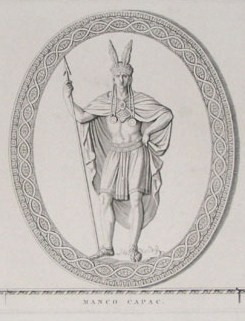 Everyone’s thinking more globally these days, historians included. But constructing a historical imagination that encompasses the whole planet isn’t only a project of the twenty-first century. The American Revolution took place in an age of global exploration, commerce, and empire. When people wrote and thought about the new nation’s founding, they didn’t look just to Europe and the classical world for connections and comparisons, but to Asia and South America as well. Writers were eager to show that the context in which they understood American events was a global one. Take for example the career of Manco Capac, founding father of the Inca kingdom of Cuzco. Continue reading
The New Left’s Usable Past

Recently, the USIH blog has been debating what historians mean by “a usable past,” and whether that concept is, well, useful. It reminded me of a clash of views from fifty years ago, which has always struck me as a defining expression of the tension at the heart of the New Left, and perhaps the historical enterprise itself: Eugene Genovese’s argument with Staughton Lynd.
In Intellectual Origins of American Radicalism, Lynd gave a provocative summary of his goals. “I am less interested in eighteenth-century radicalism than in twentieth-century radicalism. […] The characteristic concepts of the existential radicalism of today have a long and honourable history. Acquaintance with that history may help in sharpening intellectual tools for the work of tomorrow.”[1] He was, in other words, presenting a usable past; not a false one, but one constructed for the purpose of the present. Continue reading
An Omohundro Conference Recap
 This year’s annual meeting of the Omohundro Institute for Early American History and Culture was hosted with panache by Philip Morgan at Johns Hopkins University. It was apt that it took place in Baltimore, the birthplace of Ron Hoffman, whom the conference honoured as he steps down from a long tenure presiding over the institute. At the closing roundtable, a number of senior scholars movingly—and in some cases hilariously—recounted their experiences as Ron’s colleagues and friends, and paid tribute to his work as editor of the Carroll papers and historian of the Revolutionary war and its dissenters. Tongue firmly in cheek, Ron responded to the tribute manfully, by quoting Charles Carroll’s response to a biography of himself: what you have said, he told the biographer, makes me seem a much greater man than I ever believed, yet you have said nothing that is not absolutely true. Continue reading
The Week in Early American History
 Let’s get to the links…
Thomas Hobbes and Post-Revolutionary American Citizenship
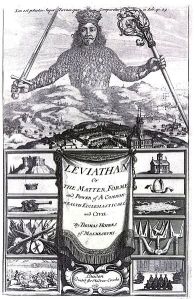 “Considered broadly,” says Douglas Bradburn, “the problem of ‘citizenship’ remains one of the most compelling contexts to attempt to understand the process, limits, and meaning of the American Revolution.”[1] This post is a brief exercise in the problem of American citizenship in the immediate post-revolutionary era (and a note towards an article-length project on international law in the new republic). It begins with the dilemma of dealing with the fallout of a civil war like the War of Independence, and it follows the reception of a slightly unexpected figure in the history of American political thought: Thomas Hobbes.
 Continue reading
Charles Beard: A Conference Recap
 In spite of the unrestful Beardian ghost recently invoked by Saul Cornell, with which I introduced the topic of the Charles Beard, Economic Interpretation and History Conference here a few months ago, not every participant was convinced, going in, that Beard was really worth the trouble of a two-day international conference. By the end, we were able to say that whatever we thought of Beard himself, his work could certainly provoke plenty of insight and discussion. It would be wrong to say the event was a celebration of Beard, or held in his honour. Instead, like his vision of history, it was characterised more by conflict than consensus–at least, if friendly scholarly disagreement really counts as conflict. Continue reading
 The Junto