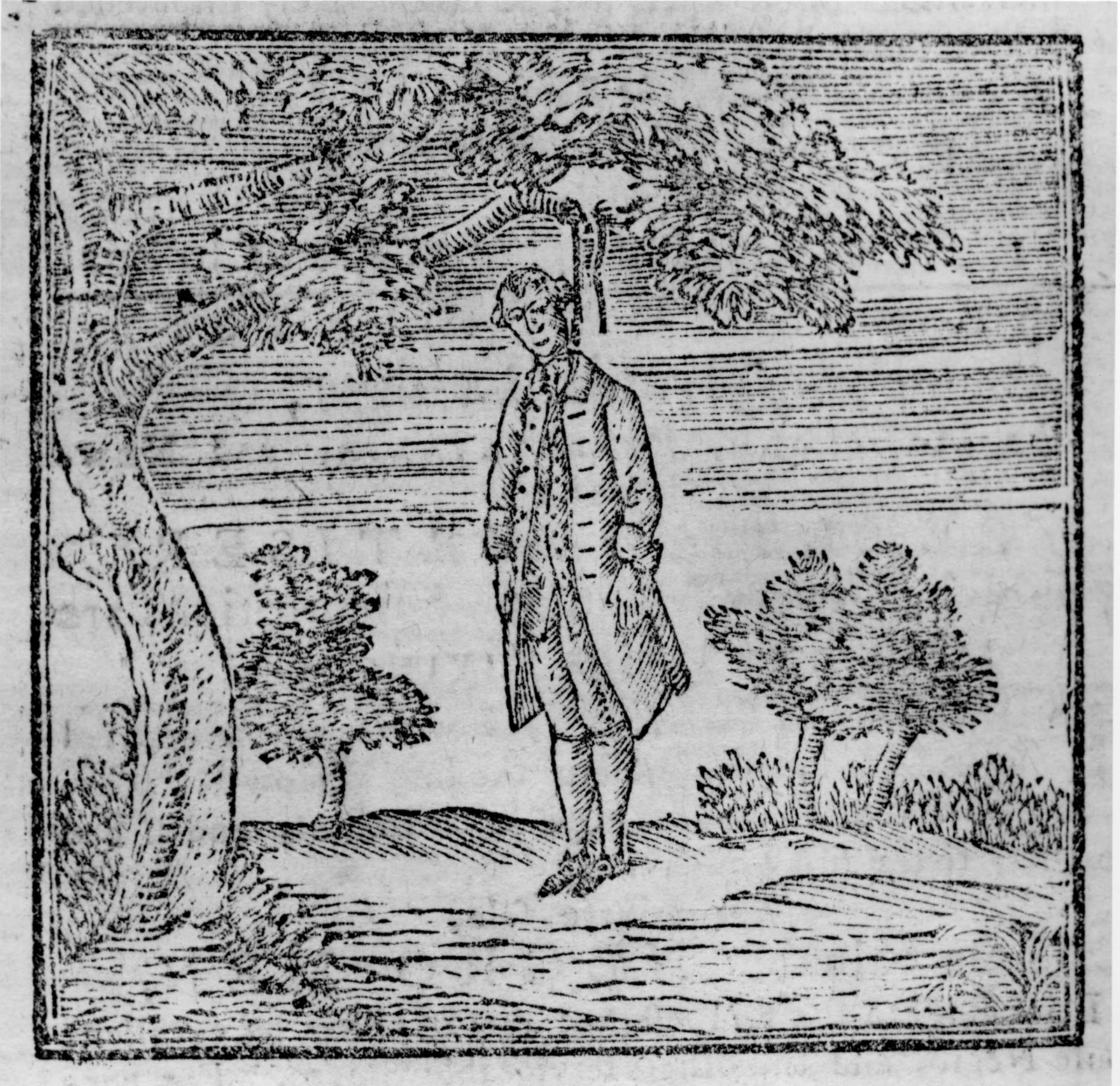
A fabulous but somewhat ominous engraving of Rivington hanging in effigy from a tree in New Brunswick, N.J.
Earlier this year, I wrote about the printer of the New-York Journal, John Holt. I focused on his newspaper’s mastheads, arguing that those mastheads were an effective medium through which he could shape political ideas and, subsequently, mobilize support. What I did not fully explain, however, was that he was not the only printer in New York City to change his masthead—James Rivington did it, too.[1] Continue reading
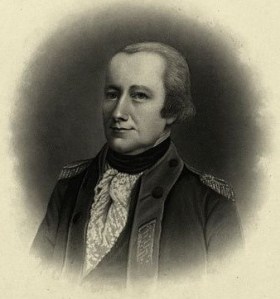 On April 25, 1775, hundreds of New Yorkers acknowledged receiving “a Good firelock, Bayonet, Cartouch Box, and Belt.” Six days after the Battles of Lexington and Concord, and three days after Israel (Isaac) Bissell told New Yorkers the news, Alexander McDougall mobilized support against the British. The War of American Independence had reached New York and, with hundreds of supporters, McDougall was ready to fight.
 The Junto