Just How Free Was Religious Life in the Early American Republic?

Religious liberty, perhaps, is the key legacy of the Revolutionary generation. The new United States was a society where slavery was a growing economic force, gender inequality was becoming entrenched, and the new nation’s expansion relied on the exploitation and expropriation of Native Americans. If there was one freedom, however, on the march in the early republic it was religious freedom. The progress of religious freedom in the United States was also the progress of religion itself. “[T]he number, the industry, and the morality of the priesthood and the devotion of the people have been manifestly increased by the total separation of the Church from the state” noted James Madison, that famous advocate of religious liberty, in an 1819 letter.[1] Religious freedom, then, is the American freedom. This has been the animating assumption behind most scholarship on the religious development of late eighteenth and early nineteenth centuries. Continue reading
The Problem of Virginia’s Colonial Establishment

I’ve been reading, writing, and thinking about Virginia’s colonial Anglican establishment since I entered graduate school (back when the Galactica had just uncovered the fate of Earth and Lehman Brothers was still short-selling subprime mortgages).  This work led me to decide to write a dissertation on the religious politics and fate of the colonial establishments in the post-Revolutionary Chesapeake.  Beginning the real work on my dissertation, however, has hammered home one important insight: despite all that reading I still don’t have a real sense of what the hell was going with Virginia’s colonial establishment. Continue reading

Intersections upon a Dark River

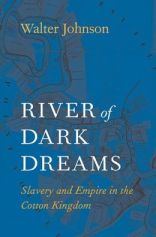
Walter Johnson’s River of Dark Dreams is the best big book on slavery I have ever encountered. This is not faint praise; there is some about the subject that causes its best historians—Eugene Genovese, Winthrop Jordan, Kenneth Stampp and more—to write in at bullet-stopping length. Johnson’s volume stands out due to his ability to seamlessly place the history of antebellum slavery at the intersection of three of the nineteenth century’s key themes—imperialism, capitalism, and technological development. He does this, as other contributors to this roundtable have noted, at the sweeping level of the very geography of Mississippi River Valley and at the much more intimate level of the lived experience of enslaved laborers. Continue reading

After Democratization?

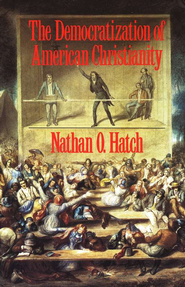
democratizationofamericanchristianityNext year marks the twenty-fifth anniversary of the publication of Nathan Hatch’s seminal The Democratization of American Christianity.[1] Few books have had as wide an influence and impact in my field of the cultural and political history of religiosity in the early American republic. In his masterwork Hatch achieves what most scholars yearn for throughout their entire careers. Democratization crystallized an interpretative scheme (the “democratization thesis”) and shoved its rival interpretation into the historiographical abyss. Continue reading