 We hear a lot about the “canon wars” of the 1980s and 1990s, when conservative (and neoconservative, and Straussian anti-anti-liberal, and pre-New-Left liberal) critics raised the hue and cry against relativizing multiculturalism, which was replacing War and Peace and The Scarlet Letter on college reading lists with just any random thing that wasn’t written by a wealthy straight white man. Or, if you prefer, when left-wing critics advanced the radical notion that women, homosexuals, minorities, and the poor are conscious human beings too. Or when cynical politicians and self-important idealists conspired together to undermine public confidence in higher education and the humanities. Or whatever.
Author Archives: Jonathan Wilson
The Week in Early American History
 In Rome, art restorers have uncovered what they say are American Indians in the background of a 1494 fresco in the Vatican’s Borgia Apartments. Some commentary on the imperial-religious context is available here.
“Unity,” writes Ilan Stavas, “is the great elusive dream of Latin America, and Bolívar is its Don Quixote.” A review of Marie Arana’s new biography of El Libertador reflects on his contradictory legacy in Latin American politics.
The Week in Early American History
We begin this week with topography and geography, both literal and figurative. Continue reading
Call for Links: History Carnival on May 1
 We’re proud to note that the 121st monthly History Carnival, featuring the best recent blogging about all fields of history, will be hosted by Michael Hattem here at The Junto on May 1. We need your help to make it a success. What fascinating, scintillating, disturbing, provoking, amusing, and illuminating things have you seen in history blogs this month? Please let us know using this form. This friendly little form right here. It’s easy and quick to nominate your favorite blogposts.
If you’re not familiar with the History Carnival, more information is available at the main website. The most recent edition of the Carnival was hosted brilliantly on April 1 by Debs Wiles at Got Soil?
Shadows of History in the Boston Marathon Manhunt
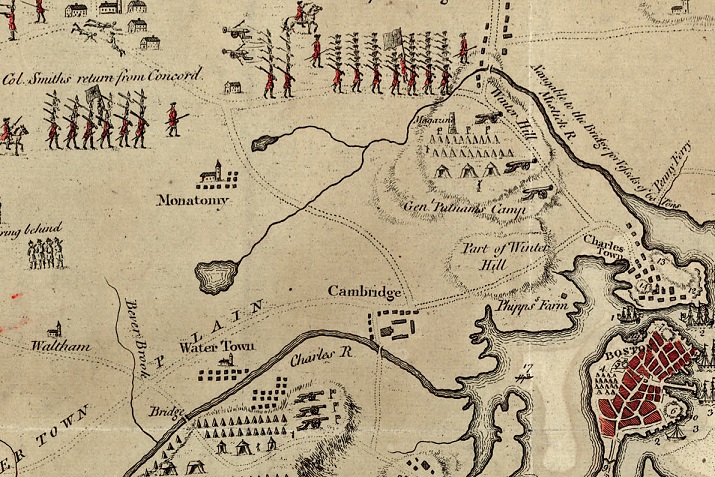 Public radio station WHYY in Philadelphia airs BBC World Update at 5 a.m. on weekdays. So on Friday morning, oddly enough, it was from the British Broadcasting Corporation rather than any domestic service that I heard surprising news from Boston.
During the night, police had chased two bombing (and robbery) suspects through the labyrinthine streets of Cambridge and Watertown, engaging in at least one major firefight along the way. Now the police seemed to be laying siege to a Watertown neighborhood. The reports at that hour were confused and confusing–not to mention frequently wrong. But as the hunt for the surviving terrorist suspect continued during the day, it became clear that the story was also, in several different ways, strangely familiar.
A Library for the Digital Republic: The DPLA Is Launched
 Four years ago, Robert Darnton, historian and librarian at Harvard, wrote in the New York Review that “we [had] missed a great opportunity.” Instead of digitizing America’s print heritage in a public project, perhaps managed by “a grand alliance of research libraries,” the United States had allowed a private corporation to control the scanning and storing of books. Depending on the outcome of federal lawsuits, Google Books would enjoy a virtual monopoly on books still in copyright.
“We could have created a National Digital Library—the twenty-first-century equivalent of the Library of Alexandria,” Darnton wrote. “It is too late now. Not only have we failed to realize that possibility, but, even worse, we are allowing a question of public policy—the control of access to information—to be determined by private lawsuit.”
“The Empire of Romance”: Some Notes on Novels in an Extensive Republic
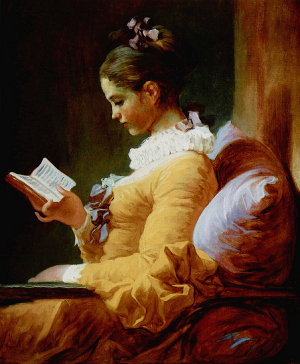 The current issue of the Journal of the Early Republic includes Andrew Cayton’s SHEAR presidential address on the novel’s place in the postrevolutionary Atlantic world: “The Authority of the Imagination in an Age of Wonder.” The essay makes a case for the usefulness of period novels to early-republic historians. Cayton gives us three reasons novels are useful as historical sources:
- “The people we study paid attention to them.” Novels were significant parts of people’s lives, and they illuminate “the shifting structure of discourse and discourse communities” in early-nineteenth-century America.
- “They challenge our preoccupation with categories.” Novels were experiments in defining and redefining people.
- Novels reveal that many people conceived of liberty socially, “as a voluntary location of one’s self within overlapping social networks” (25-26). [1] Continue reading
The Week in Early American History
 This week brings a rich harvest of material on slavery, memory, and public history.
First, we have two fascinating filmed conversations. At the Graduate Center at CUNY, James Oakes talks to Sean Wilentz about his new book, Freedom National: The Destruction of Slavery in the United States, 1861-1865. And at the New-York Historical Society, Harold Holzer speaks with Tony Kushner on the subject of Lincoln (and, of course, Lincoln).
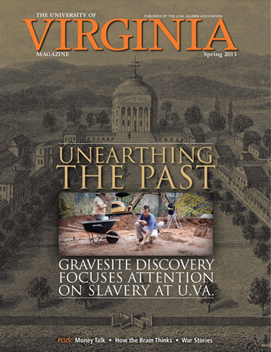
Next, we take a look into slavery at Jefferson’s university. In an article in University of Virginia Magazine and a blogpost for Encyclopedia Virginia, Brendan Wolfe contextualizes a recent archaeological discovery.
In the Washington Post, meanwhile, J. Freedom du Lac reports on Colonial Williamsburg’s difficulty recruiting slave interpreters. And how did 19th-century African American portray their own emancipations? Good interviews Deborah Willis and Barbara Krauthamer about their photographic history.
The Abolitionists Go to War: Part 3
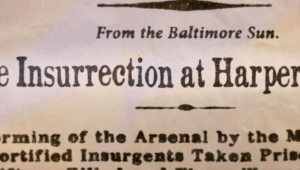 The final episode of The Abolitionists aired this week on PBS. The entire three-hour documentary is now available online here (Part 3 begins at the 1:40 mark). A full transcript is also available. Kenneth Owen and Jonathan Wilson previously discussed the first two episodes for The Junto. Today, we discuss the final hour.
Jonathan Wilson:
We’ve been fairly hard on The Abolitionists thus far, so I’m happy to say I thought the final chapter of the film is the strongest, both historiographically and dramatically. This episode reflects recent scholarship on slave rebellions, and on John Brown in particular, by meditating in a fairly sophisticated way on the uses and languages of violence.
The Abolitionists Ride Again: Part 2
 Last week, The Junto brought you a pair of responses to Part 1 of PBS’s new American Experience documentary on The Abolitionists. Kenneth Owen and Jonathan Wilson were cautiously critical of the first episode–particularly its treatment of religious belief and the activities of less famous abolitionists. Today, they weigh in again with brief responses to the second episode, which aired Tuesday night. (It is still available to watch online; skip ahead to Chapter 8 or the 50:40 mark.) Continue reading
 The Junto