One of the most striking features of the “newest political histories” has been their careful attention to questions of gender. Four essays (for example) in Beyond the Founders, the capstone-cum-manifesto of this particular historiographical moment, deal directly with the political nature of gender identities in the early American republic.[1] The privileged place of gender in these histories makes a great deal of sense–if the goal of the “newest political histories” is to broaden cast of characters in political history and explore the intersection of “cultural” and “ordinary” and “traditional” politics then questions of masculinity, femininity, and sexuality should be central. Gender, along with race, was a key way to demarcate between who was in and who was out of respectable politics in the new nation.
The most productive, and perhaps influential, use of gender as an interpretive lens has been in the political history of women. Many of the earliest works of what could be called the “newest political history,” and those which best exemplify the movement, are histories of women and politics.[2] This generation of historians has shown that women were clear actors in early national politics and print culture–through newspapers, the theater, parades, books, and the salon. Not only were women a direct participant in politics “out of doors” and in print, femininity was deeply politicized in the early national period. In the highly charged politics of the early republic, much was up for grabs–a great deal of prestige and power would be gained (or lost) depending on where the line of respectable political behavior of men and women was drawn. Continue reading

 Warning: Please be advised that there are a few spoilers in terms of the game’s storyline in the fourth paragraph of this post.
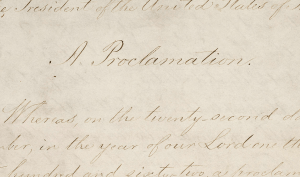 We can’t let 2013 begin without marking
  Among the highlights of my Christmas was receiving Catherine Brekus’s recently-released volume,
  In his recent review of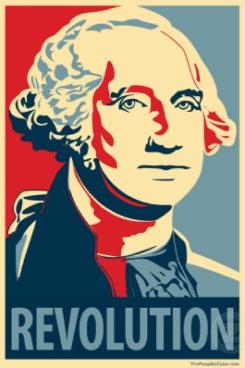

 The Junto