Today’s guest post is from Lindsay Schakenbach, a Ph.D. candidate in history at Brown University. Her dissertation, “Manufacturing Advantage: War, the State, and the Origins of American Industry 1790-1840,” explores the development of the arms and textile industries in the context of national security, diplomacy, and territorial expansion.
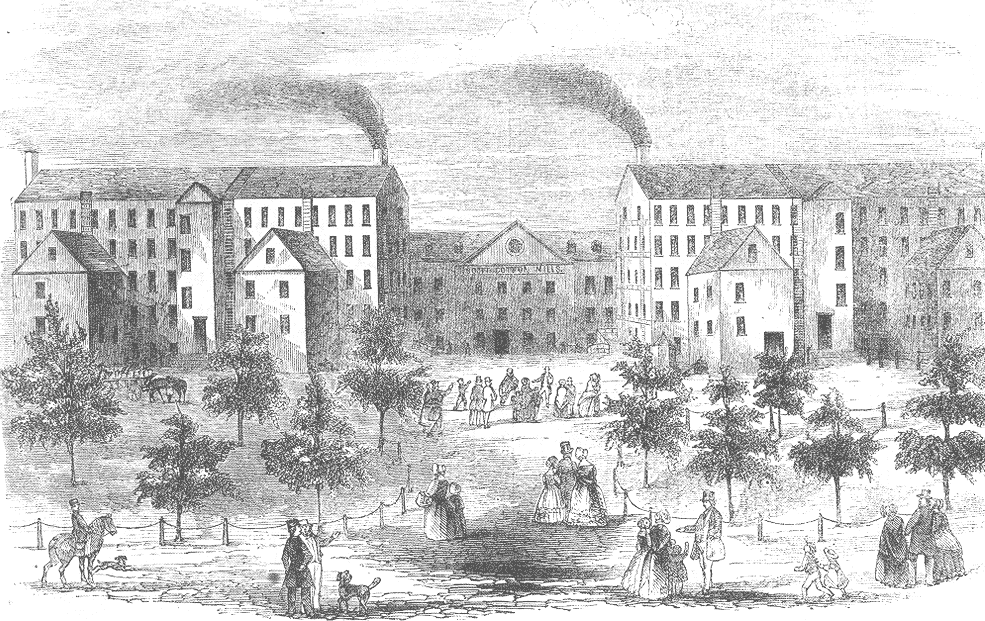 Look through any opinion section of The Wall Street Journal and you’ll almost certainly find condemnations of government intervention in business or a lambasting of the inefficiencies of bureaucratic meddling. Too much government, these commentators say, is bad for the economy. A reexamination of America’s origins as an industrial superpower, however, suggests a different mantra. Take the founding of Lowell, Massachusetts, for example. Even if we debate the birthplace of the American Industrial Revolution–Pawtucket, Rhode Island?, Patterson, New Jersey?–the fact remains that Lowell was the site of the first large-scale integrated factory system in the United States and stands as a symbol of the birth of industrial capitalism. And its rise to prominence depended on federal meddling. Continue reading

 We at The Junto would like to thank everyone who read along with us for the
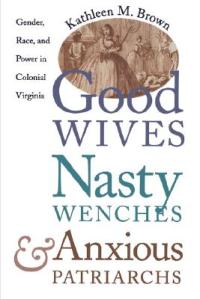 And so we’ve come to the end of the road, a consideration today of the final chapter of Kathy Brown’s Good Wives, Nasty Wenches, & Anxious Patriarchs (the full set of posts is available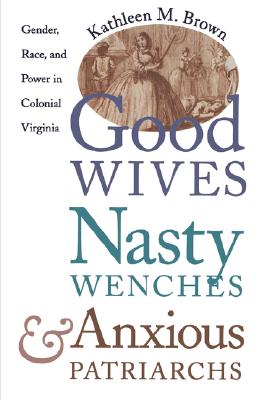

 The AMC series Turn ended its first season last month with mixed reviews. The consensus seems to be that the series, which tells the story of the Culper spy ring during the American Revolution, has a strong cast, good production values, and promising subject matter but ultimately fails both as a drama and as an accurate representation of history.
  The Junto