The Week in Early American History

TWEAHHappy Mother’s Day! Go call your Mom, then come back and take a look at our weekly round-up.
First, in honor of the holiday, one above-the-fold link: Heather Cox Richardson, writing at the Historical Society blog, looks at the origins of Mother’s Day. Hint: it’s not about “people be[ing] nice to their mothers.”

Continue reading

The Week in Early American History

TWEAHIn Rome, art restorers have uncovered what they say are American Indians in the background of a 1494 fresco in the Vatican’s Borgia Apartments. Some commentary on the imperial-religious context is available here.

“Unity,” writes Ilan Stavas, “is the great elusive dream of Latin America, and Bolívar is its Don Quixote.” A review of Marie Arana’s new biography of El Libertador reflects on his contradictory legacy in Latin American politics.

Continue reading

The Week in Early American History

TWEAHWe begin this week with topography and geography, both literal and figurative. Continue reading

The Week in Early American History

TWEAHIt’s that time of the week and it’s my turn to do the roundup, so let’s just get started with some links from the past week or soContinue reading

The Week in Early American History

TWEAHA DC-based company with the email address coolhistory13@gmail.com has posted an open casting call for a “history based reality TV show.” What could go wrong?

Do you work on disability studies? Early American Literature is running a special issue, and calling for contributions from “historians, literary critics, art historians, musicologists, and other early American scholars.” Continue reading

The Week in Early American History

TWEAHHappy Easter and Passover to all celebrating!

With all the excitement around the Junto’s March Madness tournament (we even have a hashtag!), it’s a useful reminder that there are other things going on this week around the blogosphere. Once you’ve found all the Easter eggs (or, if you hid it really well on Monday, the afikoman), sit down and try out a few of these posts and stories.

Continue reading

The Week in Early American History

TWEAHI’d like to start this week’s roundup by reminding everyone that the Junto March Madness begins tomorrow. In case you live under a rock (or—shudder at the thought—have a life outside books and blogs), we here at The Junto are combining two of our favorite things: basketball and historiography. On Thursday, we asked readers to nominate five books each to help fill out NCAA tournament-style brackets. One three-hour Google Hangout later and the brackets were set. Check here for a full explanation of Junto March Madness  and here to download the brackets. Voting in Brackets 1 & 2 begin tomorrow and will continue through subsequent rounds into next week (see John Fea’s predictions here).  I cannot stress enough that this should not be taken too seriously (particularly the “seedings”). The primary purpose of it—unlike the actual NCAA tournament—is not to find a winner; it is to spark discussion between the blog members and our readers.

Continue reading

The Week in Early American History…Now with Random Headings!

TWEAHOn to the links (and headings)…

Historical Happenings

Did Benjamin Franklin invent the mail-order catalog (on top of everything else)? Wendy Woloson investigates for Bloomberg’s Echoes blog.

Most of our readers know the radio show BackStory. This week, its eclectic “sister” show from the Virginia Foundation for the Humanities, With Good Reason, has posted the audio for an early American episode. “Red Ink” features Drew Lopenzina on Native American literacy, Turk McCleskey on law in the Virginia frontier, and Bonnie Gordon and Emily Gale on the music of early America.

According to the Boston Globe, amateur genealogist Nathaniel Sharpe has traced the word “scalawag” to an Anti-Mason in Batavia, New York, circa 1832.

When did America see its first St. Patrick’s Day parade? The N-YHS has a contender. Continue reading

The Week in Early American History

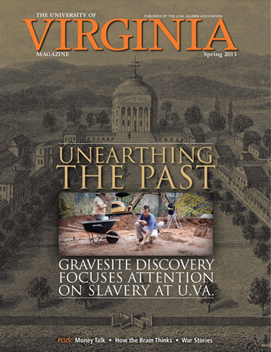
Unearthing the Past - UVA MagazineThis week brings a rich harvest of material on slavery, memory, and public history.

First, we have two fascinating filmed conversations. At the Graduate Center at CUNY, James Oakes talks to  Sean Wilentz about his new book, Freedom National: The Destruction of Slavery in the United States, 1861-1865. And at the New-York Historical Society,  Harold Holzer speaks with Tony Kushner on the subject of Lincoln (and, of course, Lincoln).

Next, we take a look into slavery at Jefferson’s university. In an article in University of Virginia Magazine and a blogpost for Encyclopedia Virginia, Brendan Wolfe contextualizes a recent archaeological discovery.

In the Washington Post, meanwhile, J. Freedom du Lac reports on Colonial Williamsburg’s difficulty recruiting slave interpreters. And how did 19th-century African American portray their own emancipations? Good interviews Deborah Willis and Barbara Krauthamer about their photographic history.

Continue reading