Few issues trouble historians of all stripes more than the disconnect between “popular” and “academic” history. Somewhere in the mists of the recent past the Age of Hofstadter gave way to, at best, the Age of McCulloch and, at worst, the Age of Barton.[1] The waning influence of professional historians in the public sphere particularly troubles the historical blogosphere. The popular-academic history disconnect is something addressed a lot here at The Junto, including with a podcast.
I am, as I said on the JuntoCast episode, particular dour about the possibility of bridging this gap. Academic historians, public historians, and interested members of the public more often than not talk past each other. How each group defines “good” or “useful” history is often so at cross-purposes that it sounds like one side is speaking English, another French, and another Dothraki.[2] My attention was recently drawn to a series of posts by Peter Feinman at New York History, which deeply entrenched my Eeyore-like-sullenness when it comes to these questions. Continue reading
 The Junto has published a number of posts about early America in popular culture and media. Until the last few years, films and television shows about early America have been relatively scarce, outside a number of multi-episode public television and cable documentaries. However, in addition to HBO’s John Adams, there are a number of projects in the works including a television series about the
 Readers will be pleased to note that blog posts might indeed be
  Ed Morgan changed the way historians understood the American Revolution. Over a period of about ten years, from 1948 to 1957, he published three important research articles, a monograph, an essay aimed at a general audience, and a historiographical article, all having to do with the coming of the Revolution. It was an amazing burst of work that elevated Morgan to the upper echelons of American historians. Of course, Morgan had previously worked on Puritanism and would go on to do groundbreaking work on colonial Virginia and slavery. But he made his bones with the American Revolution.
  It’s the middle of the summer, so most of us are hard at work on drafting new syllabi, writing and revising articles, dissertations, book manuscripts (or sometimes all three simultaneously), catching up on reading, and all sorts of myriad tasks that aren’t possible during the academic year.
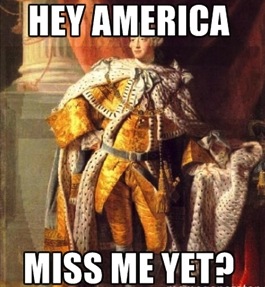 “There’s just one question I have to ask,” said the pleasant young man at the US Embassy, reviewing my visa application. “You are aware that we won, right?”
 The Junto