 If you missed previous posts in our new roundtable series on the history of childhood and youth, click here. Stop by Wednesday for the finale of this roundtable series!
Today we welcome Dr. Meg Eppel Gudgeirsson, expert in nineteenth-century U.S. religious history and childhood. She completed her PhD from the University of California, Santa Cruz in June 2016. Her dissertation, “Perfect Child, Perfect Faith: Raising Children in Nineteenth-Century Communities,” is a study of how four religious communities raised their children in an effort to embed their differing goals and identity in future generations. The United Society of Believers (better know as Shakers), Oneida Perfectionists, Church of Latter-day Saints (Mormons), and Berea abolitionists all created specific communities grounded in their unique interpretations of Christianity in an effort to reform and improve American life through challenging rural and bourgeois notions of family, gender, and race. She is currently working on expanding her research on Berea, exploring the role of children in the community’s goals of integrating education in the latter part of the nineteenth century. Dr. Gudgeirsson is a lecturer in the History Department at Santa Clara University, teaching courses on nineteenth and twentieth-century US, California History, and World History. Continue reading
![Holly+Headshot_2bw[2]](https://earlyamericanists.com/wp-content/uploads/2018/09/hollyheadshot_2bw2.jpg?w=286&h=307) If you missed previous posts in our new roundtable series on the history of childhood and youth, click
If you missed previous posts in our new roundtable series on the history of childhood and youth, click 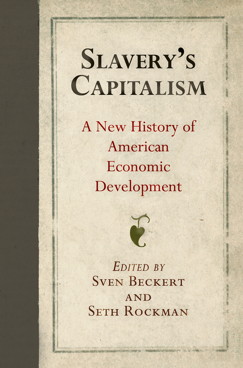 Slavery’s Capitalism offers a tremendous amount of evidence to support what scholars of slavery have long known—that slavery underwrote nearly every aspect of American economic development for over two centuries. These essays provide unprecedented detail about the precise workings of slavery’s role in the rise of American capitalism and will inspire many future research projects. Beckert and Rockman’s introduction is an ambitious piece of historiography, drawing together a diverse array of subfields and intellectual debates. Work such as Cedric Robinson’s Black Marxism and Ian Baucom’s Specters of the Atlantic, while key texts for interdisciplinary scholars working on questions of racial capitalism, are not often acknowledged by historians of the “new history of capitalism.” The introduction’s scope makes it an excellent primer for specialists and non-specialists alike. It is the most comprehensive of the recent review essays on slavery and capitalism, yet the breadth of this introduction is not matched by the essays within.
  The world was a strange and startling place for Rip Van Winkle when he awoke from a twenty-year nap in New York’s Catskill Mountains. He had ventured to the woods to find a moment’s peace from “the labour of the farm and the clamour of his wife.”
 The Junto