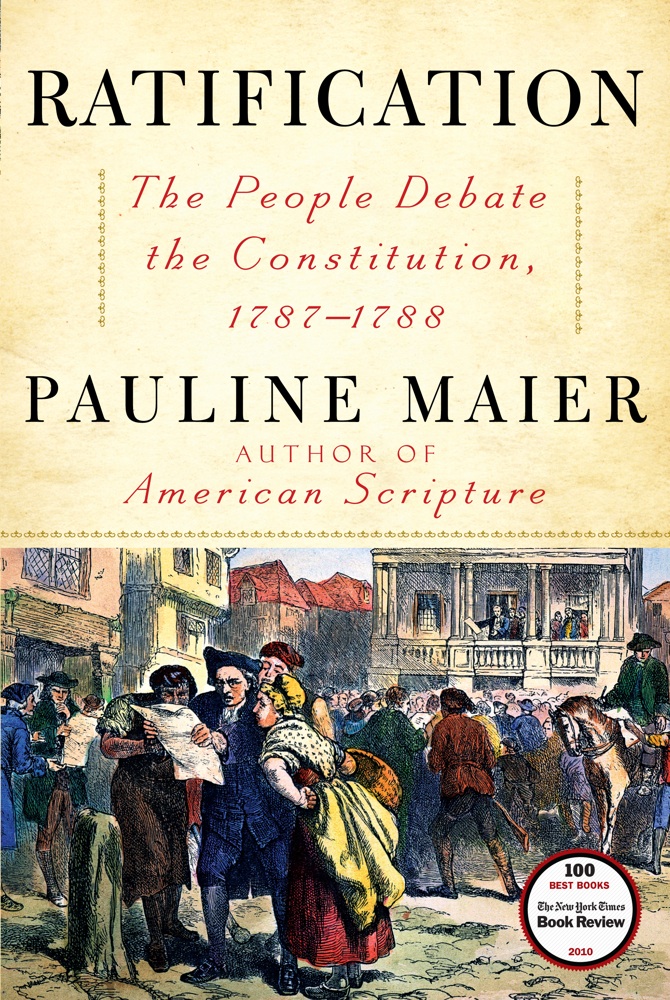
 The ratification of the Federal Constitution is a notoriously difficult historical event to categorize. On the one hand, it is a watershed moment; the creation of a consolidated federal government with extensive power is a clear break with the immediate post-Independence traditions of American governance. Yet at the same time, it is traditionally seen as the final achievement of a revolutionary generation—the fulfillment of the ideals of the Revolution.[1] Continue reading
Tag Archives: Roundtable
Roundtable: The Legacy of Pauline Maier
As promised back in August upon her untimely passing, this week The Junto will be dedicated to exploring the works and legacy of Pauline Maier. I will forego providing any biographical details since they can be found in The Junto‘s memoriam for Maier here.
 Pauline Maier spent her entire career working on the American Revolution, literally starting her career with the imperial crisis and ending it with the ratification of the Constitution. At each step along the way, she made significant and genuine contributions to our understanding of the Revolution. Whether it was drawing out the transatlantic aspects of the resistance to imperial reform, providing the most readable explication of the radical Whig ideological interpretation, or telling new stories about the ways in which colonists declared independence or citizens debated the Constitution, Maier found an often elusive sweet spot between intellectual history and social history. She took ideas seriously and showed how those ideas played out “on the ground,” beyond just the elites. From that mix, she developed a brand of political history in which popular participation was not just incorporated into the narrative; it was central. Indeed, that popular participation defines the Revolution in the canon that is Maier’s work. And so while Bernard Bailyn and Gordon Wood may have had higher academic profiles, it was Maier who best fulfilled the potential of the “Harvard interpretation,” thereby making her work more relevant to new generations of historians than that of either Bailyn or Wood. And, to me, that continuing relevance is the core of the legacy of Pauline Maier. Continue reading
Roundtable: The Legacy of Edmund S. Morgan
This is a very special week at The Junto. Following last month’s sad news of the passing of one of our field’s true giants, Edmund S. Morgan, we all agreed that a weeklong retrospective on his remarkable career was in order. Hence, this week, each day will be given over to a specific work or theme to which Morgan made important contributions during his four-decades long academic career. We hope that this roundtable, being written by graduate students and junior faculty, will provide a snapshot of Morgan’s continuing relevance to new generations of early Americanists almost three decades after his retirement from Yale University.
E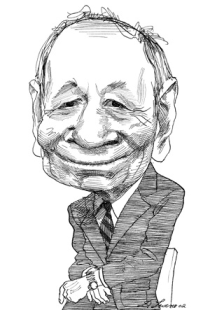 dmund Sears Morgan was born on January 17, 1916 in Minneapolis, Minnesota.[1] His father, Edmund Morris Morgan, was a Professor of Law at the Minnesota Law School, Yale University, Harvard University, and Vanderbilt University. Ed the Younger attended Belmont Hill School from which he graduated in 1933. From there, he left to do his undergraduate work at Harvard. In his second year, he took a course taught by F.O. Mathiessen, his senior tutor, and Perry Miller, whom Morgan called “simply the most exciting lecturer” he had encountered. The experience turned a budding English major into an American history and literature major. Upon graduation, Morgan spent a year at the London School of Economics studying with Harold Laski. Continue reading
A View from Beyond the Valley
 Ben, Mandy, Matt, and Roy have done a marvelous job so far this week summarizing the arguments, the strengths, and a few of the (few) weaknesses of River of Dark Dreams. I therefore want to confine myself to just a few general thoughts, and then focus in on the area where my expertise lies: what this book means for the non-expert in slavery studies. Continue reading
Intersections upon a Dark River
Walter Johnson’s River of Dark Dreams is the best big book on slavery I have ever encountered. This is not faint praise; there is some about the subject that causes its best historians—Eugene Genovese, Winthrop Jordan, Kenneth Stampp and more—to write in at bullet-stopping length. Johnson’s volume stands out due to his ability to seamlessly place the history of antebellum slavery at the intersection of three of the nineteenth century’s key themes—imperialism, capitalism, and technological development. He does this, as other contributors to this roundtable have noted, at the sweeping level of the very geography of Mississippi River Valley and at the much more intimate level of the lived experience of enslaved laborers. Continue reading
Walter Johnson’s “River of Dark Dreams”

Walter Johnson’s River of Dark Dreams is a meditation on the making of the Cotton Kingdom in the nineteenth century American South. The book is rich with the intimacies and delicacies of detail—details that describe the fundamental material circumstances in which enslaved men, women, and children forcibly transformed Native America into cultivated grids of mono-crop culture at the behest of “Manifest Destiny”; details that are gut-wrenching in their vivid depictions of the social relations of white supremacy—the torture, the hunger, the bleeding, and the raping of the enslaved—the malignant, violent underbelly that made and forcibly maintained the Cotton Kingdom; details that connect the smallest common denominators of plantation life, whether measured in lashes (upon flesh), or pounds (of cotton), or any other metric of rule—to the global economy, which itself connected slaveholders and merchant capitalists from the fields and riverbanks of New Orleans to the factories of Manchester and Liverpool. Continue reading
Roundtable Review: Walter Johnson, River of Dark Dreams (Introduction)
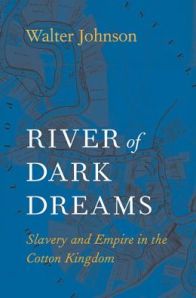 This week at The Junto, we are pleased to offer a roundtable review on Walter Johnson’s recent River of Dark Dreams: Slavery and Empire in the Cotton Kingdom (Cambridge: Belknap Press of Harvard University Press, 2013). Johnson, whose Soul by Soul: Life Inside the Antebellum Trade Market (Cambridge: Harvard University Press, 1999) went far in this year’s Junto March Madness, is the Winthrop Professor of History and Professor of African and African American Studies at Harvard University. River of Dark Dreams is a dense, learned, and sophisticated account of cotton culture, slave society, and global capitalism as experienced in pre-Civil War Mississippi Valley. It has somthing for everyone: race, slavery, capitalism, technology, regionalism, and globalism. As such, this week’s roundtable will offer five reviews from five different authors giving their take on what promises to be a classic text. After my brief overview and introduction, we will post one review each day from Mandy Izadi (today), Matt Karp (Tuesday), Joe Adelman (Wednesday), Roy Rogers (Thursday), Sara Georgini (Friday), and Eric Herschthal (Saturday). We hope that these various reviews will spark discussion and debate. Continue reading
The NNPH: Odds, Ends, and Some Concluding Statements
Political history goes marching on.
Unfortunately, we were unable to post the final scheduled post for the roundtable, which was set to be on race. So instead of someone trying to scrounge up a full post last-minute on this important topic, a few of us decided to put up some brief concluding thoughts on various topics related to the New New Political History. We ask that these be read as more informal than the previous three posts, and more as a touchstone for possible discussion. If things go right, we should have a response to the roundtable from Andrew Robertson sometime soon.
Besides engaging with any points in this or other posts in the roundtable, please feel free to bring up any other issues that we didn’t address related to the NNPH. Continue reading
More Public than Spherical: The NNPH and the “Public Sphere”
 Historians of early America often stereotype each other as being adverse to the use of theory. However, a closer look at the historiography of early America over the last century does not bear out that claim. In the first decades of the twentieth century, Progressives derived their materialist conception of history from Marx.[1] The Progressive interpretation held for decades until the 1960s when a group of historians based at Harvard University displaced it with an interpretation influenced by the sociological theories of anthropologist, Clifford Geertz.[2] Even though postmodernism and postcolonialism, as theories, never took a strong hold on the field, there have been early American historians who have sought to incorporate, in a general sense, their broader modes of inquiry.[3] The historiography of early America has hardly been devoid of theory over the last one hundred years.
Nevertheless, a deeper look into each of these examples shows us that early Americanists’ relationship with theory has been anything but obsequious. Perhaps, it is best defined as casual or, better yet, utilitarian. The Progressives appropriated the generalities of Marx’s historical materialism without embracing either his sociological analysis or his broader dialectic. Similarly, the ideological historians of the 1960s and 1970s used Geertz’s definition of ideology as the mediation of experience into the structure of consciousness without attempting to apply the rest of his intricately complex theory regarding cultural systems. Following in that tradition, early Americanists over the last twenty years, particularly those associated with the New New Political History, have loosely appropriated the Habermasian concepts of the “public sphere” and “civil society” while casting aside both small but fundamental details and the much larger particulars of Habermas’s argument.[4] Continue reading
Politically Incorrect?
I consider myself a child of the ‘new new political history’. When I first started in graduate school, books like Simon Newman’s Parades and the Politics of the Street and David Waldstreicher’s In The Midst of Perpetual Fetes helped a constitutional geek recognize the necessity of taking a broad definition not just of political activity, but also of political actors. Beyond the Founders was a wonderful introduction to the possibilities of political history – the way in which a whole host of diverse experiences influenced and shaped political culture during the early republic. Their portrayal of early American political culture was a welcome change from previous histories focusing excessively on elites (and thus tending to promote ideology ahead of political action), or social histories whose model of class consciousness seemed a bit too heavily grafted on to a period in which some (if by no means all) elite political leaders possessed a real claim to widespread popularity.
Of course, the plea to get historians to move ‘Beyond the Founders’ hasn’t been a wholesale success. While Chris Beneke may have suggested that the plethora of books about ‘Founders’ would inevitably slow down, even some Beyond the Founders contributors themselves contributed essays to Alfred Young, Ray Raphael and Gary Nash’s recent Revolutionary Founders. In both popular culture and in academic circles, the trope of ‘founders’ or ‘framers’ or a ‘revolutionary generation’ still looms large. The question I want to explore in this blog post, then, is this: If the NNPH promised to provide a history that synthesized political narratives with social and cultural history, why do we seem to find it so hard to move beyond the founders? My suggestion will be this: for all that the NNPH revitalized political history after the ‘social turn’, much of it was strangely detached from high politics. Continue reading
 The Junto