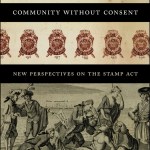
 On Sunday, the United States Postal Service introduced a stamp commemorating the 250th anniversary of the repeal of the Stamp Act. Today we are pleased to present an interview with Zachary Hutchins, editor of a new collection of essays from Dartmouth College Press that challenges traditional understandings of the Stamp Act Crisis as (in the words of the USPS) “setting [the colonists] on a path toward revolution and independence.” Zach is an Assistant Professor of English at Colorado State University. In 2014 he published his first book, Inventing Eden: Primitivism, Millennialism, and the Making of New England. A 2016 Fellow of the National Endowment for the Humanities, Hutchins is currently completing his second monograph, Before Equiano: A Prehistory of the North American Slave Narrative. Continue reading
 As many of our readers already know, this fall has marked the 250th anniversary since the protests against the Stamp Act, one of the earliest major actions of the imperial crisis that resulted in the American Revolution. Over the course of a year—from the first arrival of the Act in May 1765 until news of its repeal arrived in May 1766—colonists in the “thirteen original” colonies (as well as the “other thirteen”) passed resolutions, argued in essays, marched in the streets, forced resignations, and otherwise made clear their displeasure with paying a tax on their printed goods.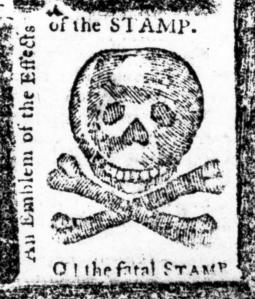
 We’re happy to bring you the fourteenth episode of “The JuntoCast.”
  Ed Morgan changed the way historians understood the American Revolution. Over a period of about ten years, from 1948 to 1957, he published three important research articles, a monograph, an essay aimed at a general audience, and a historiographical article, all having to do with the coming of the Revolution. It was an amazing burst of work that elevated Morgan to the upper echelons of American historians. Of course, Morgan had previously worked on Puritanism and would go on to do groundbreaking work on colonial Virginia and slavery. But he made his bones with the American Revolution.
  The Junto