Roundtable: New York’s Original Fashion Industry

Roundtable: New York’s Original Fashion Industry

This Colonial Couture post is by guest contributor William Howard Carter, assistant professor of history at The College of New Jersey. He is currently revising his book manuscript, “The Hideous and the Beautiful: The Power of Bodily Decorations in Iroquoia, 1550-1850.” 

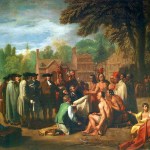
The Treaty of Penn with the Indians (Benjamin West, 1771-72)

The Treaty of Penn with the Indians (Benjamin West, 1771-72)

When was the fashion industry established in New York? With its eye towards the future and its accolades bestowed on the visionaries that best imagine the trends to come, it is hard for us to think of the fashion industry as anything but modern. Fashion tantalizes us with glimpses of the future that are not yet real but could, through the power of fashion, soon be made so. Yet those visions of possible futures are rooted in history. In Manhattan, that history stretches back over 400 years, before the supposed purchase of the island of Manhattan by Dutch colonists. Continue reading
Roundtable: Colonial Couture

Roundtable: Colonial Couture
juntofashion1

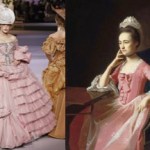
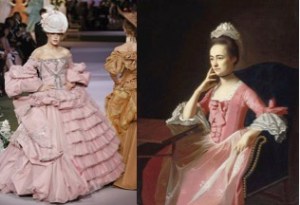
Christian Dior (2011) and Dorothy Quincy Hancock Scott (ca. 1772)

You’re invited…to The Junto’s first roundtable on fashion as history in early American life. In step with New York Fashion Week, we’ll present a new perspective daily on how the material question of “what people wore” shaped personal politics and national identity. We’re, er, bursting at the seams with guest contributors, so watch this space for a new post (or two!) every day. Thanks to a diverse array of scholars, over the next week we’ll get a better look at the sartorial identities of the enslaved; explore Native Americans’ role in the textile trade; take in the view from Benjamin Franklin’s Versailles; meet the artisans who bound up the loose threads of Atlantic World couture; and more. Continue reading

Reminder to join the conversation “Where Historians Work: A View from Early America”

Reminder to join the conversation “Where Historians Work: A View from Early America”

Do you hold a PhD titlesin early American history/literature/architectural history/art history/etc. or a related field, and have you chosen a career outside of the professoriate? The Junto wants to hear from you! There’s still time to participate in our conversation, “Where Historians Work: A View from Early America.”

Leave your stories in the comments of this post. Or, if you would prefer a less public forum, you may email The Junto (thejuntoblog@gmail.com) with the subject line “Career Diversity.” Please post comments or email by Friday, February 17. Continue reading

Where Historians Work: A View from Early America

Where Historians Work: A View from Early America

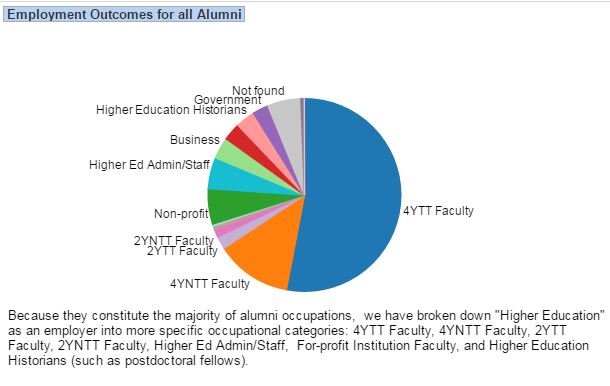
where-historians-work_graphicRecently the American Historical Association published Where Historians Work: An Interactive Database of History PhD Career Outcomes, “the only interactive, discipline-specific, and cross-institutional database of career outcomes for PhDs.” Using data collected from AHA directories and on the web, “Where Historians Work” presents a robust statistical overview of the varied employment sought by History PhDs from more than 30 degree-granting intuitions. For those historians who have long held positions outside of the academy, the database, part of the AHA’s broader Career Diversity for Historians initiative, is a welcome acknowledgement of what many have known anecdotally for years: History PhDs can—and do!—work in an array of fields.

Continue reading