 George Wythe represented the best of the Revolutionary-era Virginia gentry. Wythe, as a law professor, instructed and inspired many of the leading lights of the Patriot movement, including Thomas Jefferson. Wythe was also a racial liberal. After his wife’s death he freed the family’s slaves and even went as far as to adopt and pay for the education of one of their number, a young man named Michael Brown. By the opening years of the nineteenth century Wythe served as chancellor of Virginia’s court of equity where he handed down a monumental decision in the case of Wright v. Hudgins, which held that the burden of proof in cases of runaway slaves rested with the enslaver – not the accused runaway.
Author Archives: Roy Rogers
Howard & Me
Howard Zinn’s A People’s History of the United States changed my life.[1]
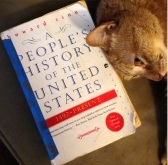
My personal copy of the 2003 edition of A People History of the United States. Also featured: my cat Marshall.
I grew up in very historically minded family. My recollections of my boyhood and tween years are filled with sweaty summer memories of traipsing with my mother and sister through every Revolutionary and Civil War battlefield between the mid-Atlantic and Upper South—from Gettysburg to Yorktown.[2] We regularly took the Orange Line into Washington to go to the National Museum of American History. The History Channel, when we had cable, was a regular fixture on our television.[3] All of this history education was very traditional—all Presidents, bloodshed, and American Exceptionalism.[4] My understanding of American history only became more traditional once I entered a conservative Catholic high school.
When Was the Last Time You Loved America?
Few issues trouble historians of all stripes more than the disconnect between “popular” and “academic” history. Somewhere in the mists of the recent past the Age of Hofstadter gave way to, at best, the Age of McCulloch and, at worst, the Age of Barton.[1] The waning influence of professional historians in the public sphere particularly troubles the historical blogosphere. The popular-academic history disconnect is something addressed a lot here at The Junto, including with a podcast.
I am, as I said on the JuntoCast episode, particular dour about the possibility of bridging this gap. Academic historians, public historians, and interested members of the public more often than not talk past each other. How each group defines “good” or “useful” history is often so at cross-purposes that it sounds like one side is speaking English, another French, and another Dothraki.[2] My attention was recently drawn to a series of posts by Peter Feinman at New York History, which deeply entrenched my Eeyore-like-sullenness when it comes to these questions. Continue reading
The American Dilemma

The influence of Edmund Morgan’s American Slavery, American Freedom: The Ordeal of Colonial Virginia is inarguable. For such a lean volume it casts a long shadow upon our understandings of colonial Virginia, the development of slavery in the American South, the relationship between racism and equality, and a variety of other interpretative problems large and small. Scholars since the book’s publication have revised and extended its arguments—into questions of gender and class consciousness—and more than a few have sought to topple its conclusions but Morgan’s central contention that “[r]acism made it possible for white Virginians to develop a devotion to the equality that English republicans had declared to be the soul of liberty” remains more or less intact.[1] During my graduate education, at both the master’s and doctoral levels, Morgan’s arguments have served as the starting point in many a seminar meeting’s discussion of America’s long history of racial inequality. Few interpretations of any historical question can claim such sustained influence.
The question I pondered, as I reread American Slavery, American Freedom for this essay, is simple: why? Why has Morgan’s interpretation of colonial Virginia survived, despite the many shifts in the historiographical winds over the last thirty-eight years, when many other powerfully argued interpretations have withered and died? What gives this book its continuing appeal to the historical profession? Continue reading
The Problem of Virginia’s Colonial Establishment
I’ve been reading, writing, and thinking about Virginia’s colonial Anglican establishment since I entered graduate school (back when the Galactica had just uncovered the fate of Earth and Lehman Brothers was still short-selling subprime mortgages). This work led me to decide to write a dissertation on the religious politics and fate of the colonial establishments in the post-Revolutionary Chesapeake. Beginning the real work on my dissertation, however, has hammered home one important insight: despite all that reading I still don’t have a real sense of what the hell was going with Virginia’s colonial establishment. Continue reading
Looking for Religion in all the Right (and Wrong) Places
James P. Byrd, Sacred Scripture, Sacred War: The Bible and the American Revolution. New York: Oxford University Press, 2013.
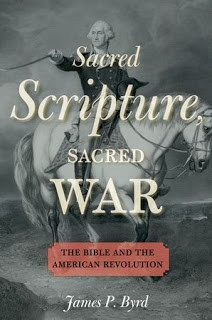 “The Revolution may be the most important event in American history,” James P. Byrd reminds us. Many of the readers of this blog will likely agree with him in that. Fewer, perhaps, will agree with one of the central arguments of his (very) recent Sacred Scripture, Sacred War: The Bible and the American Revolution that “the Bible was arguably its [the Revolution’s] most influential book.”[1] At the recent OIEAHC conference in Baltimore I was able to get my hands on a copy of this excellent new book and Sacred Scripture, Sacred War has given me a lot (despite it’s relatively conciseness) to chew on over the last two weeks.
Continue reading
Guest Post: Report from RAAC 2013
Today’s guest poster, Charlie McCrary, is a PhD student in American religious history at Florida State. His MA thesis is about 19th-century Methodist circuit riders’ autobiographies. He is now researching religion, secularism, and public education in the early republic. Here, he reports on the Conference on Religion and American Culture earlier this month.
 The Center for the Study of Religion and American Culture at IUPUI held its Third Biennial Conference on Religion and American Culture in Indianapolis over June 6th through 9th (see the program here; see also #RAAC2013) The conference, a relatively small affair—made to feel smaller and more intimate by its democratizing conference-in-the-round spatial arrangement—brought together scholars, from esteemed pillars of the field to graduate students, to discuss and debate the present and future of the study of American religions. Many of the presentations focused on case studies from the recent past and/or broader methodological issues, but pre–1865 topics received some explicit mention as well. In this brief report, I have compiled a highlight reel of scenes most interesting to the Junto’s readers. Continue reading
Intersections upon a Dark River
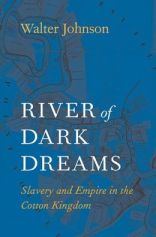
Walter Johnson’s River of Dark Dreams is the best big book on slavery I have ever encountered. This is not faint praise; there is some about the subject that causes its best historians—Eugene Genovese, Winthrop Jordan, Kenneth Stampp and more—to write in at bullet-stopping length. Johnson’s volume stands out due to his ability to seamlessly place the history of antebellum slavery at the intersection of three of the nineteenth century’s key themes—imperialism, capitalism, and technological development. He does this, as other contributors to this roundtable have noted, at the sweeping level of the very geography of Mississippi River Valley and at the much more intimate level of the lived experience of enslaved laborers. Continue reading
Remembering “Jefferson’s Statute”
 Few documents in the history of American religious freedom are as famous as Virginia’s “[A]ct for establishing religious freedom” – also known as Virginia’s Statute for Religious Freedom or (more colloquially) as Jefferson’s Statute. A quick glance at Jefferson’s text (carefully edited by the Virginia General Assembly) shows us why. Few other documents are such a clear and powerful exposition on the need for freedom of conscience.[1] The text has also aged well and appeals both sides of our modern church-state conflicts. On one hand the Statute suggests that religious freedom is a gift from god, for the “Almighty God hath created the mind free,” and on the other argues that religious beliefs are no different from “our opinions in physics or geometry.” In the Statute what the twenty-first century reader would think of as distinct “religious” and “secular” discourses are melded with spiritual coercion denounced as both “sinful and tyrannical.”[2] Who can disagree with that? It is no wonder why, then, that Jefferson had his role in drafting Virginia’s Statute for Religious Freedom engraved on his tombstone. Continue reading
After Democratization?
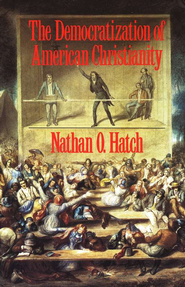 Next year marks the twenty-fifth anniversary of the publication of Nathan Hatch’s seminal The Democratization of American Christianity.[1] Few books have had as wide an influence and impact in my field of the cultural and political history of religiosity in the early American republic. In his masterwork Hatch achieves what most scholars yearn for throughout their entire careers. Democratization crystallized an interpretative scheme (the “democratization thesis”) and shoved its rival interpretation into the historiographical abyss. Continue reading
 The Junto