 Being a graduate student means that I am very much interested in the future of the profession. And being part of this blog and its podcast makes me aware, to some degree, of the impending and inevitable digitization of the profession. Recent online discussions have included the policy of embargoing the immediate and unrestricted digitization dissertations. But, in addition to changes regarding the university press monograph, there is an equally radical change to come for academic journals. Continue reading
Author Archives: Michael D. Hattem
Welcoming a New Member to The Junto
 The Junto is happy to announce the addition of Sara Damiano, a PhD candidate in the History Department at Johns Hopkins University, to the blog’s membership. Continue reading
Early American Film in the Classroom
 The Junto has published a number of posts about early America in popular culture and media. Until the last few years, films and television shows about early America have been relatively scarce, outside a number of multi-episode public television and cable documentaries. However, in addition to HBO’s John Adams, there are a number of projects in the works including a television series about the Sons of Liberty and another about John Brown. As the semester nears and my teaching duties turn to the American Revolution, I have inevitably been thinking about early American multimedia in the undergraduate classroom. Continue reading
In Memoriam: Pauline Maier, 1938-2013
Yesterday morning, the early American (and broader) history community was deeply saddened to learn of the passing of Pauline Maier. The Junto extends our condolences to her family, friends, and colleagues.
 Pauline (Rubbelke) Maier was born in 1938 in St. Paul, Minnesota. She did her undergraduate work at Radcliffe, where her interest in journalism and contemporary events led her to become a writer for The Harvard Crimson. It was there that she first met her eventual husband, Charles Maier. After graduating in 1960, she was named a Fulbright Scholar and studied at the London School of Economics, while Charles won a Henry Fellowship to Oxford. Upon completion of their fellowships, the two were married at Oxford. Continue reading
Ed Morgan and the American Revolution
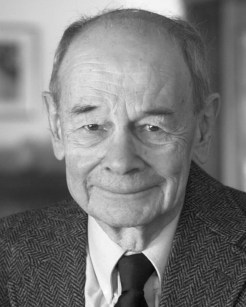 Ed Morgan changed the way historians understood the American Revolution. Over a period of about ten years, from 1948 to 1957, he published three important research articles, a monograph, an essay aimed at a general audience, and a historiographical article, all having to do with the coming of the Revolution. It was an amazing burst of work that elevated Morgan to the upper echelons of American historians. Of course, Morgan had previously worked on Puritanism and would go on to do groundbreaking work on colonial Virginia and slavery. But he made his bones with the American Revolution. Continue reading
Roundtable: The Legacy of Edmund S. Morgan
This is a very special week at The Junto. Following last month’s sad news of the passing of one of our field’s true giants, Edmund S. Morgan, we all agreed that a weeklong retrospective on his remarkable career was in order. Hence, this week, each day will be given over to a specific work or theme to which Morgan made important contributions during his four-decades long academic career. We hope that this roundtable, being written by graduate students and junior faculty, will provide a snapshot of Morgan’s continuing relevance to new generations of early Americanists almost three decades after his retirement from Yale University.
E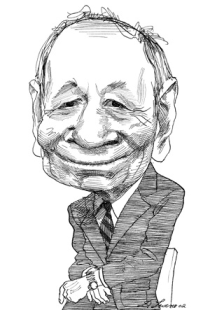 dmund Sears Morgan was born on January 17, 1916 in Minneapolis, Minnesota.[1] His father, Edmund Morris Morgan, was a Professor of Law at the Minnesota Law School, Yale University, Harvard University, and Vanderbilt University. Ed the Younger attended Belmont Hill School from which he graduated in 1933. From there, he left to do his undergraduate work at Harvard. In his second year, he took a course taught by F.O. Mathiessen, his senior tutor, and Perry Miller, whom Morgan called “simply the most exciting lecturer” he had encountered. The experience turned a budding English major into an American history and literature major. Upon graduation, Morgan spent a year at the London School of Economics studying with Harold Laski. Continue reading
The Week in Early American History
 Another week comes to a close and, as usual, The Junto‘s got links…
The JuntoCast, Episode 3: Teaching the U.S. History Survey
 The Junto is happy to present the third episode of “The JuntoCast.” In case you missed our first two episodes, “The JuntoCast” is a monthly podcast in which members of The Junto discuss issues of both academic and general interest related to early American history, pedagogy, and public history. Continue reading
A PhD Student’s Case for Embargoes
Note: I welcome this opportunity to expound more fully on a few quotes from me in a New York Times piece about the AHA statement. You can find my Storify of the debates on Twitter and in the blogosphere related to the statement here. It is also worth reminding readers that the opinions in our pieces are those of the author and not of the blog as a whole.
 A recent policy recommendation by the AHA on the embargoing of dissertations—i.e., limiting online access and distribution for a specified period of time—has created quite a stir in the blogosphere and on Twitter. Many are criticizing the AHA for a reactionary policy that concedes the status quo, i.e., the undue influence and interest of university presses in hiring and tenure decisions and the profession’s overall laxity in adapting to the digital revolution.
Let me be clear from the outset: I am not defending the AHA’s statement, per se. It does indeed ignore the broader issue of what the AHA intends to do about the long-term, systemic problem of the profession’s transition into the digital era, more generally. I am, however, going to defend the policy of allowing students the option to embargo. Continue reading
Guest Post: Thomas Mundy Peterson and the Fifteenth Amendment
Gordon Bond is an independent historian/researcher. He has written an excellent biography of the colonial New York printer, James Parker, entitled James Parker: A Printer on the Eve of Revolution. He is also the author of Hidden History of South Jersey (2013) and North Jersey Legacies (2012). Currently, he is the Founder, Editor-in-Chief & Director of Garden State Legacies .

While a rejection is nothing any writer wants, sometimes it is what we need. Such was the case with my proposals to publishers for a book about Thomas Mundy Peterson. If you’ve heard of Peterson before, chances are it will be for the Wikipedia reason; in 1870, he became the first African-American to vote under the auspices of the Fifteenth Amendment to the United States Constitution. He was, of course, more than that moment.
 The Junto