
Chan Lowe/Tribune Content Agency
“Welders make more money than philosophers,” Marco Rubio said in a recent G.O.P. debate. “We need more welders and less philosophers,” he continued, proudly. It was a decent line from the presidential hopeful. But not long after these words echoed around the Milwaukee Theatre, it was shown to be a somewhat clumsy statement, not least when seen alongside figures from the Bureau of Labor Statistics (comparative wages: philosophers & welders). Thus over the days following Rubio’s line, it was caricatured, with one cartoonist picking up on Rubio’s wording. This G.O.P. presidential candidate is not alone: All of the 2016 presidential candidates, Democrat and Republican, have been caricatured. So, too, are their worldwide equivalents on a regular basis. Continue reading
 Back in April, I had a rather surreal teaching experience. A class project, focusing on tweeting the assassination and funeral train of Abraham Lincoln, attracted a good deal of media attention in central Illinois. My class ended up appearancing in local newspapers, radio, and even with
 In her
 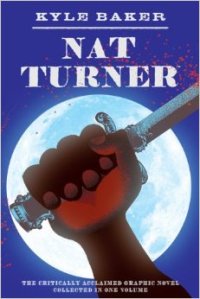 As anyone who has taught the history of slavery knows, it can be challenging. It is an important, but also emotionally loaded subject that can provoke spirited responses from students. Some students are resistant to discussing what they view as an ugly event in the past. Others may become defensive. And, for others, the history of slavery may be personal. The challenge becomes presenting the history in a thoughtful way that will engage students, but does not whitewashing history. Other traumatic events—genocide, war, etc.—can present similar pedagogical challenges.
 Last year, my university shifted its policy on assignments, meaning that faculty members suddenly got the option to change extant assignments, make new ones, and alter the weighting of any of them. This was a big transition, given that in previous years assignments were set by the department and students in each of our three class years could expect similar assignments in their courses. As a result, I’ve been playing around with assignments of zero or very little weight to try to prepare students—especially first year students—for the sometimes daunting task of the final essay assignment. Whereas before there was one low-weighted writing assignment before the final essay was due, I now have the low-weighted writing assignment (it’s half the length it was in previous years), an unassessed research proposal, and an annotated bibliography worth 10%. I want to talk about one of the problems with this last assignment.
  Welcome to another edition of This Week in Early American History! We wish a safe and healthy holiday to those
 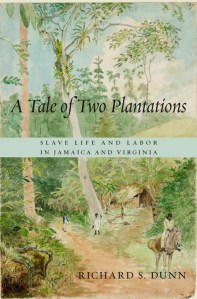 Richard Dunn has written a big book. Normally, big books like Dunn’s are primarily meant for fellow academics, grad students who need to pad their comps list, and the super-interested general public. (That category still exists, right? Right?) For academics, these types of books influence two aspects of our scholarly life: our own academic projects and our classroom instruction. The previous participants in the roundtable have focused on A Tale of Two Plantations’s contribution to the former category, while I would like to focus my remarks on the latter. So I am going to skip the basic parameters of a book review—namely, identifying the key arguments and weaknesses of the volume—and focus on how this book can work with undergraduate students.
  The Junto