 We’re happy to bring you the thirteenth episode of “The JuntoCast.” Continue reading
Tag Archives: race
The Week in Early American History
 We begin this Week in Early American History with James Oakes’ powerful and timely reflection on white abolitionism. “The Real Problem with White Abolitionists,” Oakes argues, is that “even the most radical abolitionists betrayed a blind faith in the magical healing powers of a free market in labor. Scarcely a single theme of the broader antislavery argument strayed far from the premise.”
Continue reading
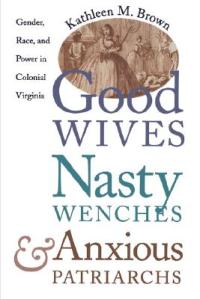
Junto Summer Book Club: Interview with Kathleen Brown
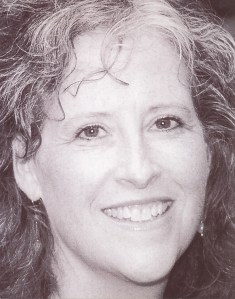 We at The Junto would like to thank everyone who read along with us for the Junto Summer Book Club. To bring the book club to a close, we caught up with Kathleen Brown, the author of Good Wives, Nasty Wenches, Anxious Patriarchs, via email. Brown is a professor of history at the University of Pennsylvania. Her most recent book is Foul Bodies: Cleanliness in Early America.
In our interview, Brown reflects on Good Wives, Nasty Wenches, Anxious Patriarchs eighteen years after its publication, assesses the state of women’s history and gender history, and shares her current project. Continue reading
Autumn Reads
 Here’s our fall preview of new titles—share your finds in the comments! Continue reading
Summer Book Club, Week 5
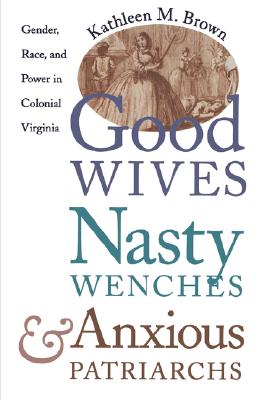 Welcome to the semifinal edition of the Junto Summer Book Club! Before we head into the closing week, let’s pause at Chapters 8 and 9 of Kathleen Brown’s Good Wives, Nasty Wenches, and Anxious Patriarchs, to remember the ladies—and gentlemen—who invested in creating Virginian society. Continue reading
Guest Post: The Decline of Barbers? Or, the Risks and Rewards of Quantitative Analysis
Today’s guest post is authored by Sean Trainor, a historian of the early American republic with an interest in the intersection of labor, popular culture, and the body. He is a PhD candidate in History and Women’s Studies and Pennsylvania State University, where his dissertation examines the history of men’s grooming in the urban United States between the turn of the nineteenth century and the American Civil War.
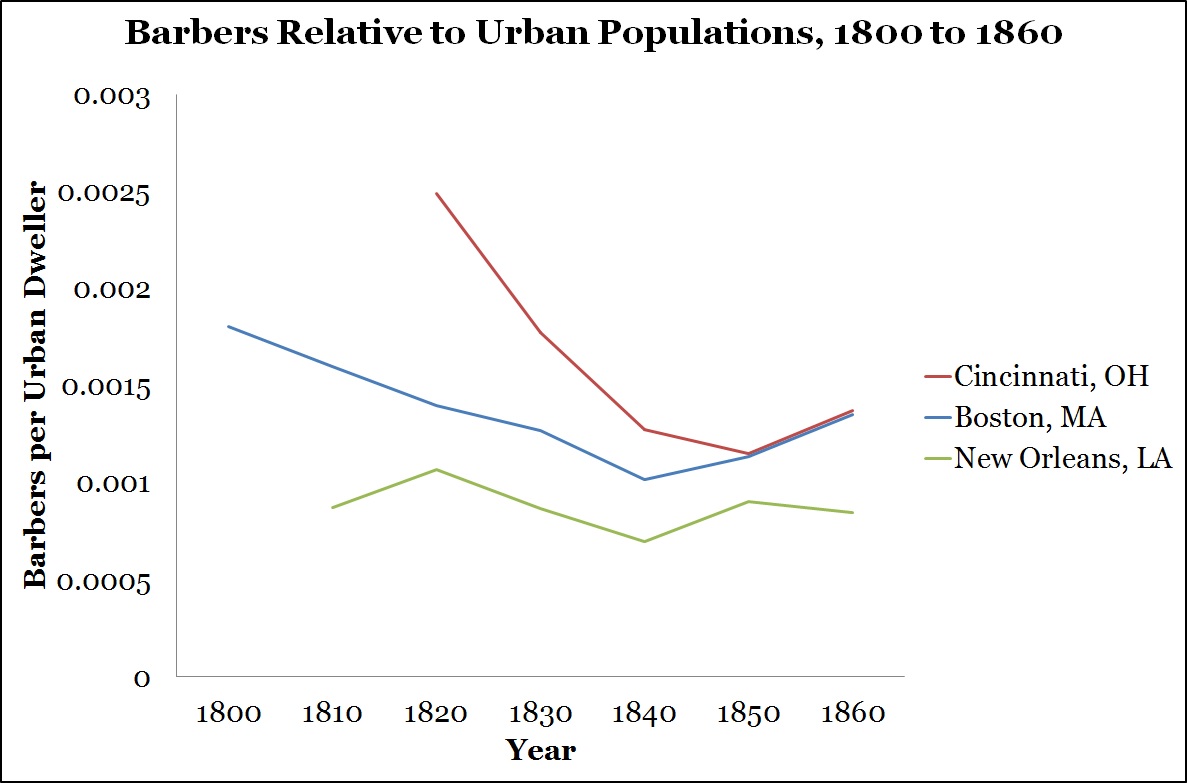 A few weeks ago, I finished compiling a database, long in the works, containing the names and addresses of all of the barbers in the cities of Boston, Cincinnati, and New Orleans between 1800 and 1860. Thrilling, I know, but the project has broader implications for historians interested in the intersection of quantitative and cultural history which, if you’ll bear with a brief exposition, I’ll discuss below.
Summer Book Club, Week 4
 After a hiatus for Independence
 Day Week, we’re back today for chapters six and seven of Good Wives, Nasty Wenches, and Anxious Patriarchs. These chapters guide us into the eighteenth century, showing how an increasingly recognizable racial order, predicated on the authority of white householders, took shape in Virginia.
Summer Book Club, Week 3
This week in the Junto Summer Book Club we’ll be looking at chapters 4 and 5, in which Brown looks first at the beginnings of Virginia’s slave system in the mid-seventeenth century, and then at the memorable—and highly teachable—events of Bacon’s Rebellion in the 1670s. Continue reading
Summer Book Club, Week 2
Welcome to the second installment of the Junto Summer Book Club! We discussed the introduction and first chapter of Kathleen Brown’s Good Wives, Nasty Wenches, and Anxious Patriarchs during Week 1. This week we’ll consider Chapters 2 and 3. With these chapters, Brown transports us across the Atlantic Ocean, shifting her focus from early modern Britain to the early years of English settlement in Virginia.
Summer Book Club, Week 1

Welcome to the Junto Summer Book Club, where over the next six Fridays we will be reading and discussing Kathleen Brown’s 1996 book, Good Wives, Nasty Wenches, & Anxious Patriarchs. Each week, a Junto representative will write a brief post on that week’s chapters to offer a few opening remarks and raise some questions to get the discussion started. We will then open up the comments section for you to address any topic related to the book—its argument, Brown’s use of sources, the historiography, using it in the classroom or in a public setting, to name just a few. We look forward to a lively conversation and to seeing how it develops over the next several weeks.
This week, we begin our conversation with the Introduction and Chapter 1, “Gender and English Identity on the Eve of Colonial Settlement.”
 The Junto