The Council, Episode One: The Mad Ones by Big Bad Wolf [PC, PS4, XBOX One]
[NB: This article contains significant story spoilers for the first episode of the video game The Council by Big Bad Wolf]
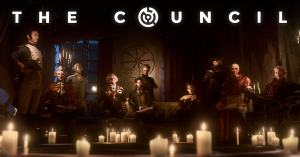
What if John Adams had a secret, occult daughter with a period inappropriate haircut?
This is one of the central plot points of the first episode Big Bad Wolf’s historical episodic video game The Council. Set in 1793 the player takes control of a twenty-something blank slate with a cool jacket, named Louis de Richet. Louis is seeking to uncover a mystery relating to Sarah, his ice queen secret agent mother. Invited to a “private island” off the English coast by Lord Mortimer, a British aristo whose aesthetic is a Regency Bond villain mixed with Eyes Wide Shut, Louis is works to uncover why Sarah vanished from one of Mortimer’s smashing shindigs. Mortimer’s shtick, you see, is hosting gatherings of the best and brightest of the late eighteenth century Euro-American world. Once Louis arrives at Mortimer’s latest fete that you discover just how vast The Council’s world is, for guess who is waiting for you by the fire?
None other than George Washington, a historical figure who our readers are likely quite familiar with. Continue reading

 As both a horror nerd and an Early American historian, I have been excited about writer/direct Robert Eggers’ debut feature The Witch for quite some time. Excited might be a bit of an understatement: the first time I saw a poster in a theatre I shrieked, and I have been faithfully following the strangely endearing and decidedly bizarre Twitter of the film’s sometimes-antagonist goat,
  This week we’ve discussed
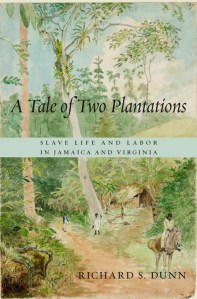 The most interesting thing about Richard Dunn’s “intergenerational study” of slave life in Mount Airy and Mesopotamia plantations of Virginia and Jamaica is its incompleteness. As Dunn notes, A Tale of Two Plantations is a narrative without “a proper opening or a proper conclusion.”
 I’ve been listening to
  Maryland’s religious history is unique in colonial British North America. We largely remember Maryland as the Catholic colony that embraced religious toleration and religious freedom, in contrast to New England’s stodgily Puritan establishment or Virginia’s scattered Anglican church. Scholars and commentators looking for sources or influences on the First Amendment are consistently drawn to the colony’s justifiably famous 1649 “Act concerning Religion.” This act made it a crime to “declare call or denominate any pson or psons whatsoever inhabiting” Maryland “an heritick, Scismatick, Idolater, puritan, Independant, Prespiterian popish prest, Jesuite, Jesuited papist, Lutheran, Calvenist, Anabaptist, Brownist, Antinomian, Barro-wist, Roundhead, Sepatist, or any other name or terme in a reproachfull manner relating to matter of Religion.” “[T]he free exercise” of Christian religion was explicitly protected by the act, with repeat violators of their fellow colonialists’ conscience were to be “severely punished by publick whipping & imprisonmt.”[1] The “Act concerning Religion” places Maryland next to Rhode Island and Pennsylvania as one of the colonial regimes committed, for European Christians at least, to religious freedom in the seventeenth century.
 I’ve admired Alfred Young’s wonderful, if unwieldy, Masquerade: The Life and Times of Deborah Sampson, Continental Soldier (New York: Knopf, 2004) since I first encountered the book in an undergraduate classroom a decade ago. Young’s biography of Sampson, which covers the life, career, and memory of this remarkable woman who “passed” as a man in the Continental Army for seventeen months, shares much in common with its intellectual sibling,
  The Junto