Abby Chandler is Assistant Professor of History at the University of Massachusetts, Lowell. She received her PhD from the University of Maine at Orono. Her first book, Law and Sexual Misconduct in New England, 1650-1750: Steering Towards England is due to be released by Ashgate in November.
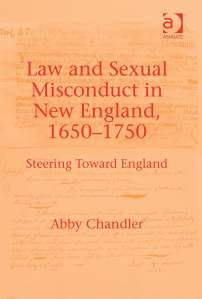 My forthcoming book, Law and Sexual Misconduct in New England, 1650-1750: Steering Toward England, uses sexual misconduct trials to examine the ways in which the growing Anglicization of the New England colonies played a role in the daily lives of ordinary colonists. Such trials may seem an unusual source base for studying broader political change, but their frequency and consistency allowed me to track the often subtle shifts toward more Anglicized legal systems. Likewise, both men and women were routinely charged with sexual misconduct, which allowed me to examine these shifts from male and female perspectives. This is the story of two widows in Essex County, Massachusetts, and their very different experiences with the Puritan dominated legal system of the seventeenth century and the Anglicized legal system of the eighteenth century.

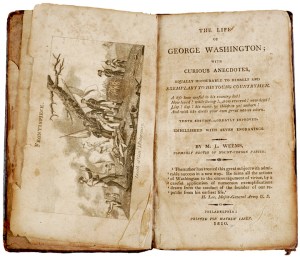 Shortly after the publication of
  Social networks are having a moment in history. They are another approach to understanding how people came together either via proximity, social status, values, or goals, with the analytical focus on what serves as the bond in the relationship(s).[1] Social theorists have ascribed a 4-part process which entails a) similar people coming together, b) influence within these groups making its members more alike, c) people winding up in the same place, and d) shared space making people more alike.[2] In short, networks are primarily about building consensus. For historians, networks are “messy,” “fragile,” “fluid,” and disregard geographic boundaries.[3]
  Yesterday, Chris Minty
 In October of 1780, the governor of Quebec, Frederick Haldimand, warned against changing the laws and regulations of the British colony. It required “but Little Penetration,” he claimed, to reach the sobering conclusion that “had the System of Government Sollicited by the Old Subjects been adopted in Canada, this Colony would in 1775 have become one of the United States of America.” He continued, “Whoever Considers the Number of Old Subjects who in that Year corresponded with and Joined the Rebels, of those who abandoned the defense of Quebec… & of the many others who are now the avowed well wishers of the Revolted Colonies, must feel this Truth.”[1]
 In her

 The Junto