 This weekend it wasn’t just the swiftly-approaching independence referendum causing excitement in Edinburgh—it was also the annual conference of the British Group of Early American Historians (BGEAH: that’s “beggar” to some, “big-ear” to others), which brought together early Americanists from Southampton to Dundee and all points in between, plus a few from the far side of the Atlantic. In the stately setting of Edinburgh University’s Old Medical School, the theme we were given was “Better Together? Union and Disunion in the Early Modern Atlantic.” I couldn’t possibly cover everything, but in this post I’ll share a few of my personal highlights. Continue reading
Author Archives: Tom Cutterham
Is the History of Capitalism the History of Everything?
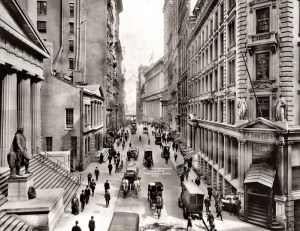 Seth Rockman begins and ends his recent essay on the “new history of capitalism” by describing capitalism as an economic system; but one of the features of the movement he describes is that it rightly treats capitalism as much more than that. As Rockman admits, “it is difficult to say what exactly it excludes.”[1] What’s most provocative and powerful about the new history of capitalism is precisely the fact that it recognizes and tries to historicize the pervasiveness of capitalism as a system that touches every aspect of our lives—everyone’s lives. Capitalism isn’t just in the workplace and the marketplace; as Jeffrey Sklansky has suggested, it’s in our very ways of being, seeing, and believing. But if the history of capitalism is an empire with no borders, just what kind of claims can it be making?[2] Continue reading
Interview: Alex Gourevitch on Thomas Paine
 Alex Gourevitch is an assistant professor of political science at Brown University. At this summer’s SHEAR conference in Philadelphia, he presented (without reading! It’s still a novelty to us historians!) a paper called “Paine and Property: Radicalism and Anti-Radicalism in Property-Owning Democracy.” In today’s interview, he returns to those themes for The Junto.
Continue reading
The Week in Early American History
 We begin this Week in Early American History with James Oakes’ powerful and timely reflection on white abolitionism. “The Real Problem with White Abolitionists,” Oakes argues, is that “even the most radical abolitionists betrayed a blind faith in the magical healing powers of a free market in labor. Scarcely a single theme of the broader antislavery argument strayed far from the premise.”
Continue reading
Guest Post: Thomas Jefferson and Public Historiography
I’m pleased to introduce today’s guest poster, Matthew Crow, a regular commenter here at The Junto, who received his PhD at UCLA in 2011 and now teaches at Hobart and William Smith Colleges in New York.
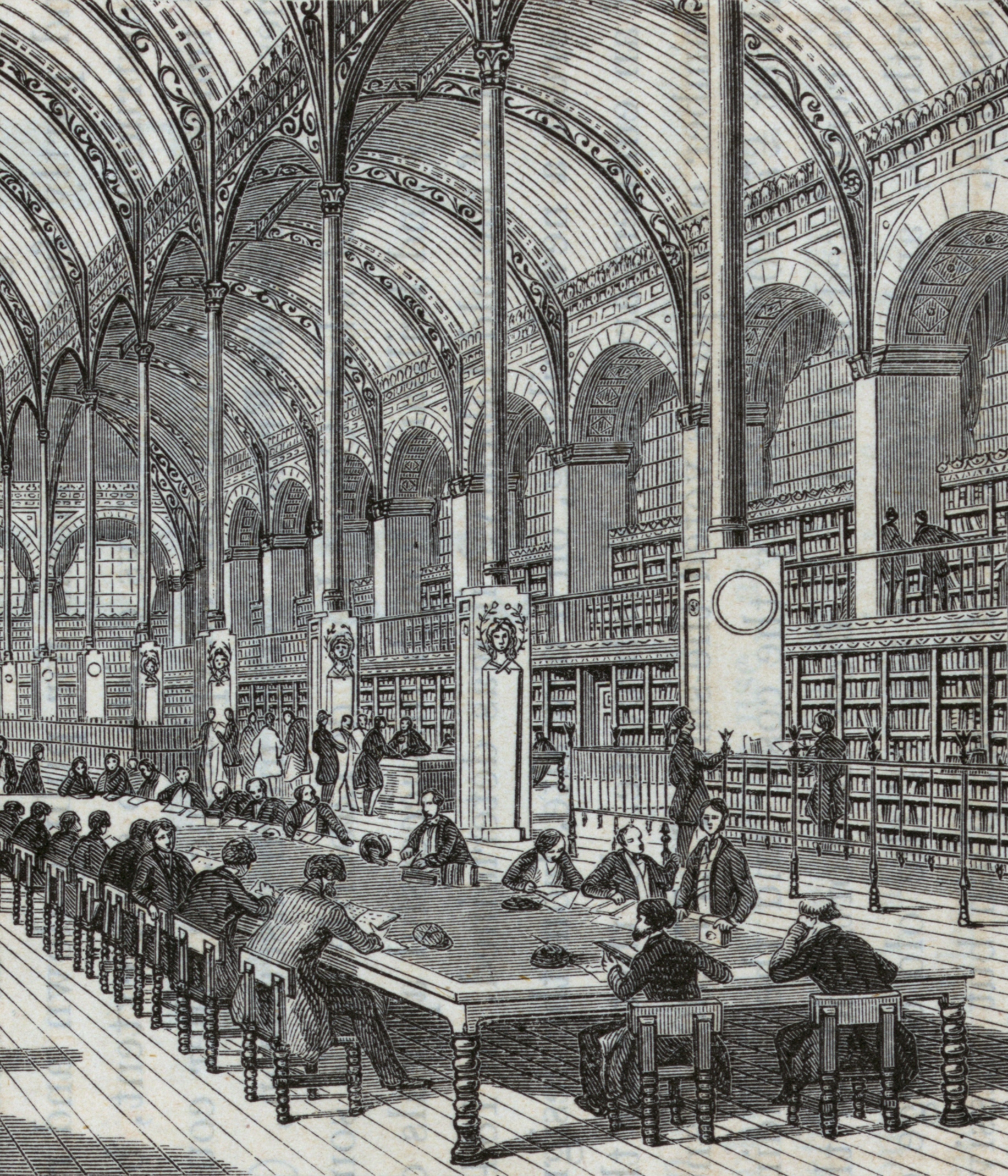 In his compendium of global archival practices, Memoirs of Libraries, Edward Edwards developed a history of how various peoples had organized their relationship to their pasts. For Edwards, political emancipation in the wake of the great revolutions required broadening public availability of the historical documents archived by the state. Continue reading
Interview: Andrew Jackson O’Shaughnessy
 Andrew O’Shaughnessy is the Saunders Director of the Robert H. Smith International Center for Jefferson Studies at Monticello, and a Professor of History at the University of Virginia. His recent book, The Men Who Lost America: British Leadership, the American Revolution, and the Fate of the Empire, won this year’s George Washington Book Prize and several other awards. Tom Cutterham spoke to him for The Junto.
Continue reading
On Gender and Genre
 Do biographies of women have different conventions to biographies of men? Setting out on a new historical project—which, at least for the moment, takes the form of a biography of Angelica Schuyler Church (not pictured! That’s Dolley Madison)—I’ve been thinking a lot about the particular confluence of what often seem to be maligned and marginalised fields even in their own right: women’s history and biography. I have a lot still to learn about both. But let me offer some preliminary considerations here, and invite Junto readers to pitch in in the comments.
Summer Book Club, Week 3
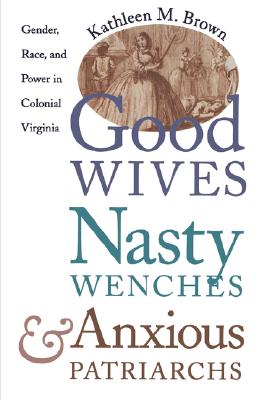 This week in the Junto Summer Book Club we’ll be looking at chapters 4 and 5, in which Brown looks first at the beginnings of Virginia’s slave system in the mid-seventeenth century, and then at the memorable—and highly teachable—events of Bacon’s Rebellion in the 1670s. Continue reading
Putting “Republicanism” in Its Place
 “By 1990,” wrote Daniel Rodgers, the concept of republicanism in American historiography “was everywhere and organizing everything, though perceptibly thinning out, like a nova entering its red giant phase.” A quarter of a century later, it can seem barely more than a dull glow—and in part, we have Rodgers’ essay to thank for dimming the lights. If republicanism’s 1970s high-water-mark was followed by a decade of furious debate over republicanism-versus-liberalism, scholarship after 1990 often framed itself as moving beyond precisely that anachronistic question. There was, apparently, no such conflict in the minds of revolutionary-era Americans. The problems that troubled them were different ones entirely.[1] Continue reading
The Week in Early American History
 Hello and welcome to another slightly belated Week in Early American History!
 The Junto