Congratulations, readers: you’ve made it to spring break! This post is written for everyone about to embark on short archival research trips (but that doesn’t mean you have to skip over it if you’re stuck in one place). I’ve always found that while I’m researching, it’s nice to have an idea of what food places are nearby for those lunchtime moments when I emerge, ravenous, from manuscript rooms around the country. Continue reading
Category Archives: Academia
The Historian’s Appetite
Hello, world.
I am slowly becoming accustomed to the feeling of having defended my dissertation, and reacquainting myself with the idea that it’s okay to take a day off here and there. Earlier this week I prepped and served pho, a Vietnamese noodle soup that takes two days to prepare.
I spent time earlier this month exploring a new cookbook, The Smitten Kitchen Cookbook, by Deb Perelman, of Smitten Kitchen blogosphere fame.
I came to the field of food history in part because I love food—cooking it, eating it, and sharing it with others—a love which has, at times, demanded that I stretch my knife skills, my ability to multitask, and my willingness to fail. Continue reading
A View from Albion
Readers of The Junto may not be familiar with the early American history scene in the UK. Hailing one from each side of the Atlantic but both working in Britain, Tom Cutterham and I have had to grapple with the problems and positives of working on the history of one continent while living on another. Here is a brief sketch of how the land lies on the other side. Continue reading
Charles Beard, Economic Interpretation, and History
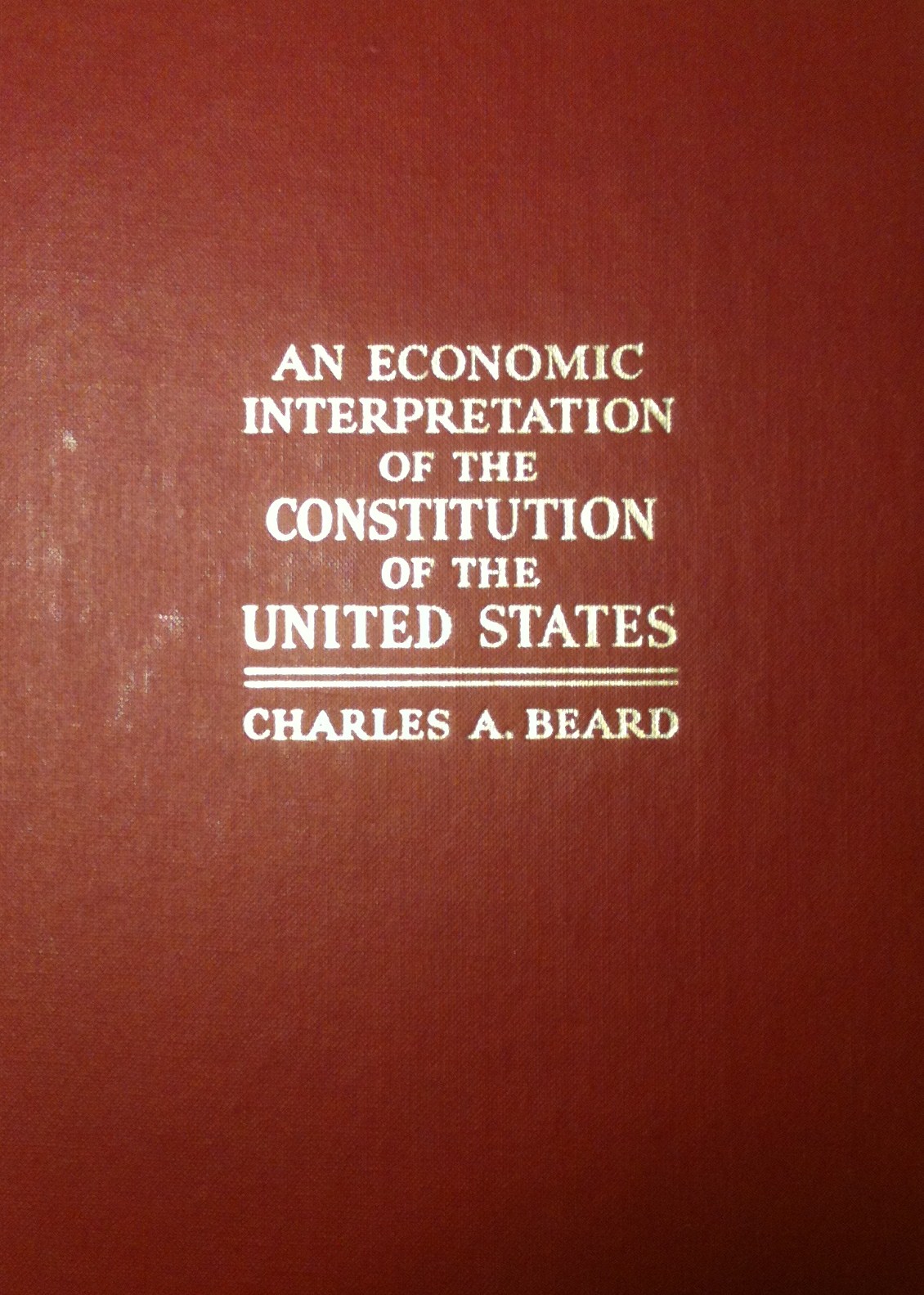 It’s been a century since Charles Beard published An Economic Interpretation of the Constitution of the United States. That book has a central role in more or less every overview of the historiography of the constitution and the founding. Just what that role is, though, is still open to debate. That Pauline Maier’s Ratification (2010) has no listing for Charles Beard in the index might have been taken as a sign that scholars no longer have to deal directly with his towering legacy. But that Seth Cotlar called her out on it in a recent William & Mary Quarterly forum, and took her to task for the “absence of any direct engagement” with Beardian, “conflict-oriented” interpretations of the period, reminds us just the opposite. As Saul Cornell put it, in light of powerful and varied strands of contemporary neo-Beardian scholarship, from Robert McGuire to Woody Holton and Terry Bouton, “one wonders if we have fully laid the ghost of Charles Beard to rest.” Well, if you have to wonder… Continue reading
Dos and Don’ts: Cover Letters and C.V.s
Today’s post was spurred by some conversations between Junto contributors about cover letters, C.V.s, and the dos and don’ts of the applications process. Whether applying for research grants or starting out on the job market, how do we make sure we’re presenting our best selves on paper?
We thought that this would be a great opportunity to ask our Junto readers: Do you have any advice for formatting C.V.s and cover letters? What do you look for in a strong cover letter or C.V.? Do you have any ‘must haves’ or pet peeves? How can we best tailor our applications for either academic or professional settings?
We welcome any thoughts, links to additional resources, or tales of application joy and woe. Continue reading
The Week in Early American History
 A relatively quiet week here; with the semester now underway everywhere, it’s probably not such a bad thing that we have fewer links to share. In any case, a little Revolution, an unidentified diary, and a forgotten war … on to the links!
Where Have You Gone, Gordon Wood?
Gordon S. Wood is perhaps the most prominent of the many Bernard Bailyn-trained historians to emerge from Harvard in the 1960s and 1970s, including Richard Bushman, Michael Kammen, Michael Zuckerman, Lois Carr, James Henretta, Pauline Maier, Mary Beth Norton, and many others. In the late 1960s, Wood’s dissertation-turned-first-book, The Creation of the American Republic, 1776-1787, had arguably as large an impact on the field as his mentor’s Ideological Origins of the American Revolution did a few years before, both helping to usher in the heady days of the “republican synthesis.” This is all to say that Wood had earned himself a prominent spot in the field of early American history from pretty much the very start of his career. However, subsequent generations of early Americanists have grown increasingly hostile to not only Wood’s work but to the man himself. This leads to the question: Why is it acceptable (or even praiseworthy) behavior among early Americanists to treat one of the most important historians in the field in the last century disrespectfully? In this piece, I’d like to talk about Gordon Wood’s career trajectory, suggest that other historians’ reactions to him reflect not only Wood but on historians themselves, and ask whether that might give us even a fleeting insight into generational differences between early Americanists. Continue reading
The AHA and the Future of the Profession

This past weekend, historians from all over the country invaded the Big Easy for the American Historical Association’s 2013 Annual Meeting. Thanks to Twitter, those of us unfortunate enough to not be in attendance were kept abreast of the discussions occurring regarding the state of the field. Most notably, the traditional AHA Presidential Address by outgoing President William Cronon has sparked much debate among historians as well as articles in the New York Times and the Chronicle of Higher Education. Before that, Cronon oversaw a panel entitled “The Public Practice of History in and for a Digital Age,” which explored academic historians’ failures to reach the general public and the profession itself failing to sufficiently adapt to the rise of digital technology. Changes to the profession discussed included a renewed focus on storytelling and narrative to better engage the general reader in academic history, weighing digital history equally with print history (when of equal value), and rethinking the monograph as the standard mode of delivery of academic historians’ work. Due to my lack of attendance, I am indebted to the excellent Twitter and blog coverage of these events by John Fea, Lincoln Mullen, and others, as well as the History News Network‘s video recording of Cronon’s address (see below). Continue reading
#AHA2013 Open Comment Thread
 Some of us here at The Junto are headed to the American Historical Association’s annual meeting in New Orleans today. We thought about doing one post, but then we thought it’d be fun to hear your AHA impressions, too. So we’re making this an open comment thread.
Do you want to plug your paper? Are you a first-time AHA attendee? Did you hear about something new afoot in the world of early America? More broadly, did you find any thought-provoking panels on teaching, publishing, or digital history?
Think of this thread as a place to post preliminary thoughts on the conference. We’d love to hear about your experiences in New Orleans.
 The Junto