Guest Post: A Series of Fortunate Events: Navigating the Eighteenth-Century World with George Galphin

Today’s guest post comes from Bryan Rindfleisch, Assistant Professor of History at Marquette University. Bryan received his Ph.D. from the University of Oklahoma, in 2014, where he specialized in early American, Native American, and Atlantic world history. His book manuscript focuses on the intersections of colonial, Native, imperial, and Atlantic histories, peoples, and places in eighteenth-century North America.

It’s inevitable. At some point, a friendly conversation about my research—with family and friends, colleagues, students, or even a random stranger at the local coffee shop—will take an unfortunate turn. All it takes is that one question: “Who is George Galphin?” Continue reading

Interview: Saul Cornell and the Originalism Debate

cornell.imgSaul Cornell is a legal and constitutional historian at Fordham University, and the author of The Other Founders: Anti-Federalism and the Dissenting Tradition in America (1999) and A Well-Regulated Militia: The Founding Fathers and the Origins of Gun Control in America (2006). As an active participant in public debate over gun regulation, as well as the scholarly debate over constitutional interpretation, Cornell is a historian who does not fear to tread in dangerous political territory. Today for The Junto, he explains originalism’s complex impact, and its strange relationship to the past. Continue reading

Putting the “Pop” into Popular History: Pop Culture Videos in the Classroom

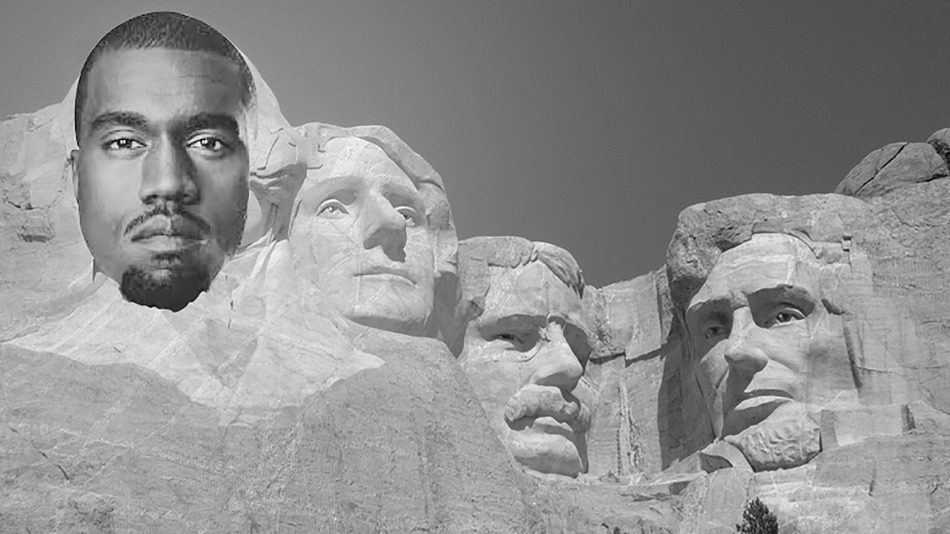
Kanye West may not be ready to enter our historical surveys, but there are other pop culture references that deserve more attention.

President Kanye West may never become a reality, but I’d like to think he’d choose a Secretary of Education who’d endorsed creative pedagogy.

Kanye West’s presidential ambitions remind us that American history is full of fun surprises—even if most of them are short-lived and forgettable. Although it’s probably too much of a stretch to make the entertainment of #Kanye2020 relevant to American history—though Donald Trump’s candidacy perhaps proves that nothing is outside the realm of possibility—I do love to find pop culture references and videos and bring relevance to what students might see as staid topics.

I’m declaring this post a judgment-free zone so that I can be frank: I have a tough time keeping the attention of the freshmen students in my undergraduate survey class. But I have found that one thing that works well is video clips, and so I find myself drawing from youtube nearly as much as I do from powerpoint. Luckily, I’m a TV-show junkie, and so I have have a lot of background at my disposal. (Finally a way to justify my Netflix binges!) Indeed, my use of videos in class is one of the constant positives in my students’ evaluations, so I know it’s not just me who enjoys this approach. Continue reading

Q&A: Kathleen DuVal, Independence Lost: Lives on the Edge of the Revolution

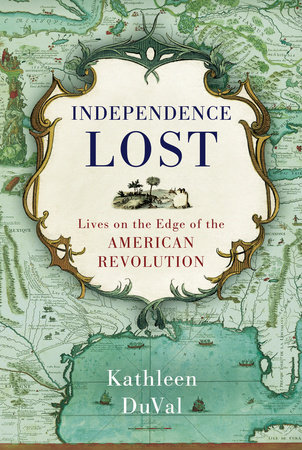
9781400068951Yesterday, Chris Minty reviewed Kathleen DuVal’s latest book, Independence Lost: Lives on the Edge of the Revolution. Today, we continue with an interview with DuVal, who is a Professor of History at the University of North Carolina, Chapel Hill. Continue reading

Re-Writing the American Revolution: Kathleen DuVal’s Independence Lost

Kathleen Duval, Independence Lost: Lives on the Edge of the American Revolution (New York: Random House, 2015).

9781400068951When most people think about the American Revolution and its cast of characters, names like Thomas Jefferson, John Adams, and George Washington spring to mind. On the British side, people might think of John André, Benedict Arnold, John Burgoyne, and, sometimes, Lord Dunmore. Though some of these people appear in Kathleen DuVal’s latest book, Independence Lost: Lives on the Edge of the American Revolution, most of DuVal’s narrative centers around people who seldom feature in books or articles on the American Revolution. It is not the American Revolution that most people know. Indeed, “The American Revolution on the Gulf Coast,” DuVal writes, “is a story without minutemen, without founding fathers, without rebels. It reveals a different war with unexpected participants, forgotten outcomes, and surprising winners and losers.” Continue reading

Guest Post: Steven Elliott on Public History at the Morristown National Park

Today’s guest post comes from Steven Elliott, a PhD candidate in American Military History at Temple University. Elliott (@EastJerseySteve) is writing a dissertation about the American War of Independence, tentatively titled “The Highlands War: Soldiers, Civilians, and Landscapes in Revolutionary New Jersey.” He has worked for seven years as a historical interpreter at Morristown National Historical Park in Morristown, New Jersey, which is the subject of this guest post.

“The chief aim of interpretation is not instruction, but provocation,” Freeman Tilden, NPS
0816151546

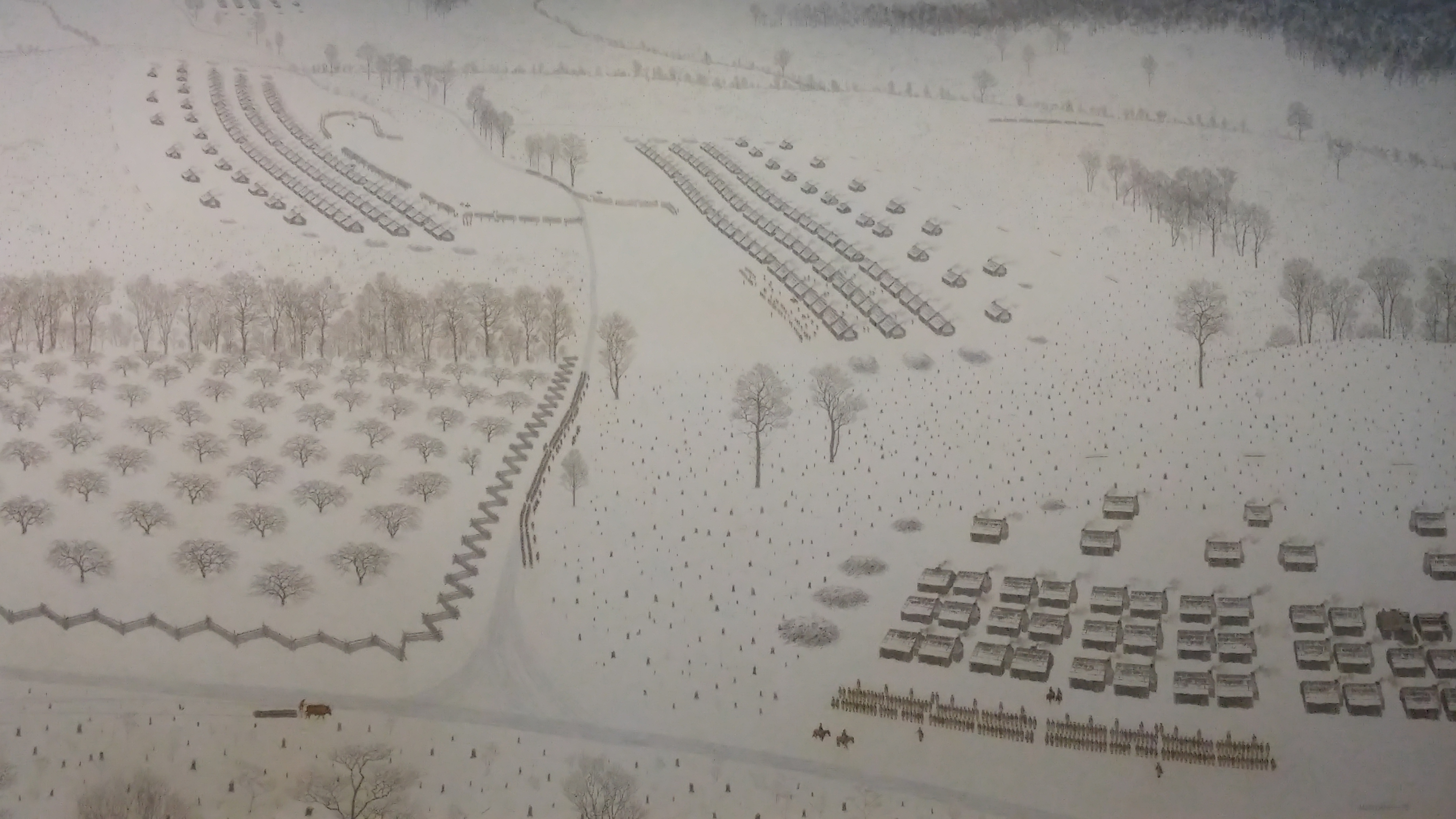
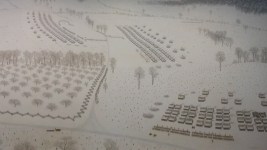
A depiction of the 1780 winter encampment at Morristown, courtesy of Morristown National Historical Park Collection.

Despite Tilden’s call to action, provocative interpretation at many National Parks remains a challenge, especially for Revolution-era sites. As many Americans learn (or re-learn) their history at public history venues, rather than through books or schooling, the Park Service can play an important role in bringing challenging interpretations to popular audiences. Yet, this can be difficult for Revolutionary-era sites, many of which were created to focus on “heroic narratives” emphasizing military campaigns and political leaders. In this post, I reflect on my personal experiences in attempting to challenge visitors’ assumptions about the Revolution, as a seasonal park guide at Morristown National Historical Park in Morristown, NJ.   Continue reading

Guest Post: The Art of Absconding: Slave Fugitivity in the Early Republic

Guest Poster Shaun Wallace (@Shaun_Wallace_) is an Economic and Social Research Council-funded Ph.D. candidate at the University of StirlingHis dissertation examines how reading and writing influenced and aided slave decision-making in the early republic. Shaun holds a B.A. (Hons.) and a MRes. from the University of Stirling and is president of Historical Perspectives, a Glasgow-based historical society run by and for graduate students in the United Kingdom.

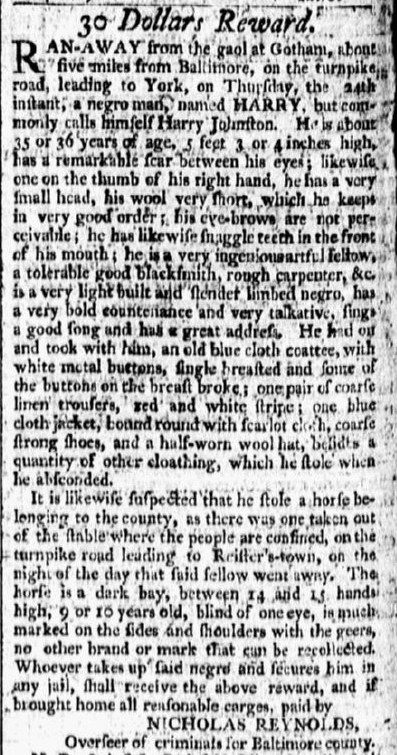
Screen Shot 2015-08-24 at 12.43.09 PMA “very ingenious artful fellow” appears a peculiar description of a runaway advertised for recapture. The advertisement, for Harry or Harry Johnstone, featured in Baltimore’s Federal Gazette newspaper, on May 2, 1800, at the request of Nicholas Reynolds, overseer of criminals for Baltimore County. Harry had absconded from Gotham gaol, near Baltimore. Reynolds described Harry as a “tolerable good blacksmith” and a “rough carpenter.” A “very talkative” slave, he was a man of “great address.” On first impression a relatively congenial description; in actuality, Reynolds’s use of the term “artful” condemned the runaway.[1]
Continue reading

Guest Post: Racial Violence and Black Nationalist Politics

Guest poster Keisha N. Blain (@KeishaBlain) is an Assistant Professor of History at the University of Iowa. She is a regular blogger for the African American Intellectual History Society (AAIHS). She is currently completing her first book entitled, Contesting the Global Color Line: Black Women, Nationalist Politics, and Internationalism. This post shares some additional insights into the racial violence Benjamin Park discussed following the Charleston shooting.

Members of the UNIA in Harlem, 1920s. Image: Black Business Network

Members of the UNIA in Harlem, 1920s. Image: Black Business Network

Someone recently asked me why the black women activists I study were so determined to leave the United States. It was a question I had been asked many times before. As I often do, I explained the complex history of black emigration, highlighting how these women’s ideas were reflective of a long tradition of black nationalist and internationalist thought. I acknowledged the romantic utopian nature of these women’s ideas. However, I also addressed the socioeconomic challenges that many of these women endured and explained how the prospect of life in West Africa appeared to be far more appealing—especially during the tumultuous years of the Great Depression and World War II. I spoke about black women’s ties to Africa and the feelings of displacement many of them felt as they longed for a place to truly call home. It was the same feeling of displacement to which the poet Countee Cullen alluded when he asked a simple yet profound question: “What is Africa to me?”

Continue reading

Guest Review: Keith Grant on Jonathan Den Hartog, Patriotism and Piety

Today’s guest post is a book review from Keith Grant, a PhD candidate in History at the University of New Brunswick, Canada. He is also the co-editor of Borealia, a new group blog on early Canadian history. We strongly encourage everyone to bookmark this new and exciting blog.

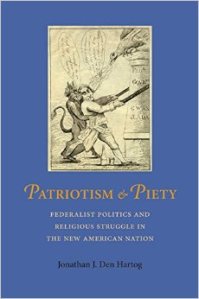
Jonathan J. Den Hartog, Patriotism & Piety: Federalist Politics and Religious Struggle in the New American Nation (Charlottesville: University of Virginia Press, 2015).

PatriotismReligion was an “engine of politics” in the early American republic. Jonathan Den Hartog explains how religion energized (and then, ironically, diverted energy from) Federalist politics, and how the national vision of Federalists changed American religion. He considers northern evangelical Federalists such as John Jay (and his two sons), Caleb Strong, and Elias Boudinot, Unitarian Federalists including John Adams, and Federalists with a southern accent, Henry De Saussure and Charles Pinckney. These individuals are located, through impressive archival research, in a web of interpersonal relationships. Continue reading
The Origins of the American Revolution: Empire

Guest poster Jacqueline Reynoso is a PhD candidate at Cornell University. This is the sixth post in a weeklong roundtable about “The Origins of the American Revolution.” On Monday, Tom Cutterham kicked things off by exhorting historians to stop “separat[ing] economic from constitutional, imperial, political, or even intellectual causes of the revolution.” On Tuesday Jessica Parr raised questions about the convergence of religious and political rhetoric during the Revolution. Mark Boonshoft considered the importance of civil society and associationism. On Thursday, Michael Hattem called for sharper attention to the periodization when discussing the origins and/or causes of the Revolution. In yesterday’s post, Ken Owen argued for using politics as the lens with which to sharpen our focus on the disjunctures of the 1760s and 1770s. Today, the roundtable concludes with Reynoso commenting on alternative vantage points of empire during the American Revolution.

7080030In October of 1780, the governor of Quebec, Frederick Haldimand, warned against changing the laws and regulations of the British colony. It required “but Little Penetration,” he claimed, to reach the sobering conclusion that “had the System of Government Sollicited by the Old Subjects been adopted in Canada, this Colony would in 1775 have become one of the United States of America.” He continued, “Whoever Considers the Number of Old Subjects who in that Year corresponded with and Joined the Rebels, of those who abandoned the defense of Quebec… & of the many others who are now the avowed well wishers of the Revolted Colonies, must feel this Truth.”[1]

Continue reading