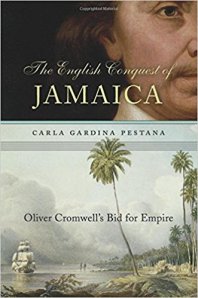
 To accompany the review by Casey Schmitt that was published yesterday, we are pleased to have this Question & Answer with Carla Pestana today regarding her new book, The English Conquest of Jamaica: Oliver Cromwell’s Bid for Empire (Harvard University Press, 2017). We thank Dr. Pestana for her time. Continue reading
Category Archives: Special Features
Book Review: Carla Gardina Pestana, The English Conquest of Jamaica
Carla Gardina Pestana, The English Conquest of Jamaica: Oliver Cromwell’s Bid for Empire (Cambridge: The Belknap Press of Harvard University Press, 2017).
It is an exciting time to be a scholar of Caribbean history. From conferences to publications, the past decade has seen historians of early America, Latin America, and the Atlantic world turn to the Caribbean for insights into the development of empire, slavery, race, and commerce.[1] In this resurgence of Caribbean historiography, the seventeenth century has emerged as a pivotal period. That said, by taking a relatively well-known event like the Western Design, UCLA Professor and Joyce Appleby Endowed Chair of America and the World, Carla Gardina Pestana, demonstrates the value of exploring the early Caribbean in her new book The English Conquest of Jamaica: Oliver Cromwell’s Bid for Empire. Pestana’s work aptly shows the profound intellectual pay-off for historians willing to explore the seventeenth-century Caribbean with bigger questions about imperialism, race, religion, and gender. Continue reading
Roundtable: Democratize the Classroom!
This is the final post in our series on Teaching Amid Political Tension (read Part I, Part II, Part III). Today’s post is by Sean Trainor, who teaches history, writing, and professional communication at the University of Florida. His writing has appeared in The Atlantic, TIME, Salon, The Chronicle of Higher Education, The Junto, Early American Studies, and elsewhere. He co-hosts the weekly podcast Impolitic.
To be perfectly honest, the current age of turmoil has had a minimal impact on the content of my courses. Long before Donald Trump emerged as a presidential contender or Pepe the Frog became an absurd, menacing presence in Americans’ collective consciousness, I had been teaching a politically engaged curriculum that focused on the intersection of racism, sexism, inequality, imperialism, and jingoistic excess in American history. I had designed these courses as a kind of rebuttal to what I saw as the defining sins of American life, and insofar as Donald Trump gleefully embodies these sins, my courses have aged well in the era of his presidency.
Roundtable: Historical Memory and Contemporary Politics
This is the third post in our series on Teaching Amid Political Tension (read Part I, Part II). Today’s post comes from Jennifer M. Black, an Assistant Professor of History and Government at Misericordia University in Dallas, PA, and Network Editor-in-Chief at H-Material Culture. She tweets at @blackjen1.
When asked to contribute to this roundtable, my mind immediately turned to a 100-level course I taught this past spring, “Turning Points in American History.” Though the course had been designed as a “greatest hits” of the US history survey, I decided that I wanted to interrogate the concept of memory as it relates to the Revolution, the Civil War, and more centrally, the shifting understandings of Freedom and Rights in the US. I intentionally chose materials that would trace these changing ideas over time and highlight the legacy of the Revolution in the Civil War, the 1960s, and our own moment today. Ultimately, I wanted to get my students to talk about the 2015 controversy that arose around the Confederate flag after Dylann Roof entered the Mother Emanuel Church in Charleston, SC and brutally murdered parishioners as they prayed. This, I hoped, would push them to consider the continued relevance of these moments—of history—for today. In forcing them to confront the ways the past still shapes our society and culture, I hoped they would be motivated to work towards a better future.
Roundtable: Teaching History in the Trump Era
This is the second post in the series on Teaching Amid Political Tension (read Part I). Today’s post is by Gautham Rao, who is an Assistant Professor of History at American University. He is on Twitter @gauthamrao.
One day in my small undergraduate historiography seminar a few years ago, one student said something really offensive to another student. I can’t really repeat the offending sentence, but it involved a racist aspersion toward a student of color and the offender invoked the name of then-candidate Trump as he spat out the shocking utterance. I remember being so shocked at what I had heard, and the condescending way in which it was said, that I shrank from the occasion. Luckily, the student at whom the comment was directed was more than capable of standing up for herself and others. No matter, I went home that day feeling like I had failed my students. The feeling did not go away for a long time.
Roundtable: Teaching with a Historical Sense and Respect
This is the first entry in our series on Teaching Amid Political Tension. Today’s post is by Tara Strauch, who is an Assistant Professor of History at Centre College in Danville, KY. You can find her blogging at Teaching United States History, and Centre Trail (where she will soon also have podcasts.) Find her on Twitter @historian_tara.
I teach at a small liberal arts college in Kentucky. Like many academics, I spend most of my time teaching, thinking about teaching, and mentoring. I genuinely enjoy my students; they are smart, thoughtful, engaged, and generally eager to learn new things. And while the past year has been an interesting one to spend on a college campus, my students haven’t seemed remotely surprised about the political, racial, and class tensions that have occasionally swept across campus.
Roundtable: Teaching Amid Political Tension
For many teachers in both primary and secondary education, the classroom feels like a far more tense place as we head back for the 2017-2018 academic year than it did just a year ago, thanks to what seem like tectonic shifts in America’s political and social landscape. American history has become ever more politicized as metaphors and analogies abound between contemporary politics and earlier eras and figures―the founding and Andrew Jackson among the most prominent.
Q&A with Adrian Miller
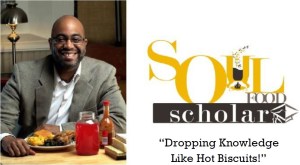 Today we’re featuring an interview with Adrian Miller, author of The President’s Kitchen Cabinet: The Story of the African Americans Who Have Fed Our First Families, from the Washingtons to the Obamas. Miller is a food writer, attorney and certified barbecue judge who lives in Denver, CO. He is currently the executive director of the Colorado Council of Churches and, as such, is the first African American and the first layperson to hold that position. Miller previously served as a special assistant to President Bill Clinton and a senior policy analyst for Colorado governor Bill Ritter Jr. He has also been a board member of the Southern Foodways Alliance. Miller’s first book, Soul Food: The Surprising Story of an American Cuisine, One Plate at a Time won the James Beard Foundation Award for Scholarship and Reference in 2014. Continue reading
Where Historians Work: Q&A with Dr. Stephanie Gamble, Johns Hopkins University
“In addition to finding the things I wanted to do or didn’t want to do [for a career], there were parts of being an academic that I was unwilling to give up, and those were just as important.” ~ Dr. Stephanie Gamble, Librarian for History & Anthropology, Sheridan Libraries, Johns Hopkins University.
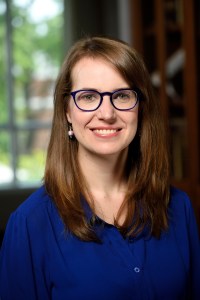 Today, Katy talks to Dr. Stephanie Gamble, Librarian for History and Anthropology in the Sheridan Libraries at Johns Hopkins University. Steph explains the wide range of responsibilities she undertakes as a librarian supporting the studies and efforts of both students and faculty. She also offers some tips for turning your CV into a resume . . . or, what she likes to call a “CV-ume.” Continue reading
Where Historians Work: Q&A with Alea Henle of Western New Mexico University
“It doesn’t hurt to have some self-knowledge about what works for you [and] what kind of environment works for you.” ~ Dr. Alea Henle, Head of Public Services Librarian, Western New Mexico University.
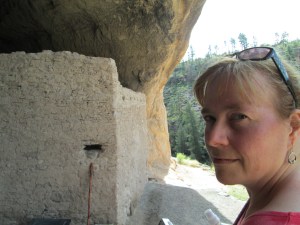 Welcome back to “Where Historians Work: The View from Early America!” This week Katy chats with Dr. Alea Henle, Head of Public Services Librarian at the J. Cloyd Miller Library at Western New Mexico University. The pair discuss the importance of “knowing your audience” as a historian and “self-knowledge” when it comes to thinking about next steps for a career. Continue reading
 The Junto