 It’s been an exciting week for history in the news. First, we learned that Karen Nipps has discovered buried treasure in Harvard’s Houghton Library–650 signatures of Boston citizens pledging to boycott British goods taxed by the Townshend Acts in 1767. The signatories include Paul Revere, John Wheatley (owner of Phillis), and several of Boston’s women.
Collecting Pennsylvania
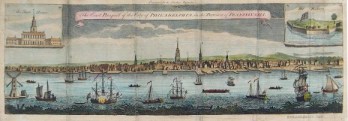
How is digital scholarship charting new prospects for our view of early America? Cathleen Lu, Digital Conversion & Bibliographic Specialist and Dana Dorman, Digital Projects Manager, at the Historical Society of Pennsylvania, kindly described how HSP produces and presents new digital content that’s open for research (along with the library) while renovations continue at 1300 Locust Street throughout early autumn 2013. Continue reading
Guest Post: Thomas Mundy Peterson and the Fifteenth Amendment
Gordon Bond is an independent historian/researcher. He has written an excellent biography of the colonial New York printer, James Parker, entitled James Parker: A Printer on the Eve of Revolution. He is also the author of Hidden History of South Jersey (2013) and North Jersey Legacies (2012). Currently, he is the Founder, Editor-in-Chief & Director of Garden State Legacies .

While a rejection is nothing any writer wants, sometimes it is what we need. Such was the case with my proposals to publishers for a book about Thomas Mundy Peterson. If you’ve heard of Peterson before, chances are it will be for the Wikipedia reason; in 1870, he became the first African-American to vote under the auspices of the Fifteenth Amendment to the United States Constitution. He was, of course, more than that moment.
In Memoriam: Edmund S. Morgan, 1916-2013
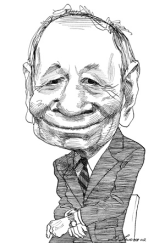 Yesterday, the New York Times and Associated Press reported the death of Edmund Morgan at age 97. The man Bruce Kuklick called “arguably the finest living American historian” needs no introduction here, but today we’re featuring tributes, reflections, and some favorite articles from around the Web. The Junto will be hosting a week-long roundtable on the legacy of Morgan and his most important works in the first week of August.
In the meantime, please feel free to use the comments here to discuss the scholar and his work.
History Is Not Science
Over at Slate last week, our Junto colleague Eric Herschthal reviewed some of the latest popular histories of revolutionary America, including two new studies of the years around 1776 by Richard Beeman and Joseph Ellis. Eric takes a very critical view of the analytical stance of the books–arguing that they are too in thrall to outdated and invalidated historical techniques; focusing too much on elites and ‘leadership’ at the expense of more recent trends in scholarship, such as the new emphasis on those who stayed (or tried to stay) neutral during the Revolutionary War.
Perhaps the most provocative part of the review is this statement:
“If you bought a popular book on science, one that came with a similar sheen of intellectual prestige, and learned that it essentially ignored years’ worth of scholarship, you’d demand your money back. Why should history be any different?”
To me, the answer seems self-evident. Continue reading
There’s a Conference Coming! (Pre-Conference Highlights for #SHEAR13)
As you may have read, the Junto is cross-posting some of the pre-conference highlights for the Society for Historians of the Early American Republic’s (SHEAR’s) upcoming July conference in Saint Louis. Continue reading
Collecting Connecticut
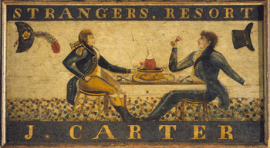 After enjoying the festivities of the Fourth, why not make it a whole weekend of early American history research? The Junto asked Barbara Austen, Archivist at the Connecticut Historical Society, to introduce the institution’s collections and digital projects. Continue reading
Why A Brit Should Teach American Revolutionary History
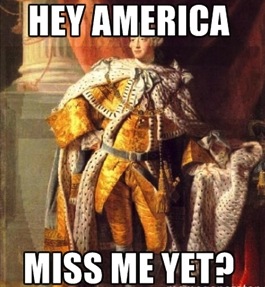 “There’s just one question I have to ask,” said the pleasant young man at the US Embassy, reviewing my visa application. “You are aware that we won, right?”
As a Brit teaching early American history in the U.S., I get some version of this question quite a lot. And it’s something I play up to in my own classes, as well. Many of my courses begin with the warning: “If you learn nothing else over the next 15 weeks, you will understand what it is like to be subject to arbitrary British despotism.” When teaching the Boston Massacre, I jest that I’m worried to give too much information, just in case my students get ideas. And in teaching colonial history, I remind my students that the history we cover is as British as it is American.
Food in America and American Foodways
 In his essay on “Eating American,” the anthropologist Sidney Mintz relates a class conversation during which he admitted that he “did not think that there is such a thing as an American cuisine.”[1] Around this time of year, it’s impossible to ignore the influx of commercials, ads, and general hullabaloo pushing “American food” for the Fourth of July. I have to admit that I’ve been convinced by Mintz’s point for a long time, especially as that assertion pertains to the world of early American cuisine.
I first encountered these definitional problems while writing my undergraduate thesis, (over-)ambitiously titled “A Brief Treatise on the Culinary Nature of America During the Time of the Early Republic. In Which the Author Examines Pumpkins, Puddings, Poems, and People. Calculated to Give the Reader a Better Knowledge of American Food and Foodways, and an Easier Understanding of the American Character.” Needless to say, I was a bit keen on imitating early modern cookbook titles back in the day, but the title betrays more than my need to come up with tongue-in-cheek titles (“Roll, Jelly, Roll” and “Peace Came in the Form of a Cookie” were the fake titles of my dissertation for quite some time): it demonstrates how even though I’d written a long paper about food in the late eighteenth and early nineteenth centuries, I still wasn’t sure what that cuisine offered as a cohesive whole. Continue reading
The New Left’s Usable Past
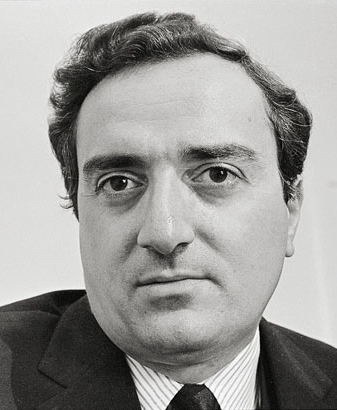
Recently, the USIH blog has been debating what historians mean by “a usable past,” and whether that concept is, well, useful. It reminded me of a clash of views from fifty years ago, which has always struck me as a defining expression of the tension at the heart of the New Left, and perhaps the historical enterprise itself: Eugene Genovese’s argument with Staughton Lynd.
In Intellectual Origins of American Radicalism, Lynd gave a provocative summary of his goals. “I am less interested in eighteenth-century radicalism than in twentieth-century radicalism. […] The characteristic concepts of the existential radicalism of today have a long and honourable history. Acquaintance with that history may help in sharpening intellectual tools for the work of tomorrow.”[1] He was, in other words, presenting a usable past; not a false one, but one constructed for the purpose of the present. Continue reading
 The Junto