History by Freehand: Drawing Your Research

History by Freehand: Drawing Your Research

QuestionMapChances are, if you’ve ever sat next to me during a seminar, lecture, colloquium, workshop, conference, or dinner, you’ve seen me scribbling away on something. Stylus or pen in hand, I’ll create landscapes of crudely drawn people or mountains or ships, encircled and dissected by wavering arrows and question marks.

It’s about time I admit it. I’m a doodler. Continue reading

SHEAR 2013: Conference Recap

SHEAR 2013: Conference Recap

shear2013Last weekend, historians of the early Republic convened in St Louis for the SHEAR annual meeting. As is normal for a meeting that takes place each year in mid-July, the heat and humidity during the day was rather intense (I somehow suspect this is a deliberate design to make the air-conditioned conference rooms a welcome solace!). As with Tom’s post covering the Omohundro conference last month, I can’t possibly hope to give complete coverage. As ever, the number of panels I wanted to attend was greater than the number of panels I could physically attend—the sign of an invigorating conference, for sure, but also a conference whose scope can’t be summed up in 1000 words. If you attended, please add your own reflections in the comments. Continue reading

Beyond the Valley of Mexico

Expanding the boundaries of early America has been a hot topic of conversation this summer. At both the Omohundro Institute conference last month, and at SHEAR last weekend, plenary sessions discussed a broader view of the past. Having internalized the Atlantic turn, scholars are now turning their energies toward the interior, asking how we should integrate the trans-Appalachian and trans-Mississippian West into our stories and interpretations.

Continue reading

SHEAR 2013: Presidential Plenary Session

This post comes to you from the annual meeting of the Society for Historians of the Early American Republic in St Louis. If you’re at the conference, please come and say hello!

The SHEAR Annual Meeting kicked off this year with the Presidential Plenary session, “Missouri: Crossroads of the Early Republic?” Using the conference’s location as a jumping-off point for discussions of the diverse and multifaceted history of the early nineteenth century, four distinguished historians offered reflections as if located in Missouri, looking across the North American continent in different directions. Walter Johnson then concluded the roundtable with the notional title “Looking Forward,” but calling attention to some ways in which the session might profitably be used by historians looking to introduce new themes and stories into their teaching. Continue reading

Guest Post: Sports Talk Radio, Sabermetrics, and Carl Becker

Mark Boonshoft is a PhD candidate at Ohio State University. His work focuses on colleges and academies, especially the networks forged in them, and their role in the formation of revolutionary political culture. 

WFAN 660 AM

“Long time listener, first time caller.” These are words I heard often as a kid. I grew up listening to sports talk radio—mostly 660AM, WFAN-New York—and this is how many a caller introduced themselves. I’ve limited my habit—I no longer keep a transistor radio quietly playing under my pillow while I sleep—but I have not shaken it entirely. Long car rides are still a good chance to binge, and binge I did this July Fourth weekend. Driving through Albany, I called in for the first time ever. Continue reading

Land and Language Symposium: A Recap

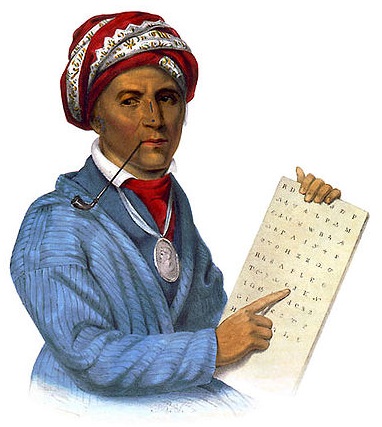
Sequoyah_CharlesBirdKing1830On April 26, Columbia University’s American Studies and Early American History Seminars organized the symposium “Rethinking Land and Language: Dialogues in Early American and Indigenous Studies.” Divided into two roundtables dedicated to land and language, the symposium brought together an array of scholars to discuss how new perspectives in Native American studies might influence work being done across fields in early American history. This post will recap a few of the key themes that emerged from the symposium.* Continue reading

The Problem of Virginia’s Colonial Establishment

I’ve been reading, writing, and thinking about Virginia’s colonial Anglican establishment since I entered graduate school (back when the Galactica had just uncovered the fate of Earth and Lehman Brothers was still short-selling subprime mortgages).  This work led me to decide to write a dissertation on the religious politics and fate of the colonial establishments in the post-Revolutionary Chesapeake.  Beginning the real work on my dissertation, however, has hammered home one important insight: despite all that reading I still don’t have a real sense of what the hell was going with Virginia’s colonial establishment. Continue reading

Violence, Revolution, and Lessons from Egypt

There’s a nasty undercurrent of triumphalism latent in much analysis of recent events in Egypt. When considering how the “Egyptian Revolution” seems to have gone awry in recent weeks, some commentators have lauded the experience of the American Revolution and proclaimed the importance of civil society. If only Egypt had the mature society America possessed in the 18th century, they seem to say, maybe there wouldn’t be a necessity of military control. It’s as if they read Tocqueville and assumed that he spoke timeless truths about the entirety of American history, rather than really thinking deeply about the process of winning Independence. (Then again, we already knew that about George Will, didn’t we?) Continue reading