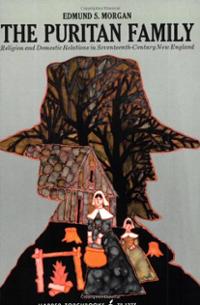
 Family pictures can be the hardest to frame, and Puritans make for appealingly restless subjects. In tackling the early American narrative, scholars must confront the thorny task of portraying the Puritan family with equal parts theological dexterity and sociological skill, a problem that seventeenth-century artists and modern historians alike have sought to refine. Scholars who take on the Puritans must address sin, salvation, and community-building in a way that does not make American democracy feel inevitable; further, they must seize onto the seventeenth-century peculiarities of transatlantic intellectual life in which the Puritans flourished and fell. Wrapped in New England lore and either exalted or disowned by their descendants, the cultural memory of Puritan contributions to the project of nation-building has inspired a broad spectrum of historiographical views. In the early 1940s, then-Harvard doctoral student Edmund S. Morgan and his colleagues would have encountered a popular narrative of Puritanism, one seemingly destined to smother any effort at new work: America’s Puritan “tribe” had briefly inhabited a tau(gh)t sphere, bounded by covenant theology and laden with impossible ethics, peopled by censorious prudes who excelled at capitalist rhetoric and balked at the sinful frivolity of a stray dance. Or… did they? Continue reading
Roundtable: The Legacy of Edmund S. Morgan
This is a very special week at The Junto. Following last month’s sad news of the passing of one of our field’s true giants, Edmund S. Morgan, we all agreed that a weeklong retrospective on his remarkable career was in order. Hence, this week, each day will be given over to a specific work or theme to which Morgan made important contributions during his four-decades long academic career. We hope that this roundtable, being written by graduate students and junior faculty, will provide a snapshot of Morgan’s continuing relevance to new generations of early Americanists almost three decades after his retirement from Yale University.
E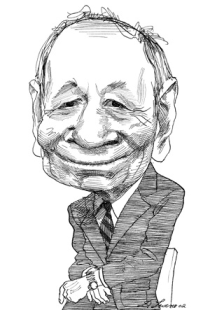 dmund Sears Morgan was born on January 17, 1916 in Minneapolis, Minnesota.[1] His father, Edmund Morris Morgan, was a Professor of Law at the Minnesota Law School, Yale University, Harvard University, and Vanderbilt University. Ed the Younger attended Belmont Hill School from which he graduated in 1933. From there, he left to do his undergraduate work at Harvard. In his second year, he took a course taught by F.O. Mathiessen, his senior tutor, and Perry Miller, whom Morgan called “simply the most exciting lecturer” he had encountered. The experience turned a budding English major into an American history and literature major. Upon graduation, Morgan spent a year at the London School of Economics studying with Harold Laski. Continue reading
The Week in Early American History
 Another week comes to a close and, as usual, The Junto‘s got links…
Buy, Sell, Read

How did eighteenth-century print networks really operate? This week, The Junto asked Jordan Goffin, Special Collections Librarian at the Providence Public Library, how mapping Rhode Island’s early book trade led to the creation of a new digital atlas. Continue reading
The JuntoCast, Episode 3: Teaching the U.S. History Survey
 The Junto is happy to present the third episode of “The JuntoCast.” In case you missed our first two episodes, “The JuntoCast” is a monthly podcast in which members of The Junto discuss issues of both academic and general interest related to early American history, pedagogy, and public history. Continue reading
Reading and Magic
 Last week, the Library Company of Philadelphia and the McNeil Center for Early American Studies hosted the Early American Literature and Material Texts Workshop, generously sponsored for the fifth time by the Andrew W. Mellon Foundation. Led this year by Meredith McGill, the workshop offers a chance each summer for some material-texts scholars to get together and talk about their work and reflect on what attention to the material conditions of texts can bring to the study of, primarily, history and literature. This year there was a particular focus on materiality as it relates to how we think about form and genre–we had great sessions on nineteenth-century autobiography as a genre, P.T. Barnum, the print transmission of colonial media narratives, and the meaning of format from manuscript to magazine to mp3. It’s always humbling and exciting to glimpse the high level on which other scholars are thinking about some of the things I’m interested in. Continue reading
Guilty Pleasures: 1776
 It’s the middle of the summer, so most of us are hard at work on drafting new syllabi, writing and revising articles, dissertations, book manuscripts (or sometimes all three simultaneously), catching up on reading, and all sorts of myriad tasks that aren’t possible during the academic year.
A PhD Student’s Case for Embargoes
Note: I welcome this opportunity to expound more fully on a few quotes from me in a New York Times piece about the AHA statement. You can find my Storify of the debates on Twitter and in the blogosphere related to the statement here. It is also worth reminding readers that the opinions in our pieces are those of the author and not of the blog as a whole.
 A recent policy recommendation by the AHA on the embargoing of dissertations—i.e., limiting online access and distribution for a specified period of time—has created quite a stir in the blogosphere and on Twitter. Many are criticizing the AHA for a reactionary policy that concedes the status quo, i.e., the undue influence and interest of university presses in hiring and tenure decisions and the profession’s overall laxity in adapting to the digital revolution.
Let me be clear from the outset: I am not defending the AHA’s statement, per se. It does indeed ignore the broader issue of what the AHA intends to do about the long-term, systemic problem of the profession’s transition into the digital era, more generally. I am, however, going to defend the policy of allowing students the option to embargo. Continue reading
The Week in Early American History
Last week, we heard the news that Mitch Daniels, formerly governor of Indiana and now president of Purdue University, apparently tried to keep “terrible anti-American academic” Howard Zinn’s People’s History out of Indiana’s schools and universities. This week, Indiana University’s Carl Weinberg revealed how he actually used Zinn’s text in a training course for Indiana high school teachers. Continue reading
Guest Post: Teaching with Legal Sources: The Case of Ann Hibbens
Today’s guest poster is Sara Damiano, a Ph.D. candidate at Johns Hopkins University. Her dissertation is entitled, “Gender, Law, and the Culture of Credit in New England, 1730-1790.”

As we plunge into syllabus-writing season, I would like to contribute to The Junto’s ongoing conversation on teaching with primary sources. (Joseph Adelman and Glenda Goodman have previously written on favorite sources in the survey and on music in the classroom, respectively.) I’m a historian of gender and law, so I would like to make the argument for including legal sources in our syllabi, even for courses that aren’t explicitly focused on legal history. By way of illustration, I would also like to recommend one of my favorite legal history sources for teaching: the 1640 trial of Ann Hibbens before the First Church of Boston.
 The Junto