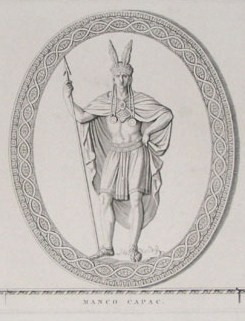
 Everyone’s thinking more globally these days, historians included. But constructing a historical imagination that encompasses the whole planet isn’t only a project of the twenty-first century. The American Revolution took place in an age of global exploration, commerce, and empire. When people wrote and thought about the new nation’s founding, they didn’t look just to Europe and the classical world for connections and comparisons, but to Asia and South America as well. Writers were eager to show that the context in which they understood American events was a global one. Take for example the career of Manco Capac, founding father of the Inca kingdom of Cuzco. Continue reading
The Week in Early American History
 There’s a lot to get through this week, so let’s jump right into it. Continue reading
Seeing Dead People: Biography in the Survey
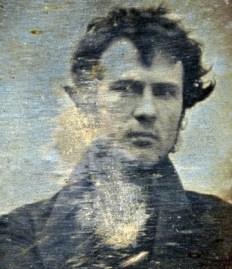 This fall, I’m teaching a freshman U.S. history survey with a couple of unusual requirements. First, my class covers American history, from the seventeenth century to the twentieth, in a single frenzied semester. Second, and also by school policy, all the readings in the course must be biographical. Continue reading
Unorthodox Assignments
 A few weeks ago, I discussed the experience of teaching the comparative history of Native America this past spring. With syllabus-writing season well underway, I thought it would be useful to pick up on one thread I left dangling in that post on how I designed the assignments.
In Memoriam: Pauline Maier, 1938-2013
Yesterday morning, the early American (and broader) history community was deeply saddened to learn of the passing of Pauline Maier. The Junto extends our condolences to her family, friends, and colleagues.
 Pauline (Rubbelke) Maier was born in 1938 in St. Paul, Minnesota. She did her undergraduate work at Radcliffe, where her interest in journalism and contemporary events led her to become a writer for The Harvard Crimson. It was there that she first met her eventual husband, Charles Maier. After graduating in 1960, she was named a Fulbright Scholar and studied at the London School of Economics, while Charles won a Henry Fellowship to Oxford. Upon completion of their fellowships, the two were married at Oxford. Continue reading
Historians Who Love Just a Bit
 I’ve never met anybody, living or dead, who fits their name quite as well as Peregrine Foster did. I encountered Peregrine in the papers of his brother, Dwight Foster, at the Massachusetts Historical Society, where I was looking for compilations of meaty correspondence that depicted land speculators at work. Peregrine was the youngest of three; his older brothers were Congressmen from Massachusetts and Rhode Island. Peregrine, though, wasn’t destined for such prominence.
In 1780, at the age of twenty-one, he more or less flunked out of the College in the English Colony of Rhode Island and Providence Plantations (now Brown University), complaining that his homework was eating him. “Though it is but only 23 Days since he began the 1st Vol of Blackstone’s Commentaries,” his oldest brother wrote, “he lost Flesh surprizingly and . . . is persuaded that it is not for his Interest to pursue his Books.”[1] Peregrine wanted to go to sea, but his brothers disapproved. So instead, after a few years of twenty-something idleness, he resolved to venture west in pursuit of a fortune through land speculation. Continue reading
The Week in Early American History
Readers will be pleased to note that blog posts might indeed be worth something—though how much remains up in the air.
The Paradox of Popular Sovereignty
If Inventing The People is a work of consensus history, it is not one that seeks to celebrate blindly the development of an Anglo-American tradition of popular sovereignty. “The popular governments of Britain or the United States rest on fictions as much as the governments of Russia and China” (13). Indeed, many of Morgan’s most important conclusions in the book are remarkably radical—reminding us that all power is at some level arbitrary, and that appeals to rationality alone cannot justify any single system of government. Indeed, governments that try and conform to the letter of their appeals to the people could not long hope to survive. “The fiction must approach the fact but never reach it” (91). Thus, while Morgan unquestionably concludes there is a coalescence of ideas of popular sovereignty, it is not a reassuring consensus. The consensus on the dominance of popular sovereignty is necessary, for else a community can never be made fit to govern. Continue reading
The American Dilemma

The influence of Edmund Morgan’s American Slavery, American Freedom: The Ordeal of Colonial Virginia is inarguable. For such a lean volume it casts a long shadow upon our understandings of colonial Virginia, the development of slavery in the American South, the relationship between racism and equality, and a variety of other interpretative problems large and small. Scholars since the book’s publication have revised and extended its arguments—into questions of gender and class consciousness—and more than a few have sought to topple its conclusions but Morgan’s central contention that “[r]acism made it possible for white Virginians to develop a devotion to the equality that English republicans had declared to be the soul of liberty” remains more or less intact.[1] During my graduate education, at both the master’s and doctoral levels, Morgan’s arguments have served as the starting point in many a seminar meeting’s discussion of America’s long history of racial inequality. Few interpretations of any historical question can claim such sustained influence.
The question I pondered, as I reread American Slavery, American Freedom for this essay, is simple: why? Why has Morgan’s interpretation of colonial Virginia survived, despite the many shifts in the historiographical winds over the last thirty-eight years, when many other powerfully argued interpretations have withered and died? What gives this book its continuing appeal to the historical profession? Continue reading
Ed Morgan and the American Revolution
 Ed Morgan changed the way historians understood the American Revolution. Over a period of about ten years, from 1948 to 1957, he published three important research articles, a monograph, an essay aimed at a general audience, and a historiographical article, all having to do with the coming of the Revolution. It was an amazing burst of work that elevated Morgan to the upper echelons of American historians. Of course, Morgan had previously worked on Puritanism and would go on to do groundbreaking work on colonial Virginia and slavery. But he made his bones with the American Revolution. Continue reading
 The Junto