
This Colonial Couture post is by guest contributor Charmaine A. Nelson, professor of art history at McGill University. Her latest book is Slavery, Geography and Empire in Nineteenth-Century Marine Landscapes of Montreal and Jamaica.

It is a remarkable fact that everywhere that Africans were enslaved in the transatlantic world, they resisted in a myriad of ways. While scholars have frequently examined the more spectacular and violent forms of resistance (like slave revolts and rebellions), a far quieter type of resistance was ubiquitous across the Americas, running away. Where printing presses took hold, broadsheets and newspapers soon followed, crammed with all manner of colonial news. Colonial print culture and slavery were arguably fundamentally linked. More specifically, as Marcus Wood has argued, “The significance of advertising for the print culture of America in the first half of the nineteenth century is difficult to overestimate.”[1] Continue reading
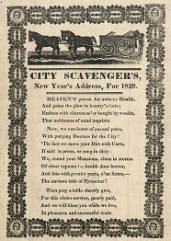 Every day they took apart the city, and put it back together again. New Year’s Day was no different. They worked while dawn, then dusk, threaded the sky, to patch up narrow streets. Lamplighters, an urban mainstay heroicized by
  We at The Junto would like to thank everyone who read along with us for the
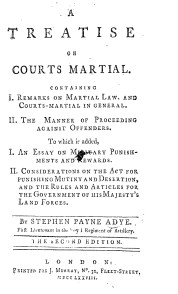 One of the most provocative aspects of the popular Netflix series Orange is the New Black is the way it grapples with the issue of class (as well as race, gender, and sexuality) as it relates to the contemporary American penal system. By contrasting the prison experiences of the main character, Piper, an upper middle class white woman, with those of a range of working class and minority characters, the show invites a deeper reflection on the complex ways in which class divisions help shape and organize a supposedly impartial system of justice. In my own research on British military courts during the Revolutionary War, I have found that class, specifically the divide between officers and enlisted men, also helped determine crucial aspects of the military justice system.
  That’s how I feel about my own project, a history of power and ideology among American elites in the 1780s. The first question that troubles me – why study elites? – tends to dissolve into a slightly different one – what does it mean to study elites? To be meaningful it has to be a way of studying how historical change happens and how the conditions of life are produced. Elites are both separate and inseparable from the rest of society, linked in a complex, ambivalent embrace that constitutes a kind of class struggle. And class struggle is history in action.
 The Junto