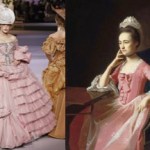
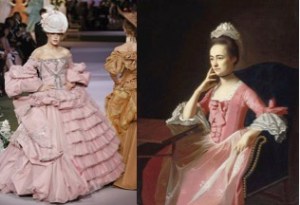
Christian Dior (2011) and Dorothy Quincy Hancock Scott (ca. 1772)
You’re invited…to The Junto’s first roundtable on fashion as history in early American life. In step with New York Fashion Week, we’ll present a new perspective daily on how the material question of “what people wore” shaped personal politics and national identity. We’re, er, bursting at the seams with guest contributors, so watch this space for a new post (or two!) every day. Thanks to a diverse array of scholars, over the next week we’ll get a better look at the sartorial identities of the enslaved; explore Native Americans’ role in the textile trade; take in the view from Benjamin Franklin’s Versailles; meet the artisans who bound up the loose threads of Atlantic World couture; and more. Continue reading

 Late last week, Americans learned about an armed takeover of a federal wildlife refuge in Oregon. It was initiated by a group of men who have an
 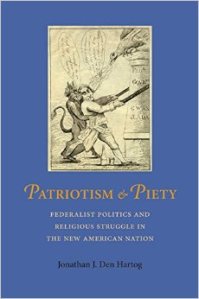 Religion was an “engine of politics” in the early American republic. Jonathan Den Hartog explains how religion energized (and then, ironically, diverted energy from) Federalist politics, and how the national vision of Federalists changed American religion. He considers northern evangelical Federalists such as John Jay (and his two sons), Caleb Strong, and Elias Boudinot, Unitarian Federalists including John Adams, and Federalists with a southern accent, Henry De Saussure and Charles Pinckney. These individuals are located, through impressive archival research, in a web of interpersonal relationships.
 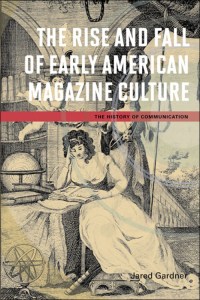 Almost by definition, studying communications media means examining the nature of rationality and the meaning of citizenship. So literary historians generally see the novel, which privileges dialogue and individual subjectivity, as helping to constitute a liberal social order, while political historians see newspapers as essential to various expressions of republicanism and democracy. In
  The Junto