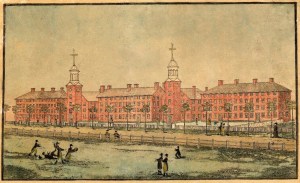
 Last week, in the first part of this post, I argued that we tend to justify the liberal arts in two potentially contradictory ways. First, we assert that the liberal arts offer tools for citizenship. Second, we claim they point our way to human values that transcend any community. I argued that both of these justifications or approaches are necessary. I also suggested that early Americanists have not found it easy to explain what we contribute to the second approach.
Today, therefore, I am taking up the question I posed last week. Does early American scholarship offer anything distinctive to the liberal arts as a way of understanding humanity at large? Continue reading
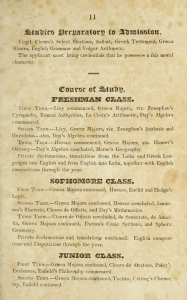
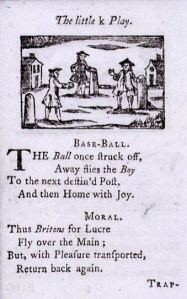 As most graduate students experience first-hand, the relationship between universities and unions can be complex. Our position as students, employees or a combination of the two varies largely by institution, particularly by whether or not our universities are public or private. However, if you’re a Division One football player with a potential NFL career in your future, the construct of a student-athlete underscores a specific question about the nature of labor in higher education. For those who participate in collegiate sports, are academic scholarships a privilege or a right, a special acknowledgement of their abilities on the field or a form of compensation for service to their institutions? Yet the tension between privileges and rights is as much about intellectual activity as it is about physical skills, dating all the way back to Andrew Law’s Privilege of 1781.
 It’s not every Sunday that we get to begin this recap with a genuinely fresh proslavery argument. But this week the International Herald Tribune ran a brief column by Humayan Dar, a self-described
  The Junto