In today’s guest post, Cho-Chien Feng, a PhD candidate at Saint Louis University, remembers his late advisor, Michal Jan Rozbicki, and his last book, Culture and Liberty in the Age of the American Revolution (Charlottesville: University of Virginia Press, 2011). Before Rozbicki began his twenty-seven tenure at Saint Louis University in 1992, he served as Director of the American Studies Center at Warsaw University. His first book on early America, The Complete Colonial Gentleman: Cultural Legitimacy in Plantation America, was published in 1998. He passed away on July 31, 2019.
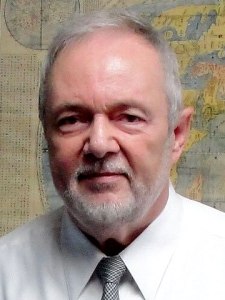 Professor Michal Jan Rozbicki passed away on July 31, 2019 after retiring from teaching this June. As a student of his, I would like to take this opportunity to revisit his contributions to the early American history and hopefully stimulate some further reflections or conversations. In the summer of 2011, when I went to New York to conduct research for my master’s thesis, I found his book, Culture and Liberty in the Age of the American Revolution, in a bookstore. After reading few pages, I was so attracted by his ideas and viewpoints that I knew I wanted to contact this author and see if I could be his student. That was what I did, and that was how I came to Saint Louis. Continue reading
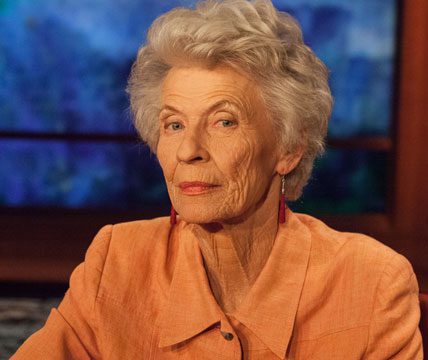 Joyce Oldham Appleby was born in Nebraska on April 9, 1929. After a rootless childhood that involved a number of moves from Illinois to California (and a number of places in between), Appleby attended Stanford University, where she received her BA in History in 1950. After spending a few years working as a writer for Mademoiselle in New York City, she returned to California and subsequently decided to pursue graduate study in history. Following an MA at UC-Santa Barbara, Appleby went on to complete her PhD at Claremont Graduate University in 1966 with a dissertation entitled, “An American in Paris: The Career of an American Pamphlet in French Revolutionary Politics, 1787-89.” In 1968, after a year abroad in Paris with her family, which, by now, included three children, Appleby published her first article in the American Historical Review, “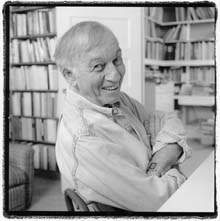
 Last week, the entire field was saddened by the news of the passing of Drew Cayton. Born in Cincinnati in 1954, he earned his bachelor’s degree from the University of Virginia before receiving his PhD from Brown University, where he studied under Gordon Wood. Cayton went on to teach at Harvard, Wellesley, Ball State, and Miami University, before recently moving to Ohio State University, where he held the Warner Woodring Chair. He contributed to the profession in numerous ways, including serving as President of SHEAR in 2011-12 and the Ohio Academy of History in 2015. A frontier history pioneer, Cayton’s most well-known work, Frontier Republic: Ideology and Politics in the Ohio Country, 1780-1825, was published in 1989. His most recent work was Love at the Time of Revolution: Transatlantic Literary Radicalism and Historical Change, 1793-1818, published by the OIEAHC in 2013. A number of scholars responded to our call for remembrances, which we are honored to publish in memory of such a highly respected and pioneering member of our field.
  As a 20 year-old junior at Texas Tech, I had no plans to pursue a postgraduate degree in history. A single semester in Dr. Ethan Schmidt’s class on the Atlantic World changed that. He had an enthusiasm and dramatic flair during lecture that came from his love of colonial history and a background in a musical theater troupe he joined during his childhood in small-town Peabody, Kansas. After beginning every class with eighteenth-century folk music and drinking songs, he launched into topics ranging from the lives of women in Virginia to the epic clash of empires on the high seas, making them all equally compelling and important. He convinced me to apply to Tech’s graduate program, helped me win a fellowship, and remained a steadfast, involved advisor for the next two and a half years. One of his greatest talents lay in making his students feel more like equals. For Ethan, everyone who took his classes was an historian. So, it is with pain that I write this tribute, knowing it should be another recommendation for a teaching award.
 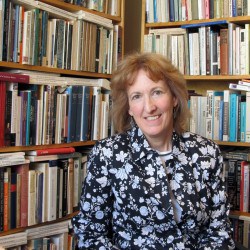 nity of early Americanists is relatively small and close-knit within the larger historical profession. That made it all the more shocking and painful when we learned a few weeks ago of the passing of Dallett Hemphill.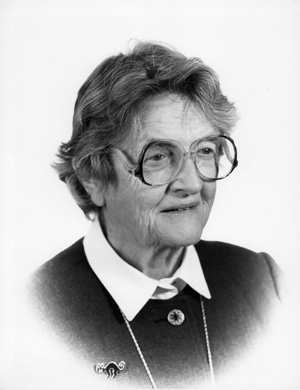
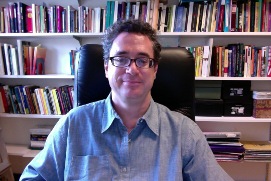 Historian Christopher Schmidt-Nowara passed away suddenly in Paris on Saturday, June 27th at the age of 48. Schmidt-Nowara was a prolific chronicler of the history of slavery and emancipation in the Hispanic world, as well as politics and ideas in the Spanish empire. He received his B.A. from Kenyon College in 1988. He completed his PhD from the University of Michigan in 1995, under the direction of Rebecca Scott, and taught at Fordham University in New York City for over a decade before joining the faculty at Tufts University in 2011. At the time of his death, he was Prince of Asturias Chair of Spanish Culture and Civilization at Tufts.
 Pauline (Rubbelke) Maier was born in 1938 in St. Paul, Minnesota. She did her undergraduate work at Radcliffe, where her interest in journalism and contemporary events led her to become a writer for The Harvard Crimson. It was there that she first met her eventual husband, Charles Maier. After graduating in 1960, she was named a Fulbright Scholar and studied at the London School of Economics, while Charles won a Henry Fellowship to Oxford. Upon completion of their fellowships, the two were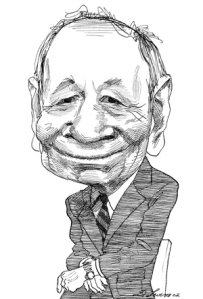
 The Junto