Modern Mormonism is known for being a predominantly white religion—at least in America. But a new book by religious studies scholar Max Mueller argues that the LDS faith has a complex and evolving story of racial imagination during the antebellum period. This is a declension narrative that is at once riveting and wrenching, and one that deserves a close reading.
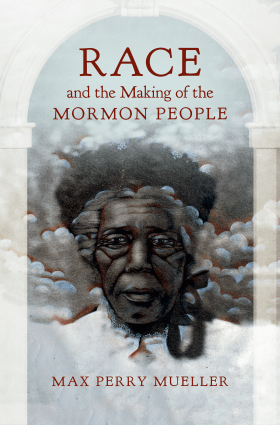 Max Perry Mueller, Race and the Making of the Mormon People (University of North Carolina Press, 2017). 352 pp., 17 halftones, notes, bibliography, index. [Also, make sure to see Mueller’s interview with The Atlantic.]
The Church of Jesus Christ of Latter-day Saints, commonly known as the Mormons, had audacious beginnings. They claimed a new book of scripture, a modern-day prophet, and a restored ecclesiastical structure. It was a reenactment of Christianity’s origins. And according to Max Mueller, those origins included a reformulation of America’s racial imagination. Contemporaries during the mid-nineteenth century were, to use a complex and problematic term, “secularizing” racial differences. They sought to justify slavery and segregation through a strict delineation of racial compartmentalization. Race, in other words, was becoming a fixed identity. But among Joseph Smith’s radical protests was an attack on that very assumption: Smith, the book Smith translated, and the movement Smith led, posited that race was a malleable component dependent more on righteousness than descent. They believed in a moderate “racial universalism” that, though it required the subjugation of non-white races, could unite the entire human family. Or, at least, they believed this during their first two decades, before eventually succumbing to a much more mainstream structure of racial difference. Continue reading →
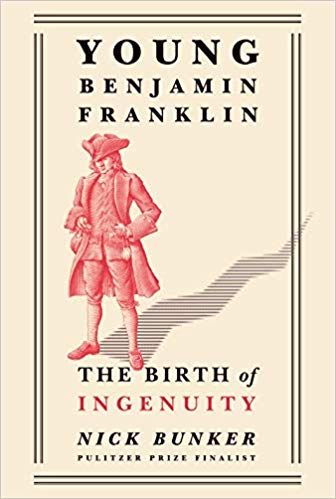 Starting with his own autobiography, there have been many treatments of Benjamin Franklin’s life. How did you approach the project when you were aware of this vast literature, and how did you attempt to carve out your own space?
 We are pleased to host a Q&A with
  Hey, remember us?
 Five years ago, The Junto was born. The immediate context was parochial: as a PhD student studying early American history at the University of Cambridge, I was lonely for fellow scholars. But the niche the blog filled was much more broad: there was a need for a digital space to serve as a hub for early American scholarship. The reception we’ve since received, and the readership we still welcome, has been overwhelming. The blog’s success is indicative of our field’s vibrancy.
  To accompany the review by Casey Schmitt that was
  The role of religion in the early republic has received a fair amount of attention in the recent decades. And though there are competing narratives concerning how ministers and denominations took advantage of the post-revolutionary era—the “
 The Junto