 The semester is in full swing, at least in the United States (hang on, UK readers and Juntoists! It’ll be here before you know it!). And here in New England, after a brutal hot spell midweek, it seems that fall weather has finally arrived. All of which means we’ve got a busy week to review for you. Without further ado, let’s get on with the links!
Author Archives: Joseph M. Adelman
Unorthodox Assignments
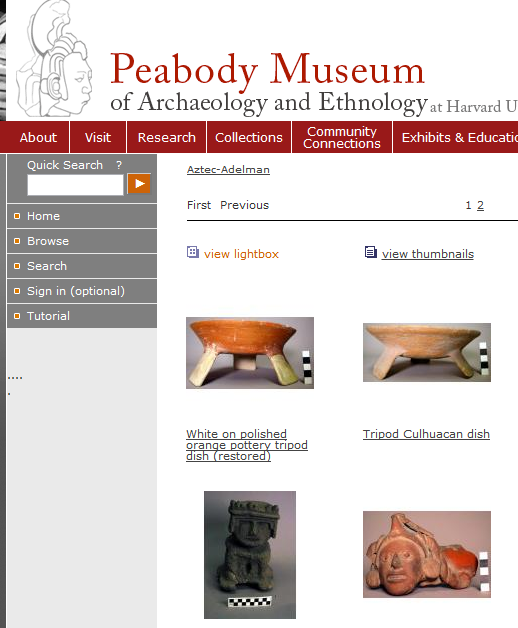 A few weeks ago, I discussed the experience of teaching the comparative history of Native America this past spring. With syllabus-writing season well underway, I thought it would be useful to pick up on one thread I left dangling in that post on how I designed the assignments.
Guilty Pleasures: 1776
 It’s the middle of the summer, so most of us are hard at work on drafting new syllabi, writing and revising articles, dissertations, book manuscripts (or sometimes all three simultaneously), catching up on reading, and all sorts of myriad tasks that aren’t possible during the academic year.
Beyond the Valley of Mexico

Expanding the boundaries of early America has been a hot topic of conversation this summer. At both the Omohundro Institute conference last month, and at SHEAR last weekend, plenary sessions discussed a broader view of the past. Having internalized the Atlantic turn, scholars are now turning their energies toward the interior, asking how we should integrate the trans-Appalachian and trans-Mississippian West into our stories and interpretations.
The Week in Early American History
 It’s hard to believe that the end of June is already upon us. This week features one of the biggest events of the Civil War sesquicentennial with the 150th anniversary of the Battle of Gettysburg. Look for more on that event (both 150 years ago and today) in next week’s edition. Meanwhile, on to this week’s links!
A View from Beyond the Valley
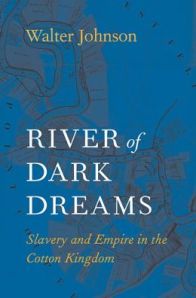 Ben, Mandy, Matt, and Roy have done a marvelous job so far this week summarizing the arguments, the strengths, and a few of the (few) weaknesses of River of Dark Dreams. I therefore want to confine myself to just a few general thoughts, and then focus in on the area where my expertise lies: what this book means for the non-expert in slavery studies. Continue reading
The 10,000 B.C. Question: How to Start the Survey
Today’s post is in the vein of ProfHacker, which is to say that it’s part descriptive of my practices in the classroom, and part a request for others to help work through a common problem.
Having just completed two consecutive semesters teaching the first half of the U.S. survey, I’m hoping to spend a little time this summer mulling how to improve the design of the course. At Framingham State, it runs “from the Age of Discovery to Reconstruction,” according to the course catalog. For our Europeanist readers and colleagues, that may seem like a mere drop in the bucket, but it’s quite a lot of ground to cover in just fifteen weeks. As a survey, everything feels like it gets short shrift. This much I knew going in, but I’m looking forward to the opportunity to reflect. Continue reading
The Week in Early American History
Happy Mother’s Day! Go call your Mom, then come back and take a look at our weekly round-up.
First, in honor of the holiday, one above-the-fold link: Heather Cox Richardson, writing at the Historical Society blog, looks at the origins of Mother’s Day. Hint: it’s not about “people be[ing] nice to their mothers.”
Democratizing Pedagogy: The Just Teach One Project

Last week when the Junto hosted the History Carnival we noted the creation of the “Just Teach One” project, co-sponsored by the American Antiquarian Society and Common-place. Today we’d like to take a closer look at what promises to be an exciting addition to thinking about how to teach early American studies (for both literary scholars and historians).
Twitter as an Agent of Change
“It’s only about what people eat for breakfast.”
“It caused the Arab Spring, you know.”
“It’s nothing but Justin Bieber fans writing gobbledygook.”
“I saw someone do a wonderful live-tweet of a conference last week.”
“I hate when people livetweet conferences.”
What good is Twitter, anyway? And why should you use it? Inspired by the defense of academic blogging offered in this space last month by Ken Owen, I want to offer a few thoughts on using Twitter as a professional historian. Over the past few months, I’ve had several discussions, both in-person and online, in which I’ve been called on to defend Twitter (it seems that others see me as either an effective or at least irrepressible user). After over three years on the service (@jmadelman, if you’re curious), I’ve certainly developed a theory of Twitter for myself. I would not offer it as universal, but I do think it’s important to highlight what’s good about it, and perhaps one or two things that I don’t like.
 The Junto