Roy Rogers kicked off yesterday’s 4-day roundtable with a review of the graphic novel, Rebel. For day two of our roundtable on graphic novels and history, I will discuss the use of graphic novels in teaching traumatic histories.
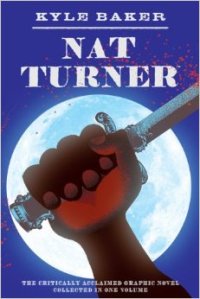 As anyone who has taught the history of slavery knows, it can be challenging. It is an important, but also emotionally loaded subject that can provoke spirited responses from students. Some students are resistant to discussing what they view as an ugly event in the past. Others may become defensive. And, for others, the history of slavery may be personal. The challenge becomes presenting the history in a thoughtful way that will engage students, but does not whitewashing history. Other traumatic events—genocide, war, etc.—can present similar pedagogical challenges.
 Historian Christopher Schmidt-Nowara passed away suddenly in Paris on Saturday, June 27th at the age of 48. Schmidt-Nowara was a prolific chronicler of the history of slavery and emancipation in the Hispanic world, as well as politics and ideas in the Spanish empire. He received his B.A. from Kenyon College in 1988. He completed his PhD from the University of Michigan in 1995, under the direction of Rebecca Scott, and taught at Fordham University in New York City for over a decade before joining the faculty at Tufts University in 2011. At the time of his death, he was Prince of Asturias Chair of Spanish Culture and Civilization at Tufts.
 As funding budgets shrink, many historians face increased pressure to make the most of their time in distant archives. For a number of years now, a lot of researchers have favored a good digital camera, which (theoretically) allows for a faster gathering of primary source materials than traditional note-taking methods. Of course, as historian Larry Cebula humorously observed, failure to exercise good digital stewardship with your own personal archives
  Welcome to another edition of This Week in American History. It has been a busy, yet troubling two weeks.
 I’m grateful to The Junto blog for inviting me to discuss how to publish a journal article. Although the views that follow are my own and the details of the process vary somewhat from journal to journal, I know from conversations with other editors that there is consensus on the essentials.
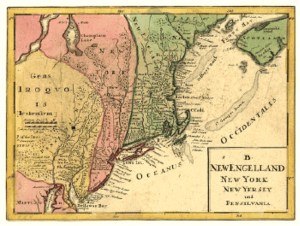 States’ rights looms large in discussions of both historical and contemporary American politics and its federal union. For good reason, the ante-bellum states’ rights movement of the South is often the first to come to mind, but such a narrow focus does not do justice to the topic as a dynamic historical phenomenon, nor does it provide adequate context for the more modern manifestations of states’ rights movements. In the early republic, New Englanders promoted their own brand of states’ rights, to protect a type of near-sovereignty they attributed to their legislatures, as the best way to promote their interests and shield individuals from distant oppression.
 Historical knowledge plays an important role in the international business field. Ironically, as programs in the humanities are forced to justify their relevance to administrators, elected officials, and the general public, we, as a society, are in need of those fields’ contributions to creating the desired “global citizen.”
 Almost all university presses prefer to first receive a proposal from a potential author, rather than a full manuscript. Alas, no editor anywhere has the time to read the huge number of manuscripts that come our way, and the situation would be even worse if we attempted to read manuscripts from every potential author seeking a publisher. This makes the proposal an ideal introduction to a topic and a crucial step in the process towards publication. Although an author may have chatted with an editor prior to submitting a proposal (if not then I urge you to get to an academic conference and chat up editors in the exhibit hall), the proposal is the first formal representation of a book project from the author to the publisher.
  The Junto