 Last week, The JuntoCasters—aka Ken Owen, Roy Rogers, and myself— appeared on the new, fast-growing podcast hosted by Liz Covart called Ben Franklin’s World, an interview-based early American history podcast that launched in October 2014. Already, the podcast has a catalogue of twenty-four episodes and a rapidly growing audience. Most episodes feature Liz interviewing a historian/author about a recent book and some of her past guests have included such notable historians as Alan Taylor, François Furstenberg, Claudio Saunt, Joyce Chaplin, and James Green, as well as The Junto’s own Sara Georgini for an episode about John and Abigail Adams and the Adams Papers. Continue reading
Category Archives: Interview
Q&A with Stephen R. Berry, Author of A Path in the Mighty Waters
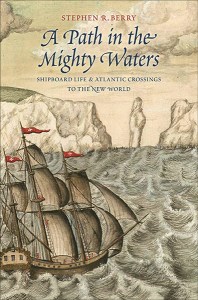 The following is an interview with Stephen R. Berry, an Associate Professor of History at Simmons College. My review of Berry’s recently-released book, A Path in the Mighty Waters: Shipboard Life and Atlantic Crossings to the New World (New Haven: Yale University Press, 2015) appeared on the blog yesterday. Today, he agreed to answer some follow-up questions about his book and his future research plans. Continue reading
Bernard Bailyn’s Last Act?: An Interview with the Harvard Historian on His New Book
 Bernard Bailyn’s contribution to our understanding of early American history is so vast that it’s easy to forget he’s still publishing books. His writings on the American Revolution, begun in the 1960s, remain required reading for any doctoral student studying for orals. And even since retiring from Harvard a quarter century ago, he’s continued to influence the field, perhaps nowhere more than through his promotion of Atlantic history.
Yet even at 92, Bailyn isn’t finished. His new book, Sometimes An Art: Nine Essays on History (Knopf), can be read in a number of ways: as an introduction to his vast corpus of work; a chance to respond to his critics; a reflection on the meaning of history; and, perhaps, a summing up of sorts. “It reflects some of my own work over the years,” Bailyn told me during an interview from Boston. The essays he’s chosen to include, dating from 1954 to 2007, have only appeared in either obscure publications or dated back issues of prominent journals. But in one way or another, he said, they “concentrate on certain major themes” in all his work. Continue reading
Retelling “A Tale”: An Interview with Richard S. Dunn
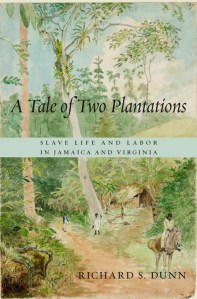 Wrapping up our roundtable review of A Tale of Two Plantations, The Junto chats with Richard S. Dunn about microhistory as a “healthy antidote to top-down history,” and the archival surprises that reshaped his work. If you are near Harvard University on February 5th, come and hear more about the project. Continue reading
Reviewing Digital History
 Today, The Junto interviews Dr. Jeffrey W. McClurken, Professor of History and American Studies & Special Assistant to the Provost for Teaching, Technology, and Innovation at University of Mary Washington. McClurken (Ph.D., John Hopkins University, 2003) is Contributing Editor for Digital History Reviews, Journal of American History. Continue reading
Q&A with Kyle T. Bulthuis, Author of Four Steeples over the City Streets
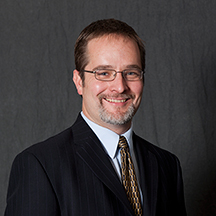 The following is an interview with Kyle Bulthuis, an assistant professor of history at Utah State University. Jonathan Wilson’s review of Kyle’s recently-released book, Four Steeples over the City Streets: Religion and Society in New York’s Early Republic Congregations, appeared on the blog yesterday. Kyle agreed to sit down and answer a few follow up questions about the book and his future research plans, which we are happy to post today. Continue reading
Interview: Alex Gourevitch on Thomas Paine
 Alex Gourevitch is an assistant professor of political science at Brown University. At this summer’s SHEAR conference in Philadelphia, he presented (without reading! It’s still a novelty to us historians!) a paper called “Paine and Property: Radicalism and Anti-Radicalism in Property-Owning Democracy.” In today’s interview, he returns to those themes for The Junto.
Continue reading
Junto Summer Book Club: Interview with Kathleen Brown
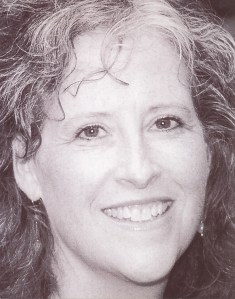 We at The Junto would like to thank everyone who read along with us for the Junto Summer Book Club. To bring the book club to a close, we caught up with Kathleen Brown, the author of Good Wives, Nasty Wenches, Anxious Patriarchs, via email. Brown is a professor of history at the University of Pennsylvania. Her most recent book is Foul Bodies: Cleanliness in Early America.
In our interview, Brown reflects on Good Wives, Nasty Wenches, Anxious Patriarchs eighteen years after its publication, assesses the state of women’s history and gender history, and shares her current project. Continue reading
Interview: Andrew Jackson O’Shaughnessy
 Andrew O’Shaughnessy is the Saunders Director of the Robert H. Smith International Center for Jefferson Studies at Monticello, and a Professor of History at the University of Virginia. His recent book, The Men Who Lost America: British Leadership, the American Revolution, and the Fate of the Empire, won this year’s George Washington Book Prize and several other awards. Tom Cutterham spoke to him for The Junto.
Continue reading
The First Year of Founders Online: An Interview with Kathleen Williams
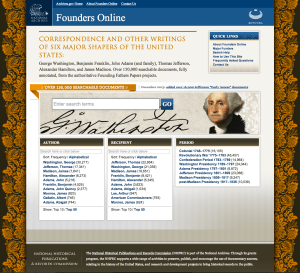 Founders Online launched just over a year ago on June 13, 2013. Today, The Junto catches up with Kathleen Williams, the Executive Director of the National Historical Publications and Records Commission (NHPRC), to get a sense of how Founders Online is being used, how much it is being used, and who is using it. We also discussed what the future may hold in store for Founders Online in terms of further website and content development. (NB: In my capacity as a Research Assistant at the Franklin Papers, I have been proofreading the Founders Online transcriptions of the Franklin volumes. I have also used the database for research, both for pieces I have written for the blog as well as my dissertation.) Continue reading
 The Junto