Chryssa Sharp is an Associate Professor of International Business in the Robert W. Plaster School of Business and Entrepreneurship at Lindenwood University in St. Charles, Missouri. She earned a PhD in Management from the University of Calgary in Canada and an MBA in International Management from the Thunderbird School of Global Management. Dr. Sharp’s industry experiences encompass aspects of marketing, strategic planning, and cross-cultural communications. She has also been involved with developing programs to support small business exporting.
 Historical knowledge plays an important role in the international business field. Ironically, as programs in the humanities are forced to justify their relevance to administrators, elected officials, and the general public, we, as a society, are in need of those fields’ contributions to creating the desired “global citizen.”
 Almost all university presses prefer to first receive a proposal from a potential author, rather than a full manuscript. Alas, no editor anywhere has the time to read the huge number of manuscripts that come our way, and the situation would be even worse if we attempted to read manuscripts from every potential author seeking a publisher. This makes the proposal an ideal introduction to a topic and a crucial step in the process towards publication. Although an author may have chatted with an editor prior to submitting a proposal (if not then I urge you to get to an academic conference and chat up editors in the exhibit hall), the proposal is the first formal representation of a book project from the author to the publisher.

 How does one select a sampling of dozens of pairs of eighteenth-century shoes and translate the assemblage into a coherent museum exhibit housed in one charming, but tiny gallery? How does one translate a five-year study of eighteenth-century consumption patterns, cultural diffusion, and gentility in the Atlantic shoe trade into a show that will excite the imaginations of early Atlantic scholars yet appeal to the general public? How does present a material culture and fashion history exhibition in a refined Athenaeum situated in a corner of New Hampshire?
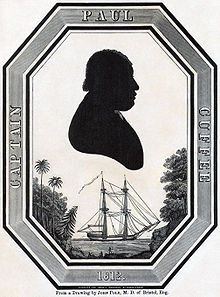 Credit cards, electronic banking, online shopping, and a host of other modern forms of commerce did not exist at the turn of the nineteenth century. Merchants throughout the Atlantic relied on reputation and good character when determining a customer’s credit worthiness. Not exactly a foolproof way to do business but seemingly less risky than our fully electronic world of money and banking in twenty-first century America. Yet, identity theft and fraud were still a part of doing business.
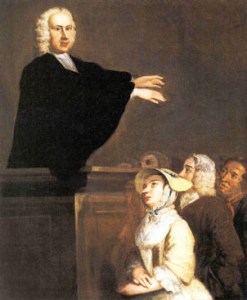 Those familiar with the first great awakening will undoubtedly recognize George Whitefield as a key figure of eighteenth century evangelical culture in Britain and its American colonies. Like many associated with the Methodist movement in Whitefield’s time, the prolific preacher and publisher saw himself as an Anglican in discussion with the Church of England about reform and an allowance for a broader religious experience. However, his theology, the new birth doctrine, the gathered church, etc., all alienated Whitefield from the Anglican hierarchy within the first few years of his missionary career.
 The Junto