Hannah Bailey, a PhD candidate in History at the College of William & Mary, studies the interconnectivity between developing notions of race and the expansion of the African slave trade in the early modern French Atlantic. She graduated with honors from the University of Wisconsin-Madison in 2010, with degrees in History and French, and a minor in Gender and Women’s Studies. Her master’s thesis focused on how women like Eliza Jaquelin Ambler Brent Carrington remembered, defined, and recorded their experiences during the American Revolution for her master’s thesis. Her dissertation uses histories of West Africa written by individuals like Jean-Baptiste Labat to help explain why, in early eighteenth-century accounts of the region, the fiction of African inferiority began to supersede the fact of African political and economic dominance on the West African coast.
 I never learned the verb “rebobiner” in any of my nine years’ worth of French courses. I don’t blame my French teachers or professors for this. Neither they nor I had any idea that it would one day become an integral part of my vocabulary as I commenced my dissertation research in the Archives Nationales d’Outre-mer in Aix-en-Provence, France. As it happens, “rebobiner” means “to rewind the bobbin of microfilm that you spent twelve minutes learning how to load onto the microfilm reader, because microfilm is always complicated and is triply so when the directions are in a foreign language,” or…something like that. Despite my attempts to prepare myself for my time in the French archives, I experienced more “trials by fire” than I might care to admit. All of my listening to French radio, reading complex French secondary sources, and frantic scouring of French online archival inventories only got me so far. Despite the best efforts of the kindest and most helpful archival staff I’ve yet encountered, I often had to learn by doing, and that wasn’t always easy. It was, however, always worth it. Continue reading →
 October 31, 2014. On the most fearsome day of the year, Tufts University convened “Fear in the Revolutionary Americas, 1776-1865,” a one-day conference designed to explore the question: What role did fear play in the revolutions that occurred in North and South America between 1776 and 1865? Continue reading
  It is not often that historiographical essays have a hero. But, in Al Young’s essay, “American Historians Confront ‘The Transforming Hand of Revolution’,” it’s hard not to see J. Franklin Jameson that way. Jameson was a New Englander by birth and character who helped found the American Historical Association in 1884. Never a prolific historian (or teacher, for that matter), Jameson’s greatest impact—beyond the important structural role he played in the emergence of History as a modern academic and professional discipline in the United States—came in the form of a small collection of four lectures originally written in 1895 but published largely in the form they were given at Princeton 30 years later. That small book, The American Revolution Considered as a Social Movement, is not just the starting point for Young’s assessment of the historiography of the American Revolution in the twentieth century, it is quite literally its genesis.
  I’ve admired Alfred Young’s wonderful, if unwieldy, Masquerade: The Life and Times of Deborah Sampson, Continental Soldier (New York: Knopf, 2004) since I first encountered the book in an undergraduate classroom a decade ago. Young’s biography of Sampson, which covers the life, career, and memory of this remarkable woman who “passed” as a man in the Continental Army for seventeen months, shares much in common with its intellectual sibling,
  Such is the line that Alfred Young opened his classic The Shoemaker and the Tea Party: Memory and the American Revolution (Boston: Beacon Press, 1999). In a way, the phrase captures much of his overall scholarship. Other contributions to this roundtable have/will cover(ed) how he did this in his influential books, essays, and edited collection. In my post, I want to focus on how he translated his approach into a work that is probably read more than any of his other books. Indeed, Shoemaker and the Tea Party is a popular book in the classroom, both undergrad and graduate, since it tells a fascinating tale with an important message.
  In 1967, Alfred F. Young transformed his Northwestern doctoral dissertation into a dense saga of New York’s Revolutionary power players and their roiling class wars, entitled The Democratic Republicans of New York: The Origins, 1763-1797 (Chapel Hill: Published for the Institute of Early American History and Culture at Williamsburg, Va., by the University of North Carolina Press). Young’s work, in many ways, spoke both to the colonial past that he studied and to the America of President Lyndon Johnson, a nation beset by party strife over civil rights, the Vietnam War, and a range of social issues. And, tucked away near the volume’s end, Young shared a few bright-lines of inquiry for any student of political history—no matter that his focus here is firmly fixed on New York State. “I have been interested in politics as it is organized by the leaders,” Young writes, “how it appears up front to the voters, how it all turns out in the elections, and what the elected do with political power” (596).
  This week, The Junto is dedicated to reconsidering the legacy of Al Young. Young died two years ago this week, but we scheduled the timetable unaware of that coincidence. Instead, we originally scheduled it to coincide with Pope’s Day, a topic many of us associate with Al Young. After his passing, the internet was filled with many personal and heartfelt memoriams from colleagues and former students. But this week, my fellow Juntoists and I will reconsider the legacy of Al Young and a body of work with few equals in the history of early American scholarship.
 On September 18th millions of voters in Scotland will head to the polls to answer a simple question: “Should Scotland be an independent country?” As an historian of the American Revolution living and working in Scotland I am struck by the parallels not just between the two movements for independence, but more significantly between the ways in which the British government in the eighteenth century and the UK government in the twenty-first century have challenged those who sought and seek independence.
 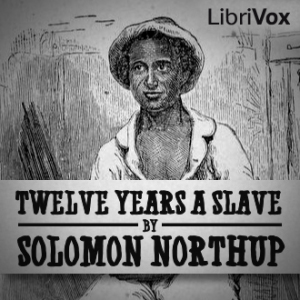 As a newly-minted ABD embarking on my first stab at teaching the early American history survey, I find myself buried beneath my own excitement for the material. No one warned me that the biggest obstacle to designing a course would be curbing my own unrelenting enthusiasm. Perhaps no part of that enthusiasm has proven more damaging to my syllabus than my passion for storytelling. Specifically, I approached teaching the early America survey with a litany of historical works of fiction and non-fiction that I wanted to familiarize undergraduates with: 12 Years a Slave, Benito Cereno, Poor Richard’s Almanac, Letters From an American Farmer, among many, many other titles. Before too long I was looking at a weekly reading word count over 150 pages. Yikes.
  The Junto