
Francis Parkman’s Medicine Chest
Pratt must be paid. There was a route to examine one last time, and three shirts to stuff into a knapsack bulging with flannels and history books, powder and shot. The Berkshire Hills trip was a rush job; he needed to return for graduation in late August, 1844. Into the knapsack went a 4” x 2½” dusky-green journal, with shorthand notes in pencil. After a boyhood spent hunting and riding bareback on the Medford frontier, the blue-eyed Harvard senior, 20, knew how to pack for a research errand into the wilderness. Already, he boasted colorful adventures from past summer forays, fine-tuning the field skills that history professor Jared Sparks did not cover in class. Take July 1841: Scaling his first New Hampshire ravine, the rookie historian slipped and swung free, clawing air. As he “shuddered” and clung to the crag, a hard sheaf of pebbles fell, “clattering hundreds of feet” to the sunny gulf below.
 Back in April, I had a rather surreal teaching experience. A class project, focusing on tweeting the assassination and funeral train of Abraham Lincoln, attracted a good deal of media attention in central Illinois. My class ended up appearancing in local newspapers, radio, and even with
 In her
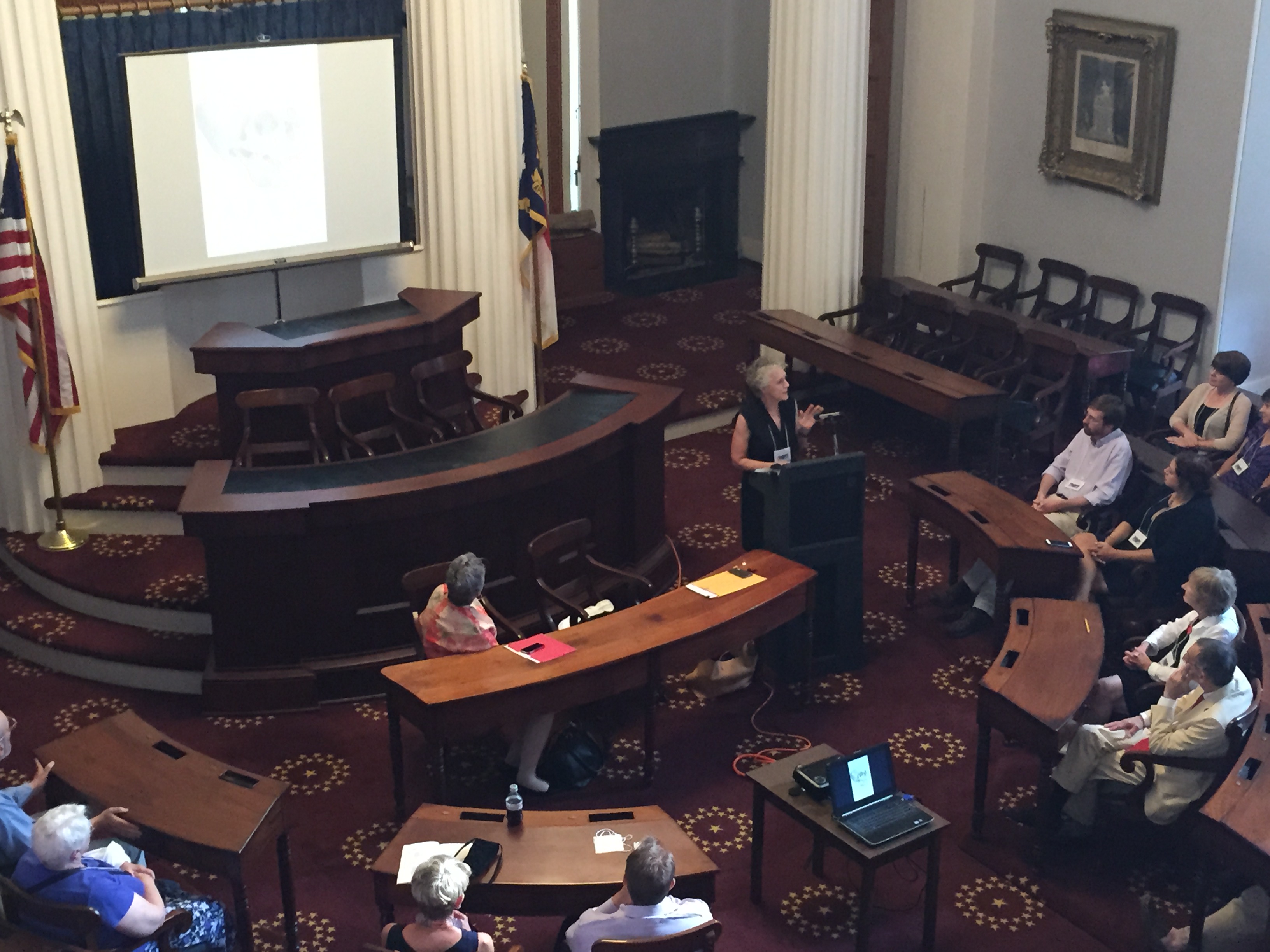
 nity of early Americanists is relatively small and close-knit within the larger historical profession. That made it all the more shocking and painful when we learned a few weeks ago of the passing of Dallett Hemphill.
 The Junto