 Here in the United States, today is Memorial Day, a holiday originally created in the late 1860s to honor the Union Civil War dead, and now a time to commemorate all of America’s war dead. Because it’s also observed as a three-day weekend, we’re bringing you a special Monday holiday edition of The Week in Early American History. On to your morning reading…
Tag Archives: American Revolution
The American Revolution: People and Power
 It’s increasingly clear that, while the era of grand syntheses may be over, there will be no shortage of provocative new work on the American Revolution. Last week the Huntington Library hosted the third major conference on the revolution in as many years, following those organised by the McNeil Centre in 2013 and the Massachusetts Historical Society back in April. The American Revolution: People and Power may have been smaller than its two predecessors, but what it lacked in scale it made up for in intellectual focus and cohesion. In this post, rather than giving a straightforward recap, I’ll report what I took away as the headlines. Continue reading
Set in Stone
 Every president has a past, and to his regret, John Adams did not save all of it for history’s sake. “Whatever you write preserve,” he directed his grandsons in 1815. “I have burned, Bushells of my Silly notes, in fitts of Impatience and humiliation, which I would now give anything to recover.” Continue reading
When the Old is New
 Sometime in the 1990s, NBC decided to promote its usual lineup of summer reruns with the tag line, “if you haven’t seen it, it’s new to you!” I’ve thought about that line occasionally since I started grad school, and came to it again this week as I’m working on syllabi (including, yes, a belated book order) for the fall semester. The problem I’m facing is a familiar one: how to balance the desire to engage in discussions of the newest work on a given topic—in this case the American Revolution—with the fact that they haven’t yet encountered some of the classic arguments.
The King’s Arms?
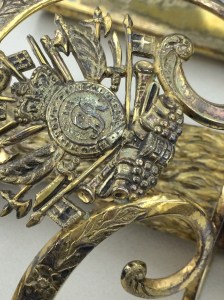 Paper soldiers on the march, and tin men tilting at swordpoint: these were the first battle ranks that Grenville Howland Norcross, aged 11 in Civil War Boston, led to glory. Between phantom invasions and replays of Antietam with “relics” received as gifts, Norcross gobbled up the military heroics popularized by the era’s dime novels. In a childhood diary that illustrates how “lowbrow” literature grabbed the imagination of a warsick homefront, Norcross chronicled his progress through the antics of Kate Sharp, Old Hal Williams, and Crazy Dan. By 1875, Norcross had outgrown his toy battalions, graduated Harvard, and stepped into a law career. An avid autograph collector, from his Commonwealth Avenue perch Norcross nurtured the city’s flourishing history culture, taking a leading role at the New England Historic and Genealogical Society, the American Antiquarian Society, and the Bostonian Society. He rose to serve as Cabinet-Keeper for the Massachusetts Historical Society, supervising the intake and cataloguing of major collections including, by April 1920, the library of historian Henry Adams. At the Society’s next meeting, held in the midafternoon of 10 June, Grenville Norcross reported on the Cabinet’s newest curiosity, which has proven a royal mystery ever since:
Race, Riot, and Rebellion: A Bibliography
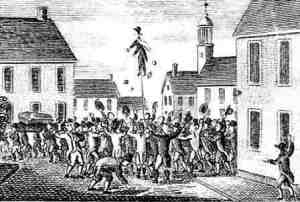 This morning on the other side of the Atlantic, I woke up early in preparation for a seminar on William Otter, whose History of My Own Times closes the list of our readings in my Revolutionary America class. Essentially, Otter was a brawling, violent, white man in the 1800s, living variously in New York, Pennsylvania, and Maryland. He jumped from job to job while engaging in various aggressive “sprees” against African Americans, Irishmen, and anyone else who seemed a likely candidate before becoming a burgess of Emmitsburg, Maryland.[1] And instead of getting up to prep this morning, I remained in bed, glued to the #BaltimoreUprising and #BlackLivesMatter hashtag on Twitter, as, I’m sure, were many of you during the late hours of the night. During times like these, it’s part of our jobs as historians to acknowledge that different types of violence have specific meanings that change over time. And so Juntoists have compiled a bibliography for our mutual education. Continue reading
The Week in Early American History

Welcome to another The Week in Early American History! Take a break from the end-of-semester crunch to check out the unprecedented unification of the four surviving Magna Carta manuscripts or to a look at the tree root that ate Roger Williams. On to the links! Continue reading
Recap: “So Sudden an Alteration” Conference (9-11 April 2015)
 Two weeks ago, 175 historians descended upon the Massachusetts Historical Society (MHS) in Boston for a three-day conference that considered the political, social, economic, and global parameters of the American Revolution. The conference consisted of eight panels (with pre-circulated papers), two keynotes, and some special presentations on digital projects. The conference proceedings were live-tweeted under #RevReborn2, and fellow Juntoist Joseph Adelman provided some live coverage on the blog. The Junto has also had some post-conference commentaries, including “You Say You Want a Revolution” by Joseph Adelman and “The Suddenness of the Alteration: Some Afterthoughts on #RevReborn2” by Michael Hattem.
Review: Andrew Beaumont, Colonial America & the Earl of Halifax, 1748-1761
Andrew D. M. Beaumont, Colonial America & the Earl of Halifax, 1748–1761. New York: Oxford University Press, 2015.
 Andrew Beaumont has written a provoking biography of George Montagu Dunk, second earl of Halifax (1716–1771) that covers the crucial period between 1748 and 1761. This book offers a re-evaluation of how we understand colonial American politics and, by implication, it forces us to reconsider the origins of the American Revolution.It also reorients our understanding of British figures who wanted to centralize the Empire during the eighteenth century. For Beaumont, we should look less at the familiar cast of characters: George Grenville; the Earl of Bute; William Pitt, later Lord Chatham; and Lord North. There are others, of course. But, we are familiar with these men. We know their stories. We know their contributions. Beaumont does not argue that we should look away from these men. Rather, he argues that we should look at other “ambitious men” and how they affected the British Empire. In this book, Beaumont examines the “Father of the Colonies,” the Earl of Halifax. Continue reading
You Say You Want a Revolution
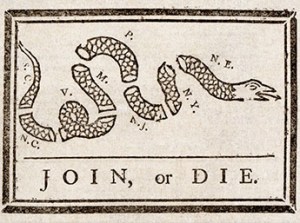 At the risk of overkill, I have thoughts about the “So Sudden an Alteration” conference hosted by the Massachusetts Historical Society, which I attended along with a number of my Junto colleagues. I’d like to pick up on the themes of the conference to discuss an underlying tension in the conversation that never quite reached the surface in explict terms.
 The Junto