This is the first entry in our series on Teaching Amid Political Tension. Today’s post is by Tara Strauch, who is an Assistant Professor of History at Centre College in Danville, KY. You can find her blogging at Teaching United States History, and Centre Trail (where she will soon also have podcasts.) Find her on Twitter @historian_tara.
I teach at a small liberal arts college in Kentucky. Like many academics, I spend most of my time teaching, thinking about teaching, and mentoring. I genuinely enjoy my students; they are smart, thoughtful, engaged, and generally eager to learn new things. And while the past year has been an interesting one to spend on a college campus, my students haven’t seemed remotely surprised about the political, racial, and class tensions that have occasionally swept across campus.
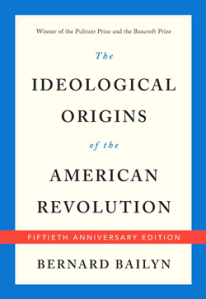 It took me a long time to warm to The Ideological Origins of the American Revolution. I don’t think this is an uncommon experience for an early Americanist. Fifty years after its publication, Bailyn’s seminal work still features prominently on graduate and undergraduate reading lists. Yet it is hard to say that the book is beloved. Often, simply mentioning Bailyn’s name can be a pejorative shorthand—an outmoded view of the past that celebrates elites at the expense of the darker underbelly of the Revolution. As an undergraduate, I too railed against the book. How far, I asked with youthful bluster, were minutemen really inspired by the cautionary tale of seventeenth-century Denmark? And yet, like the profession itself, I have found it hard to shake Bailyn’s shadow. How is it that a book that is often only grudgingly admired still occupies such a large part of the field’s mental imagination?
  I’m teaching two sections of the first half of the U.S. survey this semester (which goes to 1877 here at BYU). I taught two sections of the same last semester. After nearly a five-year break from the classroom as I researched and wrote a dissertation, it was fun to be back in the classroom: to work with students, take a step back from the specifics of my own research, reflect on the broader themes and developments of early American history, and to update my lecture/discussion notes and outlines with the vast amounts of excellent scholarship produced over the course of that five-year period.

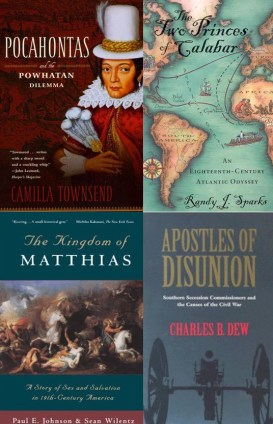
 I am fortunate that in graduate school, I had quite a bit of guidance in writing across the curriculum pedagogy. I have since taught approximately a dozen designated writing-intensive courses. Most history courses are writing-intensive by default, and many history faculty do find themselves teaching writing and research techniques. Here, I am focusing primarily on the strategies I use in survey courses, with a short list of monographs that I have found work well for this purpose.
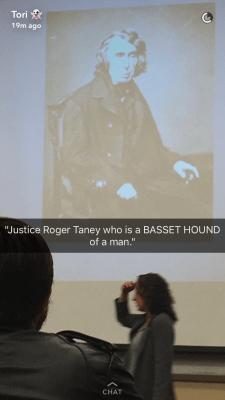 Several years ago, I attended a seminar on digital pedagogy. I thought it might be worthwhile to explore new opportunities out there for social media in the classroom. It was indeed an eye-opening experience, though not in the way I had hoped. Seminar leaders regaled us with software package after software package filled with whistles, bells, alerts, gimmicks, everything, they claimed, one would need to connect with this generation of “digital natives” (their term, not mine.) Students these days spend so much time on social media, they claimed, that faculty need to learn to connect with them online in order to really
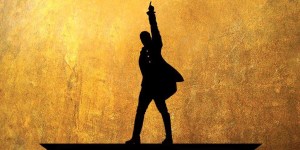 Last spring, I blogged about how I used the song “Farmer Refuted” from
  The Junto