
This Colonial Couture post is by guest contributor Ben Marsh, senior lecturer in history at the University of Kent. His current research project is “Unravelling Dreams: Silkworms and the Atlantic World, c. 1500-1840.”

Super Bowl LI
In July 1760, an American correspondent writing to a former neighbor in Surrey, England, graciously thanked them for dispatching a package across to South Carolina, risking the perils of transatlantic post during the Seven Years’ War, to send some cosmopolitan gifts. The gift of a fan was heralded as a “curiosity,” the suit (probably linen, though this descriptor was scored out) was apparently “universally admired,” but the real coup in the package was unquestionably the pompon. Not only was the pompon the prettiest these Americans had apparently ever seen, but the girl it was intended for was delighted “the more so as they are the first of ye fashion that have reach[e]d this part of the world.” Continue reading

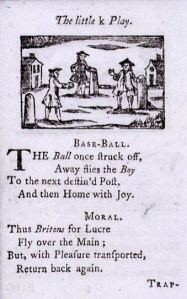 As most graduate students experience first-hand, the relationship between universities and unions can be complex. Our position as students, employees or a combination of the two varies largely by institution, particularly by whether or not our universities are public or private. However, if you’re a Division One football player with a potential NFL career in your future, the construct of a student-athlete underscores a specific question about the nature of labor in higher education. For those who participate in collegiate sports, are academic scholarships a privilege or a right, a special acknowledgement of their abilities on the field or a form of compensation for service to their institutions? Yet the tension between privileges and rights is as much about intellectual activity as it is about physical skills, dating all the way back to Andrew Law’s Privilege of 1781.
 The Junto